Category
page 1Classical Chinese philosophy

Taoism
Taoism or Daoism (, ) is a philosophical and religious tradition indigenous to China, emphasizing harmony with the Tao . With a range of meaning in Chinese philosophy, translations of Tao include 'way', 'road', 'path', or 'technique', generally understood in the Taoist sense as an enigmatic process of transforming ultimately underlying reality. Taoist thought has informed the development of various practices within the Taoist tradition, including forms of meditation, astrology, qigong, feng shui, and internal alchemy. A common goal of Taoist practice is self-cultivation, a deeper appreciation

Tao
thumb|200px|Symbol of Tao (the Way)
thumb|200px|Uncreated Eight Trigrams, representing the uncreated state of a being before it incarnates into the material world.
thumb|200px|Post-created Eight Trigrams, representing the state of a being after it is born into the material world.

Chinese literature
literary works in Chinese language

Wu Xing
cycle of the five elements in Chinese astrology
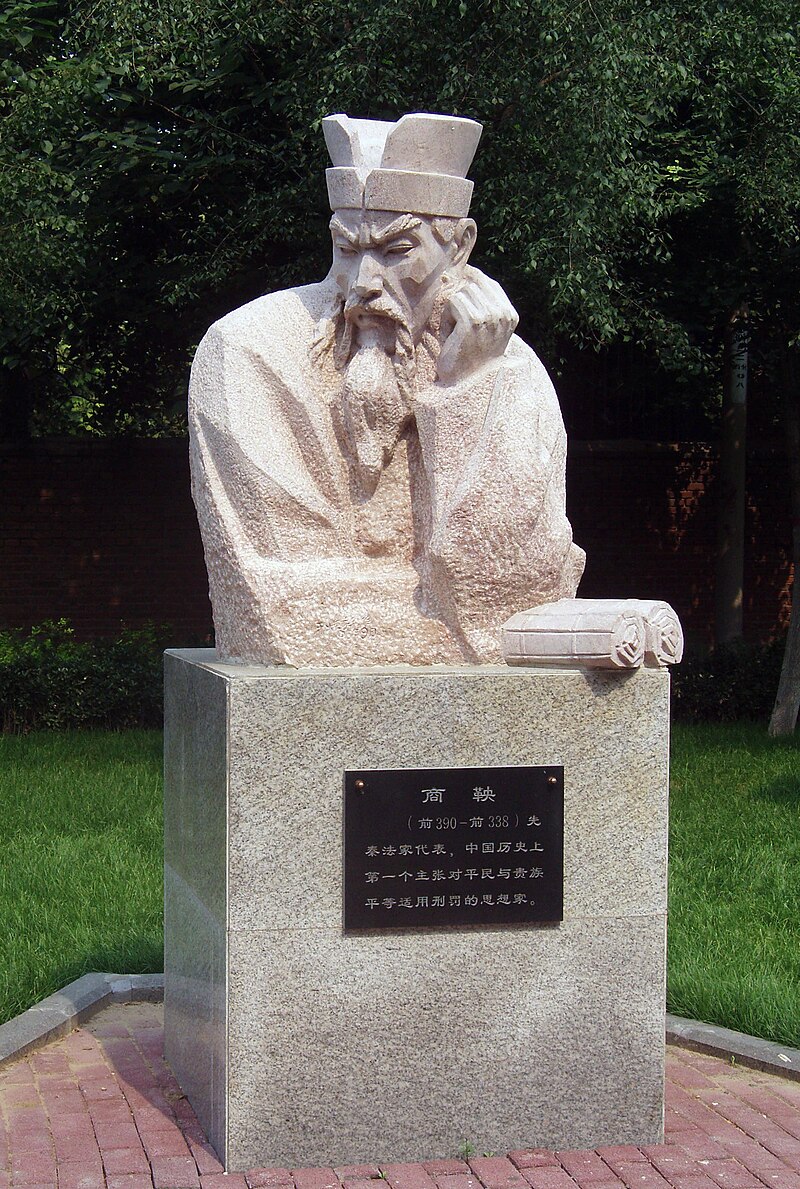
Legalism
one of the six classical schools of thought in Chinese philosophy

Mandate of Heaven
political and religious doctrine of the Emperor of China

Neo-Confucianism
Neo-Confucianism (, often shortened to lǐxué 理學, literally "School of Principle") is the cultural revival of Confucianism as an ethical, social, and religious system, which dominated Chinese philosophy from the 13th through the 19th century. Although its origin lies in the Tang dynasty, it was fully developed during the Song dynasty under the formulations of Zhu Xi (1130–1200), the tradition's central figure. Zhu, alongside Cheng Yi and Cheng Hao, comprises the dominant Cheng–Zhu school, in opposition to the later Lu–Wang school led by Wang Yangming and Lu Xiangshan.
Chinese classics
classic texts of Chinese literature
Taoist philosophy
school of thought in China
Imperial Chinese tributary system
network of trade and foreign relations between Imperial China and its tributaries, which helped to shape much of East Asian affairs

Huang-Lao
Huang–Lao () was the most influential Chinese school of thought in the early Han dynasty, having its origins in a broader political-philosophical drive looking for solutions to strengthen the feudal order as depicted in Zhou politics. Not systematically explained by historiographer Sima Qian, it is generally interpreted as a school of Syncretism, developing into a major religion, the beginnings of religious Taoism.
Lunheng
The Lunheng, also known by numerous English translations, is a wide-ranging Chinese classic text by Wang Chong (27 – ). First published in 80, it contains critical essays on natural science and Chinese mythology, philosophy, and literature.
fangshi
Fangshi () were Chinese technical specialists who flourished from the third century BCE to the fifth century CE. English translations of include alchemist, astrologer, diviner, exorcist, geomancer, doctor, magician, monk, mystic, necromancer, occultist, omenologist, physician, physiognomist, technician, technologist, thaumaturge, and wizard.
Fa yan
book by Yang Xiong
Syncretism
eclectic school of thought