Category
page 1Classical control theory
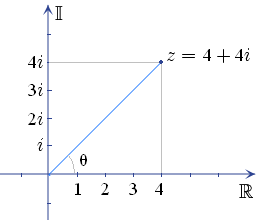
complex plane
geometric representation of the complex numbers
PID controler
control loop mechanism used in control engineering based on three terms (P, I and D)
positive feedback
process that occurs in a feedback loop which magnifies a small disturbance
Bode plot
graph of the frequency response of a linear system presented in logarithmic scale
state-space representation
mathematical term
Nyquist stability criterion
Nyquist stability criterion in control systems
linear time-invariant system
mathematical model of system that produces an output signal from any input signal subject to the constraints of linearity and time-invariance
Nyquist plot
plot
system identification
method of identifying or measuring the mathematical model of a system from measurements of the system inputs and outputs; uses statistical methods to build mathematical models of dynamical systems from measured data
root locus
graphical method for examining how the roots of a linear time-invariant system change with variation of a certain system parameter, commonly a gain within a feedback system
open-loop controller
control law without knowledge of the state or output
overshoot
a signal or function exceeding its target
controllability
Controllability is an important property of a control system and plays a crucial role in many regulation problems, such as the stabilization of unstable systems using feedback, tracking problems, obtaining optimal control strategies, or, simply prescribing an input that has a desired effect on the state.
step response
time behavior
setpoint
target value that an automatic control system, for example PID controller, will aim to reach
observability
Observability is a measure of how well internal states of a system can be inferred from knowledge of its external outputs.
In control theory, the observability and controllability of a linear system are mathematical duals.
state observer
system that provides an estimate of the internal state of a given real system, from measurements of the input and output of the real system

signal-flow graph
a specialized flow graph, a directed graph in which nodes represent system variables, and branches (edges, arcs, or arrows) represent functional connections between pairs of nodes
closed-loop transfer function
process in systems in which there is interaction
state variable
variable whose value is uniquely determined by the state of a dynamical system
gain scheduling
approach to control of non-linear systems
causal system
system where the output depends only on past and current inputs
Nichols plot
plot
Proportional control
linear feedback control system
plant
in control theory, the combination of process and actuator
Lead–lag compensator
control system
phase margin
Parameter of electronic amplifiers
integral windup
error condition in a proportional–integral–derivative controller, may be limited using anti-windup
State-transition matrix
Tool in control theory