Category
page 1Cleopatra

Julius Caesar
Gaius Julius Caesar was a Roman general, statesman, and author who was the dictator of the Roman Republic almost continuously from 49 BC until his assassination in 44 BC. A member of the First Triumvirate, he led the Roman armies through the Gallic Wars and defeated his political rival Pompey in Caesar's civil war. He consolidated power and proclaimed himself dictator for life in 44 BC, which contributed to the political conditions that led to the collapse of the Roman Republic and the emergence of the Roman Empire. For his role in these events, he is regarded as one of the most influential historical figures.

Cleopatra
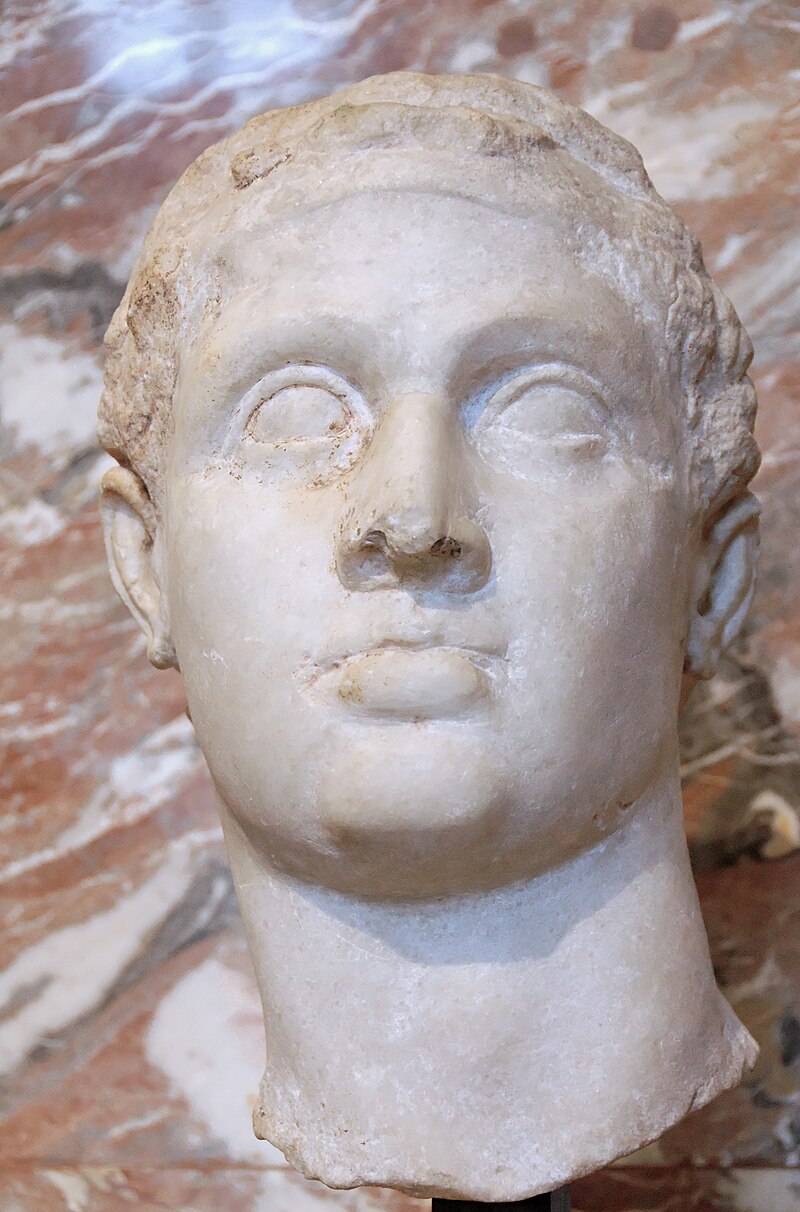
Cleopatra VII Thea Philopator (; 70/69 BC10 or 12 August 30 BC) was Queen of the Ptolemaic Kingdom of Egypt from 51 to 30 BC, and the last active Hellenistic pharaoh. A member of the Ptolemaic dynasty, she was a descendant of its founder Ptolemy I Soter, a Macedonian Greek general and companion of Alexander the Great. Her first language was Koine Greek, and she is the only Ptolemaic ruler known to have learned the Egyptian language, among several others. After her death, Egypt became a province of the Roman Empire, marking the end of the Hellenistic period in the Mediterranean,

Battle of Actium
31 BCE decisive confrontation of the Final War of the Roman Republic

216 Kleopatra
main-belt asteroid
Ptolemy XII Auletes
1st-century BC Egyptian pharaoh

Caesar's Civil War
one of the last politico-military conflicts in the Roman Republic before the establishment of the Roman Empire

Arsinoe IV of Egypt
Queen of Ptolemaic Egypt from 48 BC to 47 BC
Cleopatra's Needles
set of Egyptian obelisks known as Cleopatra's Needle at some point in time
Final War of the Roman Republic
Last of the civil wars of the Roman Republic
Pothinus
Pothinus or Potheinos (; early 1st century BC – 48 or 47 BC), a eunuch, was regent for Pharaoh Ptolemy XIII Theos Philopator of the Ptolemaic Kingdom. He is most remembered for turning Ptolemy against his sister and co-ruler Cleopatra, thus starting a civil war, and for having Pompey decapitated and presenting the severed head to Julius Caesar according to some sources.

Taposiris Magna
ancient Egyptian site
Antony's Parthian War
1st-century BCE military campaign
death of Cleopatra
a significant event marking the death of the penultimate Ptolemaic ruler of Egypt in 30 BC
Battle of the Nile
47 BCE battle between Julius Caesar and Ptolemy XIII
Siege of Alexandria
48-47 BC battle of the Alexandrian War, Caesar vs Ptolemy XIII
Donations of Alexandria
land distribution by Mark Antony in 34 BC
Caesareum of Alexandria
demolished temple in Egypt

Ganymedes
Eunuch, general, tutor of Arsinoe IV
Alexandrian War
Caesar's intervention in Egypt during his civil war
Antirhodos
Antirhodos (sometimes Antirrhodos or Anti Rhodes) was an island in the eastern harbor of Alexandria, Egypt, on which a Ptolemaic Egyptian palace was sited. The island was occupied until the reigns of Septimius Severus and Caracalla and it probably sank in the 4th century, when it succumbed to earthquakes and a tsunami following an earthquake in the eastern Mediterranean near Crete in the year 365. The site now lies underwater, near the seafront of modern Alexandria, at a depth of approximately .

Reign of Cleopatra VII
article on the reign of Cleopatra VII
ethnicity of Cleopatra
ancestry and identity of Cleopatra
Charmion
servant to Cleopatra
asp
term in antiquity describing a venomous snake in the Nile region
Apollodorus the Sicilian
Hellenistic Egyptian
Tomb of Antony and Cleopatra
undiscovered burial crypt of Mark Antony and Cleopatra VII
Athenion
general of Cleopatra