Category
page 1Climate patterns

season
A season is a division of the year based on changes in weather, ecology, and the number of daylight hours in a given region. On Earth, seasons are the result of the axial parallelism of Earth's tilted orbit around the Sun. In temperate and polar regions, the seasons are marked by changes in the intensity of sunlight that reaches the Earth's surface, variations of which may cause animals to undergo hibernation or to migrate, and plants to be dormant. Various cultures define the number and nature of seasons based on regional variations, and as such there are a number of both modern and historica

monsoon
thumb|upright=1.2|Advancing monsoon clouds and showers in Aralvaimozhy, near Nagercoil, [[Tamil Nadu, India]]
thumb|upright=1.2|Monsoon clouds arriving at Port Blair, Andaman, India
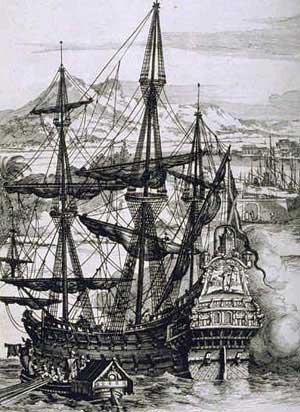
trade wind
permanent east-to-west prevailing winds that flow in the Earth's equatorial region

westerlies
right|thumb|400px|The westerlies (blue) and trade winds (yellow and brown)
thumb|397x397px|The general atmospheric circulation. Trade winds (red), westerlies (white) and the South Pacific High|South Pacific anticyclone (blue)

arid
right|220px|thumb|Arid regions of the Western United States as mapped in 1893
diel cycle
pattern that recurs every 24 hours as a result of one full rotation of the Earth with respect to the Sun
desert bloom
climatic phenomenon
teleconnection
Teleconnection in atmospheric science refers to climate anomalies being related to each other at large distances (typically thousands of kilometers). The most emblematic teleconnection is that linking sea-level pressure at Tahiti and Darwin, Australia, which defines the Southern Oscillation. Another well-known teleconnection links the sea-level pressure over Iceland with the one over the Azores, traditionally defining the North Atlantic Oscillation (NAO).
Oasis effect
alteration of a surrounding environment by the presence of a water source
cyclonic rotation
atmospheric motion matching a planet's rotation