Category
page 1Cloning

gene
In biology, the word gene has two meanings. The Mendelian gene is a basic unit of heredity. The molecular gene is a sequence of nucleotides in DNA that is transcribed to produce RNA. There are two types of molecular genes: protein-coding genes and non-coding genes. During gene expression (the synthesis of RNA or protein from a gene), DNA is first copied into RNA. RNA can be directly functional or be the intermediate template for the synthesis of a protein.

egg cell
haploid female reproductive cell or gamete
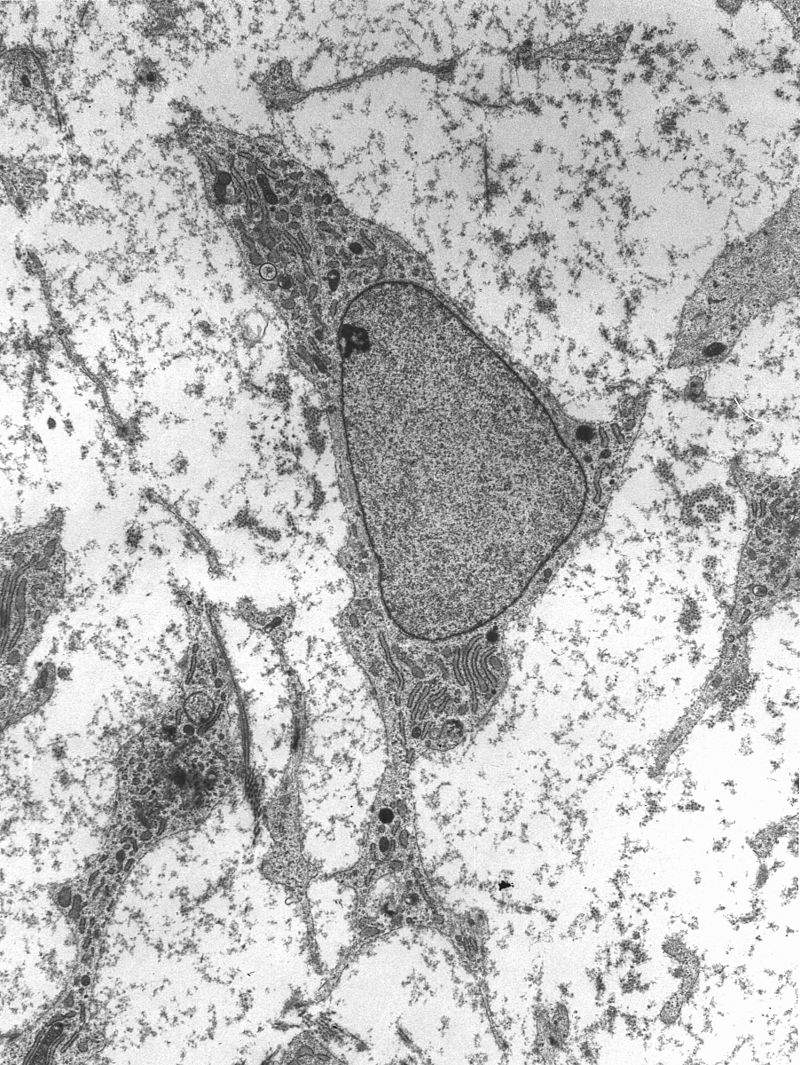
stem cell
undifferentiated biological cells that can differentiate into specialized cells

cloning
thumb|upright=1.35|Many organisms, including aspen trees, reproduce by cloning, often creating large groups of organisms with the same [[DNA. One example depicted here is quaking aspen.]]

umbilical cord
conduit between embryo/fetus and the placenta

Dolly the Sheep
cloned female sheep; first cloned animal

vegetative reproduction
asexual method of reproduction in plants
cutting
piece of a plant that is used in horticulture for vegetative (asexual) propagation
somatic cell
any biological cell forming the body of a multicellular organism other than a gamete, germ cell, gametocyte or undifferentiated stem cell

Ian Wilmut
British embryologist (1944–2023)
human cloning
creation of a genetically identical copy of a human
clone
group of identical cells that share a common ancestry

de-extinction
thumb|right|The Pyrenean ibex, also known as the bouquetin (French) and bucardo (Spanish), is the only animal to have survived de-extinction past birth through cloning.
De-extinction (also known as resurrection biology, or species revivalism) is the process of human intervention to generate an organism that either resembles or is an extinct organism. There are several ways to carry out the process of de-extinction. Cloning is the most widely proposed method, although genome editing and selective breeding have also been considered. Similar techniques have been applied to certain endangered spec
progenitor cell
biological cell that can differentiate into a specific cell type

GloFish
The GloFish is a patented and trademarked brand of fluorescently colored genetically modified aquarium fish. They have been created from several different species of fish: zebrafish were the first GloFish available in pet stores, followed by black tetras, tiger barbs, rainbow sharks, Siamese fighting fish, X-ray tetras, bronze corydoras, and freshwater angelfish. They are sold in many colors, trademarked as "Starfire Red", "Moonrise Pink", "Sunburst Orange", "Electric Green", "Cosmic Blue", and "Galactic Purple", although not all species are available in all colors. Although not originally dev
somatic-cell nuclear transfer
method of creating a cloned embryo by replacing the egg nucleus with a body cell nucleus
Keith Campbell
British biologist (1954-2012) Professor of Animal Development at the University of Nottingham
The Roslin Institute
academic research institution

Mycocepurus smithii
species of insect
.jpg)
blastulation
thumb|A. Morula and B. cross section of a blastula displaying the [[blastocoel and blastoderm of early animal embryonic development]]
Blastulation is the stage in early animal embryonic development that produces the blastula. In mammalian development, a blastula develops into the blastocyst with a differentiated inner cell mass and an outer trophectoderm. The blastula (from Greek βλαστός ( meaning sprout)) is a hollow sphere of cells known as blastomeres surrounding an inner fluid-filled cavity called the blastocoel. Embryonic development begins with a sperm fertilizing an egg cell to become a
cloning vector
small piece of DNA that can be stably maintained in an organism for cloning
Phagemid
A phagemid or phasmid is a DNA-based cloning vector, which has both bacteriophage and plasmid properties. These vectors carry, in addition to the origin of plasmid replication, an origin of replication derived from bacteriophage. Unlike commonly used plasmids, phagemid vectors differ by having the ability to be packaged into the capsid of a bacteriophage, due to their having a genetic sequence that signals for packaging. Phagemids are used in a variety of biotechnology applications; for example, they can be used in a molecular biology technique called "phage display".
Subcloning
thumb|300px|right|This image diagrams the procedure of subcloning as outlined to the left.
In molecular biology, subcloning is a technique used to move a particular DNA sequence from a parent vector to a destination vector.
artificial reproduction
The creation of new life by other than the natural means available to an organism
Fosmid
Fosmids are similar to cosmids but are based on the bacterial F-plasmid. The cloning vector is limited, as a host (usually E. coli) can only contain one fosmid molecule. Fosmids can hold DNA inserts of up to 40 kb in size; often the source of the insert is random genomic DNA. A fosmid library is prepared by extracting the genomic DNA from the target organism and cloning it into the fosmid vector. The ligation mix is then packaged into phage particles and the DNA is transfected into the bacterial host. Bacterial clones propagate the fosmid library.
The low copy number offers higher stability t
nuclear transfer
form of cloning
Vivipary
thumb|Watsonia meriana, near the end of flowering, has [[cormlets that eventually drop and root.]]
thumb|Red mangrove seeds germinate while still on the parent tree.
thumb|Vivipary in overripe tomato
ligation
technique for joining DNA molecules in molecular biology
Frozen zoo
storage facility for genetic material
revival of the woolly mammoth
proposed reintroduction of extinct species of elephant
Tong Dizhou
Chinese biologist (1902–1979)
perivitelline space
The space between the membrane of an oocyte and a surrounding membranous structure (zona pellucida or perivitelline membrane).
minigene
A minigene is a minimal gene fragment that includes an exon and the control regions necessary for the gene to express itself in the same way as a wild type gene fragment. This is a minigene in its most basic sense. More complex minigenes can be constructed containing multiple exons and intron(s). Minigenes provide a valuable tool for researchers evaluating splicing patterns both in vivo and in vitro biochemically assessed experiments. Specifically, minigenes are used as splice reporter vectors (also called exon-trapping vectors) and act as a probe to determine which factors are important in sp
Commercial animal cloning
cloning of a pet
teletransportation paradox
a thought experiment on the philosophy of identity
list of countries by stem cell research trials
Wikimedia list article
Polly and Molly
cloned sheep