Category
page 1Clubs (weapon)
club
short staff or stick, usually made of wood, wielded as a weapon

racket
sports equipment
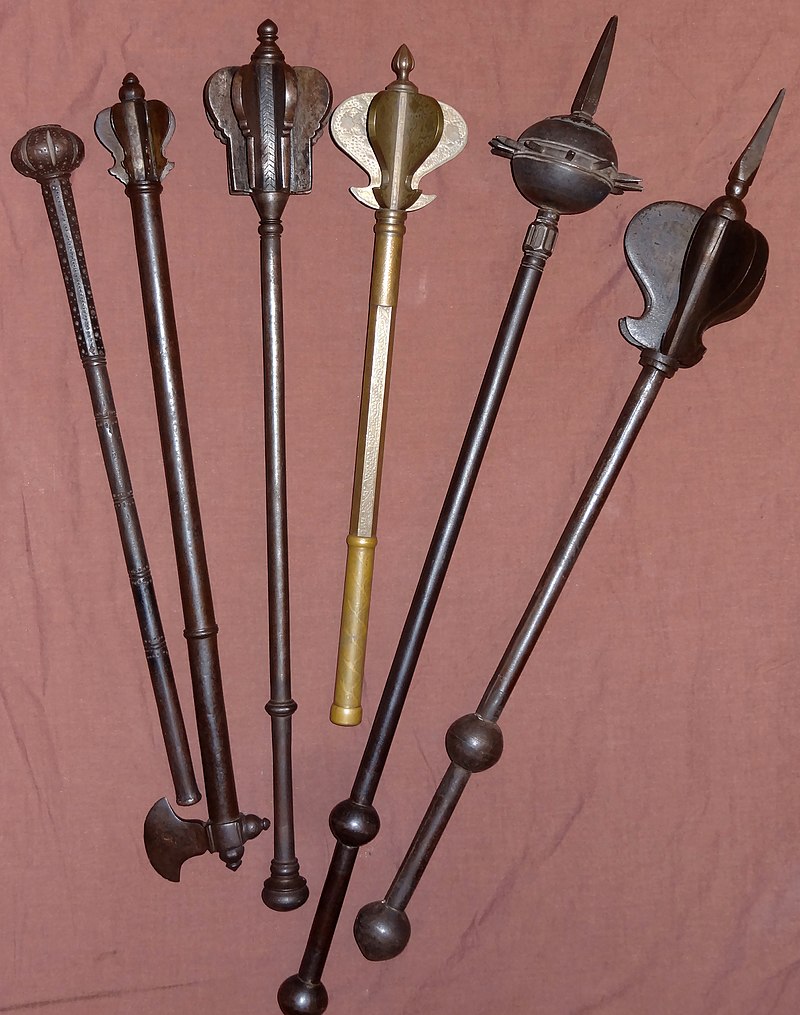
mace
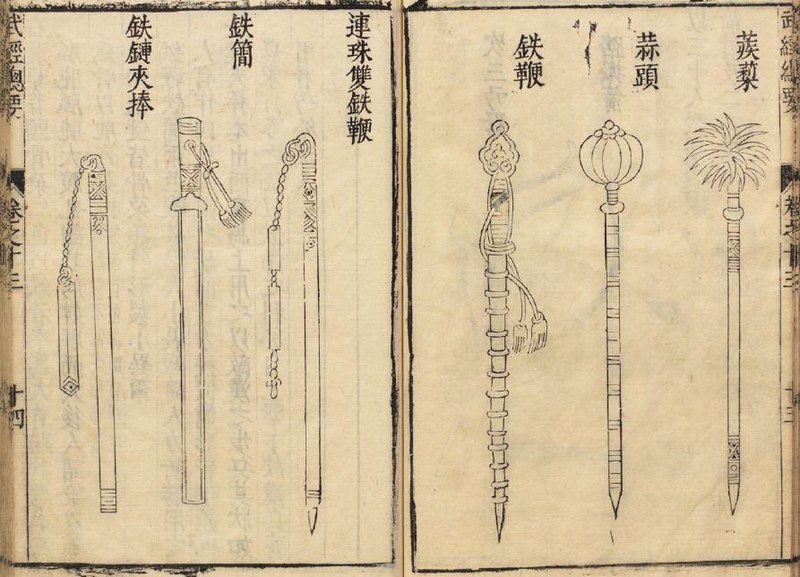
blunt weapon constituted of a long handled and a massive head to inflict traumatic injuries by striking

baton
club of less than arm's length
baseball bat
club used for baseball, or as a weapon
morning star
club-like weapons

shillelagh
thumb|right|Assorted shillelaghs
A shillelagh ( ; or , 'thonged willow') is a wooden walking stick and club or cudgel, typically made from a stout knotty blackthorn stick with a large knob at the top. It is associated with Ireland and Irish folklore.

knobkierrie
300px|thumb|A display of Zulu people|Zulu knobkerries (foreground)
A knobkerrie, also spelled knobkerry, knobkierie, and knopkierie (Afrikaans), is a form of wooden club, used mainly in Southern Africa and Eastern Africa. Typically they have a large knob at one end and can be used for clubbing an enemy's head. For the various peoples who use them, they often have marked cultural significance. Being able to carry the knobkerrie has also had a political dimension, especially in South Africa.
hakapik
A hakapik () is a club, of Norwegian design, similar to a fishing gaff, used for killing and moving seals. The hakapik is a multipurpose hunting tool—a heavy wooden club, with a hammer head (used to crush a seal's skull), and a hook (used to drag the carcass) on the end.
Millwall brick
type of blunt hand-held weapon, Improvised weapon
patu
thumb|right|A patu paraoa at the British Museum.
thumb|right|Mete Kīngi Paetahi, circa 1869 by unknown photographer.
waddy
thumb|Waddies made by the Arrernte people
thumb|Aboriginal man carrying waddy, woomera (spear-thrower) and spear, South Australia, c. 1876
A waddy, nulla-nulla, leangle or boondi is an Aboriginal Australian hardwood club or hunting stick for use as a weapon or as a throwing stick for hunting animals. Waddy comes from the Darug people of Port Jackson, Sydney. Boondi is the Wiradjuri word for this implement. Leangle is a Djadjawurrung word for a club with a hooked striking head.
mere
Māori tear-shaped broad-bladed weapon used in ceremonial dance or combat
wahaika
thumb|150px|right|Wahaika, circa 1900. Rietberg Museum.
A wahaika is a type of traditional Māori hand weapon. Wahaika are short club-like weapons usually made of wood or whalebone and are used for thrusting and striking in close-quarter, hand-to-hand fighting. Whalebone wahaika are called wahaika parāoa.
Tewhatewha
thumb|A tewhatewha at the British Museum.
A tewhatewha is a long-handled Māori club weapon shaped like an axe. Designed to be held in two hands, the weapon comes to a mata (point) at one end and a rapa (broad, quarter-round head) at the other.
kotiate
thumbnail|Two kotiate made of whalebone
thumb|Māori war-clubs. The kotiate is second from right.
Kotiate is a type of traditional hand weapon of the Māori, the indigenous people of New Zealand.
leiomano
thumb|Leiomano made with tiger shark teeth
Early 19th-century Hawai'ian leiomano|thumb
thumb|Leiomano knuckle duster at the [[Los Angeles County Museum of Art.]]
The leiomano is a shark-toothed club used by various Polynesian cultures, primarily by the Native Hawaiians.
Trench raiding club
homemade melee weapons used during World War I
bulibuli
A bulibuli or vunikau bulibuli is a Fijian war club.
thumb|Bulibuli, 19th century, Metropolitan Museum of Art
thumb|Fijian warriors, the one on the left with a bulibuli