Category
page 1Clupeidae

Clupeidae
Clupeidae is a family of clupeiform ray-finned fishes, comprising, for instance, the herrings and sprats. Many members of the family have a body protected with shiny cycloid (very smooth and uniform) scales, a single dorsal fin, and a fusiform body for quick, evasive swimming and pursuit of prey composed of small planktonic animals. Due to their small size and position in the lower trophic level of many marine food webs, the levels of methylmercury they bioaccumulate are very low, reducing the risk of mercury poisoning when consumed.

Clupea
Clupea is a genus of planktivorous bony fish belonging to the family Clupeidae, commonly known as herrings. They are found in the shallow, temperate waters of the North Pacific and the North Atlantic oceans, including the Baltic Sea. Two main species of Clupea are currently recognized: the Atlantic herring (Clupea harengus) and the Pacific herring (Clupea pallasii), which have each been divided into subspecies. Herrings are forage fish moving in vast schools, coming in spring to the shores of Europe and America, where they form important commercial fisheries.
sardine
Sardine and pilchard are common names for various species of small, oily forage fish in the herring suborder Clupeoidei. The term "sardine" was first used in English during the early 15th century; a somewhat dubious etymology says it comes from the Italian island of Sardinia, around which sardines were once supposedly abundant.
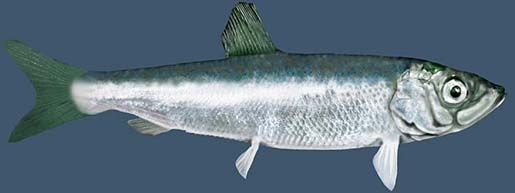
Sprattus
Sprattus is a genus of small oily fish of the family Clupeidae. They are more usually known by their common name, sprats. There are five species in the genus.
herring
Herring are various species of forage fish, belonging to the order Clupeiformes.

Ethmalosa fimbriata
species of fish
sardine as food
flesh from sardines

Araucanian herring
species of fish
Clupeinae
REDIRECT Clupeidae
_sprats.JPG)
sprat
thumb|300px|right|
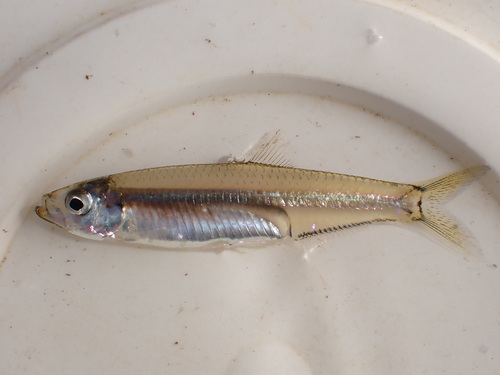
Gilchristella aestuaria
species of fish
Raconda russeliana
fish of the herring family

Ehirava fluviatilis
species of fish
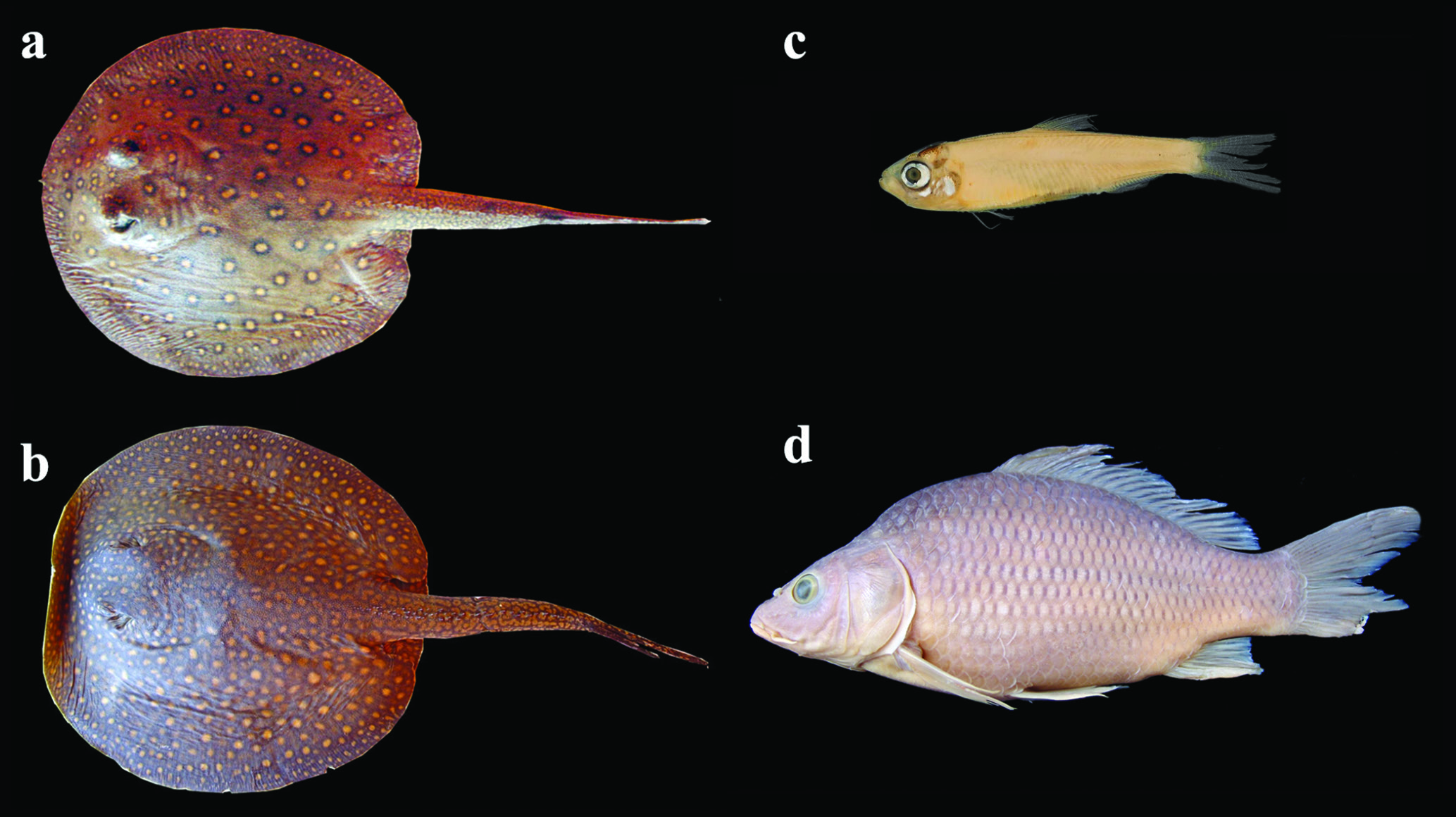
Platanichthys platana
herring species
Knightia
Knightia is an extinct genus of clupeid bony fish that lived in the freshwater lakes and rivers of North America and Asia during the Eocene epoch. The genus was erected by David Starr Jordan in 1907, in honor of the late University of Wyoming professor Wilbur Clinton Knight, "an indefatigable student of the paleontology of the Rocky Mountains." It is the official state fossil of Wyoming, and the most commonly excavated fossil fish in the world.
Kapenta
thumb|200px|Limnothrissa miodon
The Tanganyika sardine is a term for two related species (Lake Tanganyika sardine, Limnothrissa miodon and Lake Tanganyika sprat, Stolothrissa tanganicae), both of which are small, planktivorous, pelagic, freshwater clupeid originating from Lake Tanganyika in Zambia. They form the major biomass of pelagic fish in Lake Tanganyika and Lake Malawi, swimming in large schools in the open lake, feeding on copepods and potentially jellyfish. Their major predators are four species of Lates which are also endemic to Lake Tanganyika, and are related to (but not the same a

Potamalosa richmondia
fish that is endemic to Australia

Ramnogaster
Ramnogaster is a small genus of sprats found only in South America. Two species are placed in this genus:
Ramnogaster arcuata (Jenyns, 1842) (Jenyns's sprat)
Ramnogaster melanostoma (C. H. Eigenmann, 1907) (Uruguay river sprat)
Laeviscutella dekimpei
species of fish
Pellonulinae
Pellonulinae is a subfamily of freshwater herrings belonging to the family Clupeidae. Extant species are found in Asia, Africa and Australia, and members of the family occurred in North America in the Eocene.
== References ==
Hyperlophus
Hyperlophus is a genus of sprat belonging to the herring family Clupeidae. They are endemic to the waters around Australia. There are currently two species recognized in the genus.
Ethmidium
Ethmidium is a monospecific genus of marine ray-finned fish belonging to the family Clupeidae, the herrings and sprats. The only species in the genus is Ethmidium maculatum, the Pacific menhaden, a species found along the Pacific coast of South America off Peru and Chile.
Ndagala
Ndagala ( Burundi ) or Daaga ( Tanzania ) are the vernacular names given to two species of small pelagic fish of the Clupeidae family (which also includes Sardines and Shads), which are only found in Lake Tanganyika.