Category
page 1Coins of ancient Rome

denarius
thumb|Denarius of Mark Antony and Octavian, struck at Ephesus in 41 BC. The coin commemorated the two men's defeat of Brutus and Cassius a year earlier as well as celebrating the new [[Second Triumvirate.|360x360px]]
thumb|right|Top row (left to right): 157 BC Roman Republic, 73 AD [[Vespasian, 161 AD Marcus Aurelius, 194 AD Septimius Severus; Second row (left to right): 199 AD Caracalla, 200 AD Julia Domna, 219 AD Elagabalus, 236 AD Maximinus Thrax]]
The denarius (; : dēnāriī, ) was the standard Roman silver coin from its introduction in the Second Punic War to the reign of Gordian III (AD 23
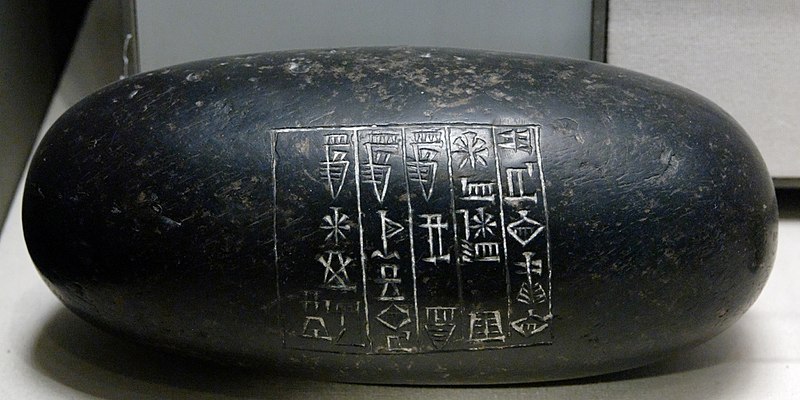
talent
ancient unit of mass

sestertius
The sestertius (: sestertii) or sesterce (: sesterces, rarely sestercii) was an ancient Roman coin. During the Roman Republic it was a small silver coin issued only on rare occasions. During the Roman Empire it was a large brass coin.
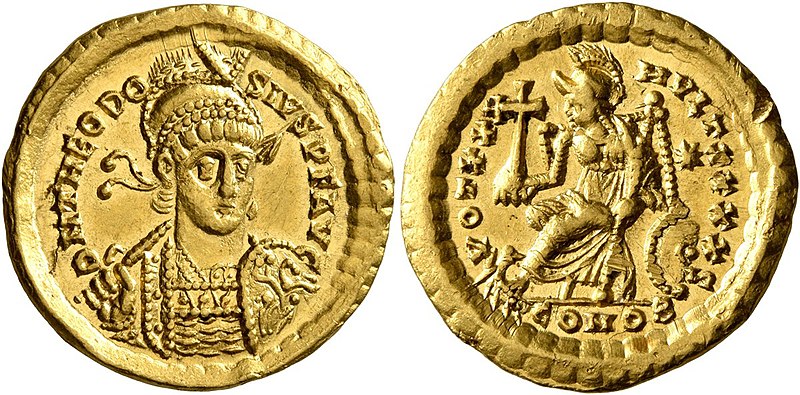
solidus
gold coin issued in the Late Roman Empire

aureus
thumb|300x300px|Aureus minted in 193 by Septimius Severus to celebrate [[Legio XIV Gemina, the legion that proclaimed him emperor]]
The aureus ( aurei, 'golden') was the main gold coin of ancient Rome from the 1st century BC to the early 4th century AD, when it was replaced by the solidus. This type of coin was sporadically issued during the Republic and standardized during the Empire, originally valued at 25 silver denarii and 100 sestertii. It was about the same size as the denarius, but heavier than the denarius since gold is denser than silver.
as
bronze and later copper coin used in Ancient Rome

antoninianus
thumb|upright=1.2|Row 1: Elagabalus ([[silver 218–222 AD), Trajan Decius (silver 249–251 AD), Gallienus (billon 253–268 AD Asian mint);Row 2: Gallienus (copper 253–268 AD), Aurelian (silvered 270–275 AD), barbarous radiate (copper), barbarous radiate (copper)]]
thumb|upright=1.2 |The antoninianus, introduced in 215 AD, continued the denarius's slow decline in silver purity.
The antoninianus or pre-reform radiate was a coin used during the Roman Empire thought to have been valued at 2 denarii. It was initially silver, but was slowly debased to bronze with a mi
Roman currency
Currency of the Roman Republic and Empire

follis
thumb|An AE1 follis of Diocletian, 27 mm

orichalcum
Orichalcum (or aurichalcum) or orichalc is a metal mentioned in several ancient writings, including the story of Atlantis in the Critias of Plato. Within the dialogue, Critias (460–403 BC) says that orichalcum had been considered second only to gold in value and had been found and mined in many parts of Atlantis in ancient times, but that by Critias's own time, orichalcum was known only by name.
dupondius
The dupondius (Latin two-pounder) was a brass coin used during the Roman Republic and Roman Empire valued at 2 asses (4/5 of a sestertius or 1/5 of a denarius during the Republic and 1/2 of a sestertius or 1/8 of a denarius during the time of Augustus).

quinarius
thumb|right|300px|A quinarius of 90 BC of L. Calpurnius Piso Frugi: Obv.: head of Roma right in a winged helmetq; V (asses) for quinarius. Rev.: Dioscuri riding right, stars above heads; ROMA below.

quadrans
thumb|–270 BC
thumb|Cast coin. Obverse: bust of Hercules l.; three pellets. Reverse: prow of [[galley; three pellets.]]
thumb|Teruncius (Apulia, [[Lucera), BC]]
thumb|Augustus Quadrans
thumb|Quadrans of Domitian
The quadrans () or teruncius () was a low-value Roman bronze coin worth one quarter of an as. The quadrans was issued from the beginning of cast bronze coins during the Roman Republic, showing three pellets representing three unciae as a mark of value. The obverse type, after some early variations, featured the bust of Hercules, while the reverse featured the prow of a galley. Coins wi

argenteus
thumb|300px|Argenteus struck under Constantius Chlorus, weighing 3.36 g.
The argenteus ( argentei, 'of silver') was a silver coin produced by the Roman Empire from the time of Diocletian's coinage reform in AD 294 to ca. AD 310. It was of similar weight and fineness to the denarius of the time of Nero. The coin was produced at a theoretical weight of 1/96th of a Roman pound (about 3 grams), as indicated by the Roman numeral XCVI on the coin's reverse.

semis
thumb|right|200px|Cast semissis
thumb|right|200px

siliqua
thumb|300px|Jovian (Emperor)|Jovian siliqua, c. 363. 18 mm and 2.2 grams.
thumb|300px|Constantine III (Western Roman emperor)|Constantine III
The siliqua (. siliquas or siliquae) is the modern namegiven without any ancient evidence to confirm the designationto small, thin, Roman silver coins produced in the 4th century and later. When the coins were in circulation, the Latin word was a unit of weight or value defined by one late Roman writer as one twenty-fourth of a Roman solidus.

Tremissis
thumb|Tremissis from Constantinople in the second reign of Zeno (emperor)|Zeno
upright|thumb|Merovingian dynasty|Frankish gold Tremissis with Christian cross, issued by minter , [[Dorestad, Netherlands, mid-600s]]

spintria
thumb|300px|A set of spintria tokens found in Rome, dating from around 22 to 37 CE

nummus
thumb|right|150px|Nummi coins of the late reign of Anastasius I (emperor)|Anastasius I: on the left a 40-nummi coin ([[follis) and on the right a 5-nummi coin (pentanummium).]]

triens
thumb|right|150px|Rome. Circa 241-235 BC. bronze|Æ [[Aes grave Triens (107.00 g)]]
thumb|right|150px|Triens: O/ Minerva, four pellets above; R/ prow of a galley left, four pellets below
The triens ( trientes) was an ancient Roman bronze coin produced during the Roman Republic valued at one-third of an as (4 unciae). While earlier cast specimens date as far back as the emergence of the Aes Grave around 280 BC, a new, lighter triens was first struck as part of a family of fractional bronze coins including semis, quadrans, sextans and uncia with the introduction of the Denarian System of Roman cu
Byzantine coinage
scruple
''', meaning a tiny stone (from ' sharp stone), indicates a weight of of a Roman ounce (i.e.) or, by extension, of other measures. Metaphorically, the stone is thought to be sharp and pricking, like a thorn.

cistophorus
thumb|right|180px|Cistophorus minted in Apollonis_(Lydia)|Apollonis under the reign of Aristonicus (133–130 BC), [[Cabinet des Médailles]]
aes grave
term in numismatics

Centenionalis
thumb|Centenionalis of Magnentius
The bronze centenionalis coins (plural: centenionales) were the attempts of Constans and Constantius II to reintroduce a large bronze coin between 320 and 340 AD, as the follis had by then shrunk dramatically. The type of coin it was is uncertain, but numismatists have categorized large bronze coins of the above date under this denomination. The centenionalis, however, did not last long. By the end of Theodosius the Great's rule, only smaller varieties of bronze coins were minted (AE3 and AE4).

miliarense
thumb|alt=Silver coin showing a man standing with a standard and a round shield behind his legs. There is writing round the edge including "TRPR" below the figure.|Reverse of a miliarense from the Hoxne Hoard. TRPS indicates the mint of [[Treveri (modern Trier, Germany).]]
Quincunx
bronze coin minted during the Roman Republic

litra
thumb|right|250px|A silver litra from Sicily, BC
thumb|right|250px|A BC bronze onkia coin (a 1/12 subdivision of a litra) with one value-pellet above the boar. A coin worth 2/12 or 3/12 litra would have had 2 or 3 value pellets respectively.
A litra (: litrae; ) was a small silver coin (or unit of measurement for other precious metals) used in the Archaic-era and early Classical colonies of ancient Greece in general and in ancient Sicily in particular. As a coin, the litra was similar in value to the obol. In silver content, the coin weighed and was equal to one-fifth of a drachma. As a unit
victoriatus
The victoriatus was a silver coin issued during the Roman Republic from about 221 BC to 170 BC. The obverse of the coin featured the bust of Jupiter and the reverse featured Victory placing a wreath upon a trophy with the inscription "ROMA" in exergue. The name victoriatus is an ancient term, attested by several contemporary texts and inscriptions. The coin was known as a tropaikon (τροπαικον, due to the trophy on the reverse) among Greek speakers.
sextans
ancient Roman coin with a denomination value of 1/6 as (1/2 triens or 2 Roman ounces)
aes rude
bes
Ancient Roman bronze coin produced during the Roman Republic valued at two-thirds of an as (8 unciae)
aes signatum
ancient Roman currency

quadrigatus
thumb|350px|Didrachm or quadrigatus (ca. 225–212 BC), with a laureate head of [[Janus or the twinned Dioscuri, and Victory driving a quadriga (four-horse chariot)]]
The quadrigatus was a medium-sized silver coin produced by the Roman Republic during the 3rd century BC. The obverse featured a young janiform bust and the reverse featured Victory driving a quadriga (four-horse chariot), giving the coin its Roman name, with the inscription "ROMA" below.

Semuncia
thumb|upright|Roman ,
The '''''' was an ancient Roman bronze coin valued at one twenty-fourth of an , or half an , produced during the Roman Republican era. It was made during the beginning of Roman cast bronze coinage as the lowest valued denomination.
Judaea Capta coinage
Coins issued by Roman Emperor Vespasian

Fourrée
thumb|A fourrée denarius of [[Domitian, showing two points of breakage in the plating.]]A fourrée (also spelt without the accent, with one r, and with one e) is a coin, usually counterfeit, that is made from a base metal core that has been plated with a precious metal to look like its solid metal counterpart; the term is derived from the French word meaning "stuffed". Most fourrées were made from plated silver and gold, but were also made from alloys such as electrum.
dodrans
The dodrans (a contraction of Latin dequadrans: "less a quarter") or nonuncium (from Latin nona uncia: "ninth twelfth") was an Ancient Roman bronze coin produced during the Roman Republic.
uncia
monetary denomination of ancient Italy
bigatus
thumb|Victoria (goddess)|Victory in a biga on the reverse of a denarius (bigatus), with the head of Mars
thumb|Serratus depicting Diana (mythology)|Diana, with Victory driving a biga
prutah
thumb|Pruta from the reign of Agrippa I
thumb|Prutah of John Hyrcanus (134 BCE to 104 BCE).
Obv: Double [[cornucopia.
Rev: Five lines of ancient Hebrew script; reading "Yehochanan Kohen Gadol Chever Hayehudim" (Yehochanan the High Priest, Council of the Jews)]]
Prutah (Hebrew: פרוטה) is a Hebrew term, possibly derived from Aramaic. It refers to a small denomination coin.

Roman Republican currency
Roman currency
Roman Imperial Coinage
Roman Imperial Coinage type series
radiate
Roman coin type
Roman provincial currency
barbarous radiate
Coinage of the Social War
coinage of the Social War
Lava Hoard
Roman hoard of coins and the gold plate discovered off Corsica
Coinage reform of Augustus
Ancient Roman currency reform
Double sestertius
large Roman coin made of brass first issued in 249-251 AD, to 271 AD (Trajan Decius to Aurelian)
Coins of Augustus
coins minted during the reign of Roman Emperor Augustus
coinage of Populonia
coins from Italian city Populonia
Ides of March coin
43–42 BC Roman denarius coin