Category
page 1Colonnades
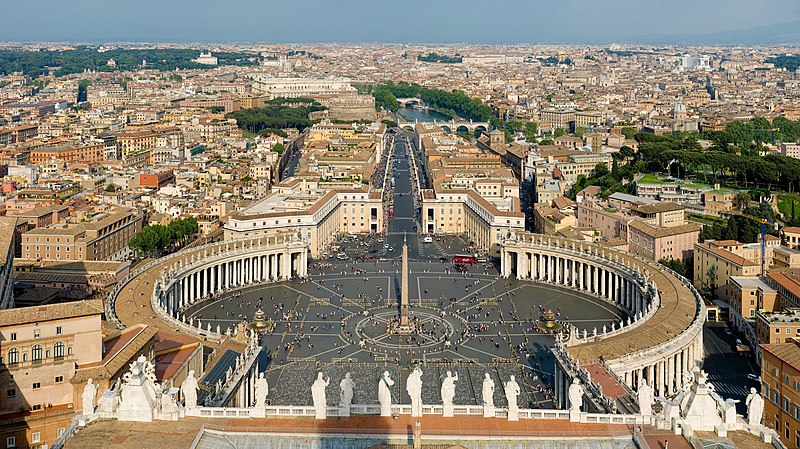
Saint Peter's Square
piazza in Vatican City

cloister
300px|thumb|upright= 1.5|The cloister at Salisbury Cathedral, England

colonnade
thumb|300px|right|Colonnade at the Belvedere on the Pfingstberg palace in Germany
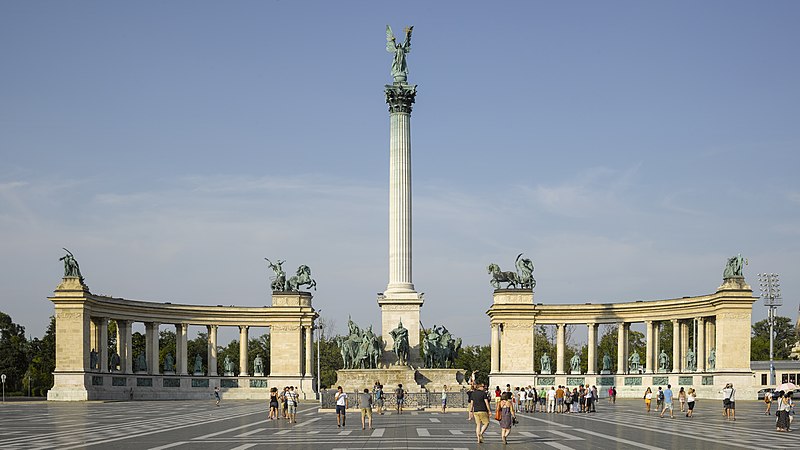
Heroes' Square
major square of Budapest

Deir el-Bahari
archaeological site

stoa
thumb|300px|The restored Stoa of Attalos in Athens, with busts of historical philosophers.
%2001.JPG)
peristyle
thumb|Reconstruction of a Roman peristyle surrounding a courtyard in Pompeii, Italy
Mayakovskaya
Moscow Metro station
Stoa of Attalos
ancient stoa in Athens

intercolumniation
thumb|right|Illustration from ''I quattro libri dell'architettura|The Four Books of Architecture by [[Andrea Palladio, translation by Thomas Ware published in London, 1738]]
thumb|The sequence of expanding intercolumniations, showing Pycnostyle ( I = 1.5D), Systyle ( I = 2D), Eustyle ( I = 2.25D), Diastyle ( I = 3D), and Araeostyle ( I = +3.5D)
In architecture, intercolumniation is the proportional spacing between columns in a colonnade, often expressed as a multiple of the column diameter as measured at the bottom of the shaft. In Classical, Renaissance, and Baroque architecture, intercolumni
Edwardian architecture
style of architecture designed during the reign of Edward of Great Britain (1901-1910)
Ruhmeshalle
building in Schwanthalerhöhe, Upper Bavaria, Germany
Great Colonnade at Palmyra
principal colonnaded street and ancient ruin in Palmyra, Syria
Louvre Colonnade
east façade of the Palais du Louvre
Los Arquillos
cultural property in Vitoria, Spain
Welsh National War Memorial
Grade II* listed building in Cardiff. World War I and II memorial in Cardiff, Wales
Pteron
In Classical architecture, a pteron (, 'wing') is an external colonnade around a building, especially an Ancient Greek temple. The pteroma or peristasis is the passage between the columns and the wall in a temple, the peristyle that in an inward-facing courtyard or garden.
Mill Colonnade
colonnade in Karlovy Vary, Czechia
kairō
{| style="border-collapse:collapse" cellpadding="0"
|style="border:1px solid black;"|alt=Yakushu-ji|x200px
|style="border:1px solid black;"|alt=Kibitsu Jinja|x200px
|}
Two examples of kairō
, , is the Japanese version of a cloister, a covered corridor originally built around the most sacred area of a Buddhist temple, a zone which contained the kondō and the tō. Nowadays it can be found also at Shinto shrines and at shinden-zukuri aristocratic residences.
coupled columns
architectural element