Category
page 1Colossomatinae

Tambaqui / Cachama
The tambaqui (Colossoma macropomum) is a large species of freshwater fish in the family Serrasalmidae. It is native to tropical South America, but kept in aquaculture and introduced elsewhere. It is also known by the names black pacu, black-finned pacu, giant pacu, cachama, gamitana, and sometimes as pacu (a name used for several other related species).

Mylossoma
Mylossoma is a genus of serrasalmids from tropical and subtropical South America, including the basins of the Amazon, Orinoco, Lake Maracaibo and Paraguay-Paraná. These common fish are found both in main river sections and floodplains. They support important fisheries and based on a review by IBAMA, they are the seventh most caught fish by weight in the Brazilian Amazon. They primarily feed on plant material such as seeds and fruits (to a lesser extent invertebrates), and in their ecology they generally resemble the larger tambaqui (Colossoma macropomum). Mylossoma reach up to in length and in
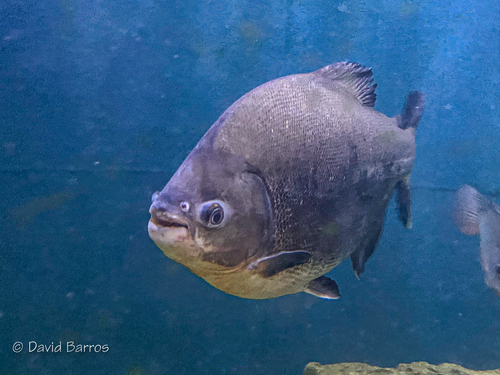
Piaractus
Piaractus is a genus of large serrasalmid from South America. The two traditionally recognized species of Piaractus are very similar in appearance and were formerly included in the genus Colossoma, which currently only contains another similar species, the tambaqui (Colossoma macropomum). A third Piaractus was described in 2019 as a new species, which was formerly considered a subpopulation of P. brachypomus.