Category
page 1Common law legal terminology
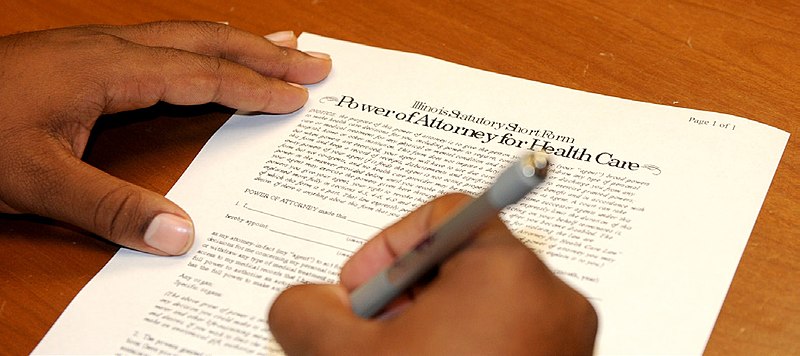
power of attorney
legal form of delegation

plaintiff
A plaintiff (Π in legal shorthand) is the party who initiates a lawsuit (also known as an action) before a court. By doing so, the plaintiff seeks a legal remedy. If this search is successful, the court will issue judgment in favor of the plaintiff and make the appropriate court order (e.g., an order for damages). Plaintiff is the term used in civil cases in most English-speaking jurisdictions, the notable exceptions being England and Wales, where a plaintiff has, since the introduction of the Civil Procedure Rules in 1999, been known as a "claimant" and Scotland, where the party has always be
John Doe
placeholder name for an anonymous or unknown person
absenteeism
Absenteeism is a habitual pattern of absence from a duty or obligation without good reason. Generally, absenteeism refers to unplanned absences. Absenteeism has been viewed as an indicator of poor individual performance, as well as a breach of an implicit contract between employee and employer. It is seen as a management problem, and framed in economic or quasi-economic terms. More recent scholarship seeks to understand absenteeism as an indicator of psychological, medical, or social adjustment to work.
injunction
An injunction is an equitable remedy in the form of a special court order compelling a party to do or refrain from doing certain acts. It was developed by the English courts of equity but its origins go back to Roman law and the equitable remedy of the "interdict".
usucaption
acquisition by squatting or keeping so long that ownership is presumed to be legal
obiter dictum
Latin legal term describing a legal opinion issued in passing
res judicata
claim preclusion in law
lien
A lien ( or ) is a form of security interest granted over an item of property to secure the payment of a debt or performance of some other obligation. The owner of the property, who grants the lien, is referred to as the lienee and the person who has the benefit of the lien is referred to as the lienor or lien holder.
conviction
In law, a conviction is the determination by a court of law that a defendant is guilty of a crime. A conviction may follow a guilty plea that is accepted by the court, a jury trial in which a verdict of guilty is delivered, or a trial by judge in which the defendant is found guilty.
restraining order
order used by a court to protect a person or entity
rescript
A rescript is a public government document. More formally, it is a document issued not on the initiative of the author, but in response to a question (usually legal) posed to the author. The word originates from replies issued by Roman emperors to such questions and is also used in modern legal terminology and the Papal curia.
substantive law
law governing societal behavior
inquest
An inquest is a judicial inquiry in common law jurisdictions, particularly one held to determine the cause of a person's death. Conducted by a judge, jury, or government official, an inquest may or may not require an autopsy carried out by a coroner or medical examiner. Generally, inquests are conducted only when deaths are sudden or unexplained. An inquest may be called at the behest of a coroner, judge, prosecutor, or, in some jurisdictions, upon a formal request from the public. A coroner's jury may be convened to assist in this type of proceeding. Inquest can also mean such a jury and the
earnest payment
kind of commitment fee
joint liability
legal term
act of God
usually-natural disaster outside human control, for which no person is at fault
time immemorial
phrase meaning time extending beyond the reach of memory, record, or tradition
concurrent estate
ownership of property by two or more individuals
joinder
In law, a joinder is the joining of two or more legal issues together. Procedurally, a joinder allows multiple issues to be heard in one hearing or trial and occurs if the issues or parties involved overlap sufficiently to make the process more efficient or fairer. That helps courts avoid hearing the same facts multiple times or seeing the same parties return to court separately for each of their legal disputes. The term is also used in the realm of contracts to describe the joining of new parties to an existing agreement.
guardianship
person under protection of a legal guardian
bona fide purchaser
common law term concerning property law
original jurisdiction
power of a court over cases that have not been appealed to a different court
Justice delayed is justice denied
legal maxim
deed of gift
legal document that transfers ownership of real, personal, or intellectual property
warehouseman
thumb|A warehouseman at the Tule Lake Unit, World War II Valor in the Pacific National Monument|Tule Lake War Relocation Center in California, United States in 1943
abuse of process
legal tort of misusing court processes unjustified by legal actions being taken
judicial assistance
judicial opinion
judge's written explanation of case judgment
Jointure
Jointure was a legal concept used largely in late mediaeval and early modern Britain, denoting the estate given to a married couple by the husband's family. One of its most important functions was providing a livelihood for the wife if she became widowed, and it is most often used in this sense, interchangeably with dower.
oyer and terminer
term in English law
inequality of bargaining power
unfavourable contract situation