Category
page 1Communication circuits
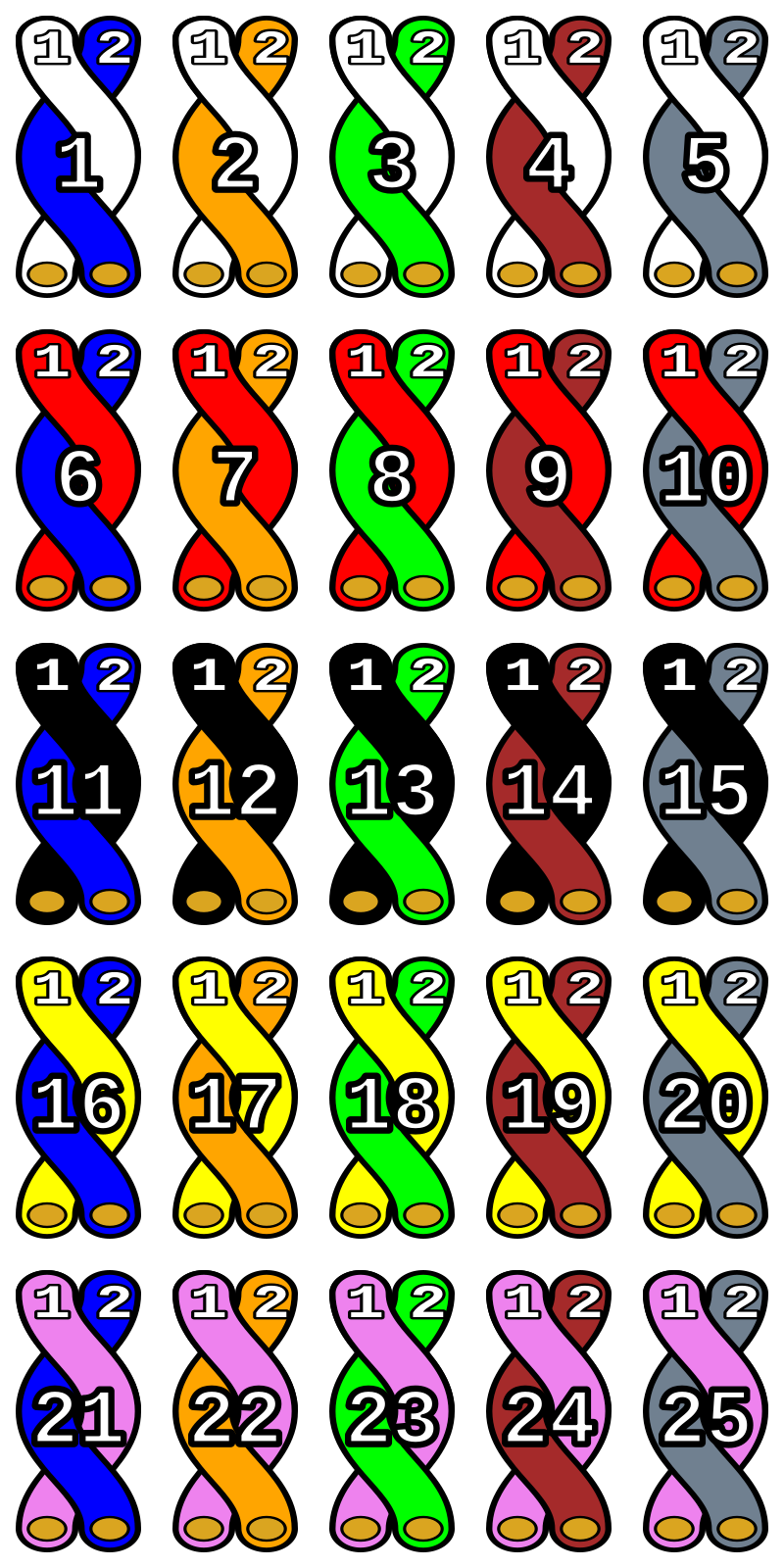
twisted-pair cable
electrical data cable consisting of several twisted pairs
carrier wave
waveform (usually sinusoidal) that is modulated (modified) with an input signal for the purpose of conveying information
superheterodyne receiver
common type of radio receiver that shifts the received signal to an easily-processed intermediate frequency

transponder
thumb|right|120px|An Ontario Highway 407 toll transponder circa 2009
phase-locked loop
control system generating an output signal whose phase is fixed relative to the phase of the input signal, keeping input and output frequencies the same
duplex communication
communication flowing in both directions simultaneously
frequency mixer
nonlinear electrical circuit that creates new frequencies from two signals applied to it
Moscow–Washington hotline
system that allows direct communication between the leaders of the United States and Russia
automatic gain control
electronic circuit to automatically adjust signal strength
loopback
Loopback (also written loop-back) is the routing of electronic signals or digital data streams back to their source without intentional processing or modification. It is primarily a means of testing the communications infrastructure.
virtual circuit
means of transporting data over a packet-switched network so as to emulate a dedicated physical link between nodes
leased line
private telecommunications circuit
simplex communication
communication channel that sends information in one direction only
telecommunications link
communications channel that connects two or more communicating devices
phase detector
frequency mixer, analog multiplier or logic circuit that generates a voltage signal which represents the difference in phase between two signal inputs; part of a phase-locked loop
differential signaling
method for electrically transmitting information using two complementary signals
trunking
In telecommunications, trunking is a technology for providing network access to multiple clients simultaneously by sharing a set of circuits, carriers, channels, or frequencies, instead of providing individual circuits or channels for each client. This is reminiscent to the structure of a tree with one trunk and many branches. Trunking in telecommunication originated in telegraphy, and later in telephone systems where a trunk line is a communications channel between telephone exchanges.
balanced line
signalling
loading coil
electronics circuit extension
automatic frequency control
radio circuit
Envelope detector
electronic circuit that takes a high-frequency amplitude modulated signal as input and provides an output which is the envelope of the original signal
frequency synthesizer
electronic system for generating any of a range of frequencies
Beat frequency oscillator
device to convert Morse code radio signals into audible tones
frequency multiplier
electronic circuit that generates an output signal whose output frequency is a harmonic of its input frequency

Echo cancellation
preventing or removin echo in telephony
Current loop
electrical signalling scheme
Foreign exchange service#Foreign eXchange Station
connection of a phone to a non-local office
Digital current loop interface
serial communications scheme
variable-frequency oscillator
oscillator whose frequency can be tuned over some range
Network On Chip
communication subsystem on an integrated circuit
Orthomode transducer
Component for guiding radio waves
Seoul-Pyongyang hotline
direct communication system between South Korea and North Korea
Single-ended signaling
signal transmission mechanism in wires
Costas loop
phase-locked loop based demodulator circuit
coupling
transfer of energy from one electrical medium or circuit segment to another
Phantom circuit
Circuit within a circuit