Category
page 1Computer architecture

random-access memory
form of computer data storage
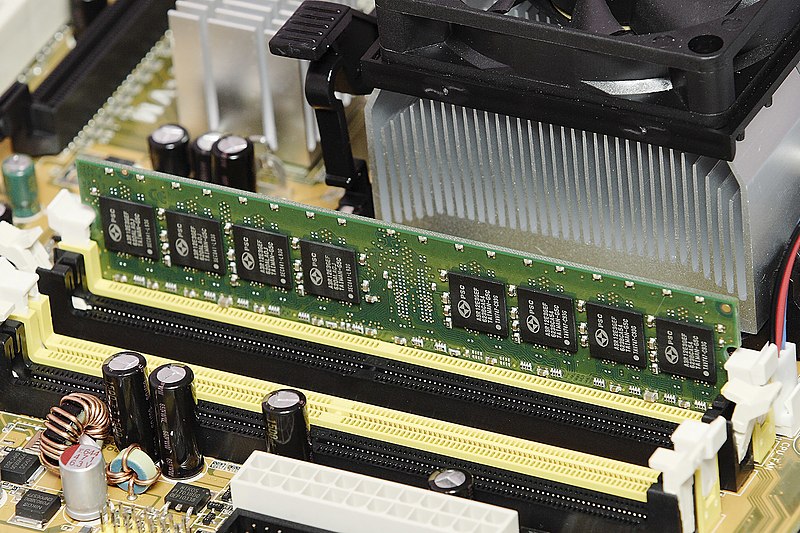
computer storage media
storage of digital data readable by computers

computer architecture
set of rules and methods that describe the functionality, organization and implementation of computer systems

cache
computing component that transparently stores data so that future requests for that data can be served faster

von Neumann architecture
computer architecture using a common memory bus and address space for instructions and data

arithmetic logic unit
combinational digital circuit that performs arithmetic and bitwise operations on binary-coded integer numbers

processor register
immediately accessible working storage available as part of a digital processor
Harvard architecture
computer architecture where code and data each have a separate bus
multi-core processor
microprocessor with more than one processing unit

scalability
Scalability is the property of a system to handle a growing amount of work. One definition for software systems specifies that this may be done by adding resources to the system.
memory management
computer resource management of memory, involving allocation and deallocation
superscalar processor
CPU that implements instruction-level parallelism within a single processor
address space
range of discrete addresses, each of which may correspond to a network host, peripheral device, disk sector, a memory cell or other logical or physical entity
shared memory
memory that may be simultaneously accessed by multiple programs with an intent to provide communication among them or avoid redundant copies
addressing mode
part of the instruction architecture in most processors that determines how machine language instructions find the data they need.
memory hierarchy
computer architecture that classifies memory/storage into a hierarchy based on response time
register renaming
technique that eliminates the false data dependencies arising from the reuse of architectural registers by successive instructions that do not have any real data dependencies between them
abstraction layer
way of hiding details of a computing subsystem, allowing separation of concerns and interoperability
stream processing
programming paradigm which gives some degree of parallel processing
load/store architecture
type of instruction set architecture
simultaneous multithreading
technique for improving the overall efficiency of superscalar CPUs with hardware multithreading
register file
array of processor registers in a central processing unit; usually implemented by fast static RAMs with multiple ports
dataflow architecture
computer architecture that lack a program counter, in which the executability and execution of instructions is solely determined based on the availability of input arguments to the instructions, with unpredictable execution order
dataflow
In computing, dataflow is a broad concept, which has various meanings depending on the application and context. In the context of software architecture, data flow relates to stream processing or reactive programming.
modified Harvard architecture
computer architecture treating code and data similarly, though not usually identically
open architecture
type of computer architecture or software architecture intended to make adding, upgrading, and swapping components easy
Popek and Goldberg virtualization requirements
set of conditions sufficient for a computer architecture to support system virtualization efficiently
register memory architecture
a computer instruction set architecture
Transport triggered architecture
type of computer processor design
NonStop
family of fault-tolerant servers
computational RAM
random-access memory with processing elements integrated on the same chip
Load-store unit
part of a computer system
responsiveness
thumb|300px|Responsiveness requires a low latency/delay of the entire input-output-loop.
temporal multithreading
Concept in computer hardware
frequency scaling
increasing a processor's frequency to enhance performance
SpiNNaker
SpiNNaker (spiking neural network architecture) is a massively parallel, manycore supercomputer architecture designed by the Advanced Processor Technologies Research Group (APT) at the Department of Computer Science, University of Manchester. It is composed of 57,600 processing nodes, each with 18 ARM9 processors (specifically ARM968) and 128 MB of mobile DDR SDRAM, totalling 1,036,800 cores and over 7 TB of RAM. The computing platform is based on spiking neural networks, useful in simulating the human brain (see Human Brain Project).
Cache control instruction
Computer memory management instruction
byte addressing
support by a hardware architecture of accessing individual bytes of data in memory
Cellular architecture
type of computer architecture prominent in parallel computing.
approximate computing
computation of possibly inaccurate results, but typically faster and more energy efficient
IBM System/360 architecture
model independent architecture for the S/360 line of mainframe computers,
computer architecture simulator
program that simulates the execution of computer architecture
Memory ordering
order of accesses to computer memory by a CPU
SIMT
execution model used in parallel computing
many-core processor
multi-core processor with a large number of cores
cache hierarchy
memory hierarchy concept applied to CPU caches with multiple levels
reference model
domain-specific, abstract framework or ontology
comparison of instruction set architectures
Wikimedia list article