Category
page 1Computer networking

Tor
daemon and utilities for an anonymizing network
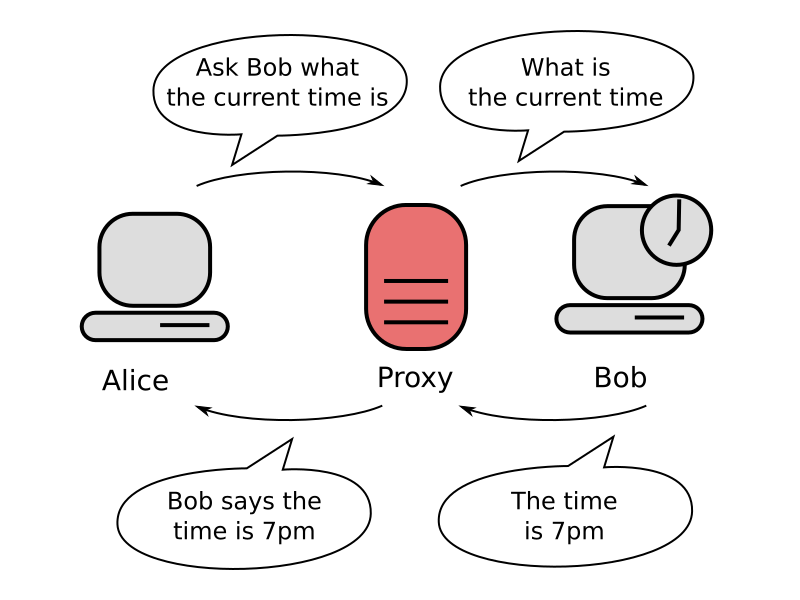
proxy server
computer server that makes and receives requests on behalf of a user

download
In computer networks, download means to receive data from a remote system, typically a server such as a web server, an FTP server, an email server, or other similar systems. This contrasts with uploading, where data is sent to a remote system.
A download is a file offered for downloading or that has been downloaded, or the process of receiving such a file.

data center
building or room where computer servers and related equipment are operated

packet switching
method for transmitting data over a computer network
node
device or point within a network capable of creating, receiving, or transmitting data
upload
Uploading refers to transmitting data from one computer system to another through means of a network. Common methods of uploading include: uploading via web browsers, FTP clients, and terminals (SCP/SFTP). Uploading can be used in the context of (potentially many) clients that send files to a central server. While uploading can also be defined in the context of sending files between distributed clients, such as with a peer-to-peer (P2P) file-sharing protocol like BitTorrent, the term file sharing is more often used in this case. Moving files within a computer system, as opposed to over a netwo
networking hardware
devices that mediate data in a computer network
power-line communication
communication method that uses electrical wiring to simultaneously carry both data and electric power

I2P
The Invisible Internet Project (I2P) is an anonymous network layer (implemented as a mix network) that allows for censorship-resistant, peer-to-peer communication. Anonymous connections are achieved by encrypting the user's traffic (by using end-to-end encryption), and sending it through a volunteer-run network of roughly 55,000 computers distributed around the world. Given the high number of possible paths the traffic can transit, a third party watching a full connection is unlikely. The software that implements this layer is called an "I2P router", and a computer running I2P is called an "I2
Fast Ethernet
Ethernet standards that carry traffic at the nominal rate of 100 Mbit/s
session
temporary context for interactive information interchange
decentralized autonomous organization
computer network organization model
routing protocol
network protocol for distributing routing information to network equipment
smart device
electronic device connected via different wireless protocols to its environment
hostname
In computer networking, a hostname (archaically nodename) is a label that is assigned to a device connected to a computer network and that is used to identify the device in various forms of electronic communication, such as the World Wide Web. Hostnames may be simple names consisting of a single word or phrase, or they may be structured. Each hostname usually has at least one numeric network address associated with it for routing packets for performance and other reasons.
overlay network
computer network which is built on top of another network
content-addressable memory
special type of computer memory used in certain very-high-speed searching applications

sneakernet
thumb|right|A USB flash drive allows the transfer of data between individuals without use of the Internet.
thumb|Memory cards are a popular physical medium for transferring files and have become smaller in size as technology has advanced.
Windows domain
logical, hierarchical collection of security principles sharing a central directory database
slashdot effect
effect that occurs when a popular website links to a smaller website, causing a massive increase in traffic

QUIC AES_128GCM
QUIC () is a general-purpose transport layer network protocol initially designed by Jim Roskind at Google. It was first implemented and deployed in 2012 and was publicly announced in 2013 as experimentation broadened. It was also described at an IETF meeting. QUIC is supported by major web browsers, including Chrome, Edge, Firefox, and Safari. In Chrome, QUIC is used by more than half of all connections to Google's servers.
home network
computer network that facilitates communication among devices near a home
ns-3
discrete event network simulator

failover
thumb|4G cellular failover for network resiliency
connectionless communication
data transmission method in packet switching networks in which each data unit is individually addressed and routed

P2PTV
thumb|right|P2PTV overlay network serving three video streams.
P2PTV refers to peer-to-peer (P2P) software applications designed to redistribute video streams in real time on a P2P network; the distributed video streams are typically TV channels from all over the world but may also come from other sources. The draw to these applications is significant because they have the potential to make any TV channel globally available by any individual feeding the stream into the network where each peer joining to watch the video is a relay to other peer viewers, allowing a scalable distribution among a

Network Driver Interface Specification
in computing, an application programming interface for network interface cards
SMDS
Data network protocol

Open Compute Project
organization
Vyatta
Vyatta is a software-based virtual router, virtual firewall and VPN product for Internet Protocol networks (IPv4 and IPv6). A free download of Vyatta has been available since March 2006. The system is a specialized Debian-based Linux distribution with networking applications such as Quagga, OpenVPN, and many others. A standardized management console, similar to Juniper JUNOS or Cisco IOS, in addition to a web-based GUI and traditional Linux system commands, provides configuration of the system and applications. In recent versions of Vyatta, web-based management interface is supplied only in th
hop (networking)
when a packet is passed from one network segment to the next
global network
Communication network covering the Earth
heterogeneous network
network connecting computers and other devices with different operating systems and/or protocols
timeout
specified period of time that will be allowed to elapse in a system before a specified event is to take place
web container
component of Java web server
sideloading
Sideloading is the process of transferring files between two local devices, in particular between a personal computer and a mobile device such as a mobile phone, smartphone, PDA, tablet, portable media player or e-reader.
Junos
real-time operating system (RTOS) software
network delay
time required for data to traverse a network
DirectPlay
DirectPlay is part of Microsoft's DirectX API. It is a network communication library intended for computer game development, although it can be used for other purposes.
Nym Mixnet
virtual private network
connection-oriented communication
network mode where a semi-permanent session is set up before data transfer, and data is delivered in the order it was sent
Cut-through switching
packet switching method
Network On Chip
communication subsystem on an integrated circuit
Service Data Objects
java library
RapidIO
RapidIO is a packet-switched interconnect technology used to link electronic components. It allows devices to exchange messages, perform read and write operations, and maintain cache coherence. RapidIO follows common electrical standards, such as those used in Ethernet, and can connect chips, circuit boards, or entire systems together.
== History ==
The RapidIO Trade Association was founded around February 2000 with early members such as Cisco Systems, Galileo Technology, HAL Computer Systems, Lucent Technologies, Mercury Computer Systems, Motorola, Nortel Networks, Seagull Semiconductor, Tund
network block device
network storage protocol
computer network diagram
schematic depicting the nodes and connections amongst nodes in a computer network
fixed-mobile convergence
change in telecommunications that removes differences between fixed and mobile networks
network simulation
simulating computer networks
message switching
NPL network
historical network in England pioneering packet switching
Decentralized network 42
dn42 is a decentralized peer-to-peer network built using VPNs and software/hardware BGP routers.
keepalive
A keepalive (KA) is a message sent by one device to another to check that the link between the two is operating, or to prevent the link from being broken.
Ethernet over USB
using a USB connection to transfer Ethernet data
OMNeT++
OMNeT++ (Objective Modular Network Testbed in C++) is a modular, component-based C++ simulation library and framework, primarily for building network simulators. OMNeT++ can be used for free for non-commercial simulations like at academic institutions and for teaching. OMNEST is an extended version of OMNeT++ for commercial use.
network forensics
sub-branch of digital forensics
QualNet
QualNet is a commercial network simulation tool owned by Keysight Technologies (formerly Scalable Network Technologies).
VyOS
VyOS is an open source network operating system Linux distribution based on Debian.

radio access technology
physical connection method for a radio communication network