Category
page 1Computer-related introductions in 1989

Internet
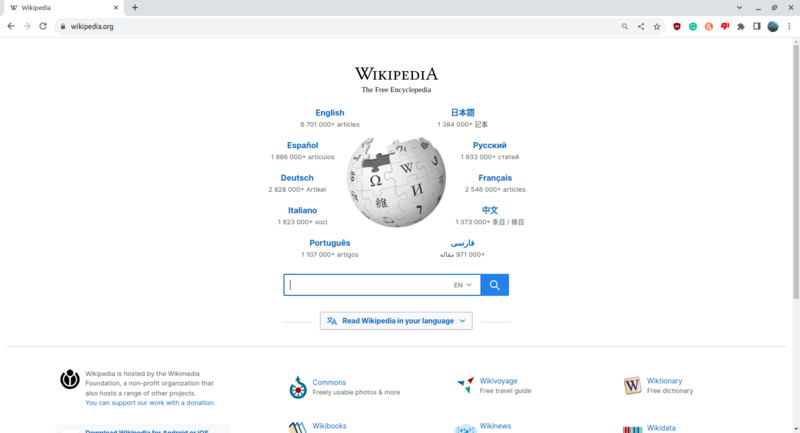
World Wide Web
global system of interlinked hypertext documents accessed via the Internet

internet service provider
organization that provides access to the Internet

web design
creation and maintenance of websites
Atari Lynx
handheld game console developed by Atari Corporation and Epyx

Intel 80486
The Intel 486, officially named i486 and also known as 80486, is a microprocessor introduced in 1989. It is a higher-performance follow-up to the Intel 386. It represents the fourth generation of binary compatible CPUs following the 8086 of 1978, the Intel 80286 of 1982, and 1985's i386.

Profibus
thumb|Profibus electrical connector
skip list
data structure that allows fast search within an ordered sequence of elements
Macintosh Portable
portable computer by Apple
FM Towns
Japanese personal computer
X PixMap
image file format
ISO/IEC 8859-9
standard
EPOC
operating system
SAM Coupé
home computer
Macintosh SE/30
personal computer by Apple
Cupertino effect
tendency of a spell checker to suggest or autocorrect with inappropriate words to replace misspelled words and words not in its dictionary

SBus
thumb|right|Two SBus cards
thumb|right |upright=1.8 |SBus male connector
SBus is a computer bus system that was used in most SPARC-based computers (including all SPARCstations) from Sun Microsystems and others during the 1990s. It was introduced by Sun in 1989 to be a high-speed bus counterpart to their high-speed SPARC processors, replacing the earlier (and by this time, outdated) VMEbus used in their Motorola 68020- and 68030-based systems and early SPARC boxes. When Sun moved to open the SPARC definition in the early 1990s, SBus was likewise standardized and became IEEE-1496. In 1997 Sun st
Macintosh IIci
personal computer by Apple

Motorola MicroTAC
The MicroTAC is a series of cellular phones that was marketed by Motorola from 1989 until approximately 2000. The MicroTACs pioneered a new "flip" design in cellular handsets that was considered innovative and more compact compared to previous "brick" phones, such as Motorola's own DynaTAC line.
DOS Protected Mode Interface
API for MS-DOS allowing programs to access protected mode on 386 (and later) CPUs
Inter-Client Communication Conventions Manual
standard for interoperability between X Window System clients of the same X server.
Macintosh IIcx
personal computer by Apple
SPARCstation
right|thumb|Sun SPARCstation 1+ "pizzabox", 25 MHz SPARC processor, early 1990s
thumb|SPARCstation Voyager
The SPARCstation, SPARCserver and SPARCcenter product lines are a series of SPARC-based computer workstations and servers in desktop, desk side (pedestal) and rack-based form factor configurations, that were developed and sold by Sun Microsystems.
MAŤO
The Maťo (Matthew) was an 8-bit personal computer produced in the former Czechoslovakia by Štátny majetok Závadka š.p., Závadka nad Hronom, from 1989 to 1992. Their primary goal was to produce a personal computer as cheaply as possible, and therefore it was also sold as a self-assembly kit. It was basically a modified PMD 85, but without backward compatibility. This, combined with its late arrival to the market, made the MAŤO a commercial failure.
Poisk
personal computer
Mac OS Roman
character encoding created by Apple
Atari STacy
computer model
DECstation
thumb|right|250px|The model identification "medallion" of a DECstation 5000 Model 120
thumb|right|250px|DECstation 5000 Model 200 with top cover removed
Pentagon
home computer from the Soviet Union
Intel 80376
variant of the Intel 80386SX intended for embedded systems ( introduced January 16, 1989)
SPARCstation 1
Early 90s personal computer
Acer TravelMate
series of business-oriented computer notebooks manufactured by Acer.
GRiDPad
thumb|GridPad 2260 in "laptop" mode
Open Document Architecture
free and open international standard document file format