Category
page 1Computer-related introductions in 1999

macOS
macOS (previously OS X and originally Mac OS X) is a proprietary Unix operating system, derived from OPENSTEP for Mach and FreeBSD, which has been marketed and developed by Apple since 2001. It is the current operating system for Apple's line of Mac computers. Within the market of desktop and laptop computers, it is currently the second most widely used desktop OS, after Microsoft Windows and ahead of all Linux distributions, including ChromeOS and SteamOS. , the most recent release of macOS is macOS 26 Tahoe, the 22nd major version of macOS.

BlackBerry
BlackBerry (BB) is a discontinued brand of mobile devices and related mobile services, originally developed and maintained by the Canadian company Research In Motion (RIM, later known as BlackBerry Limited) until 2016. The first BlackBerry was a two-way pager, Inter@ctive Pager 950, launched in 1999 in North America, running on the Mobitex network (later also DataTAC) and became very popular because of its "always on" state and ability to send and receive email messages wirelessly. The BlackBerry pioneered push notifications and popularized the practice of "thumb typing" using its QWERTY keybo

Dreamcast
thumb|130px|Alternative Dreamcast logo used in PAL territories
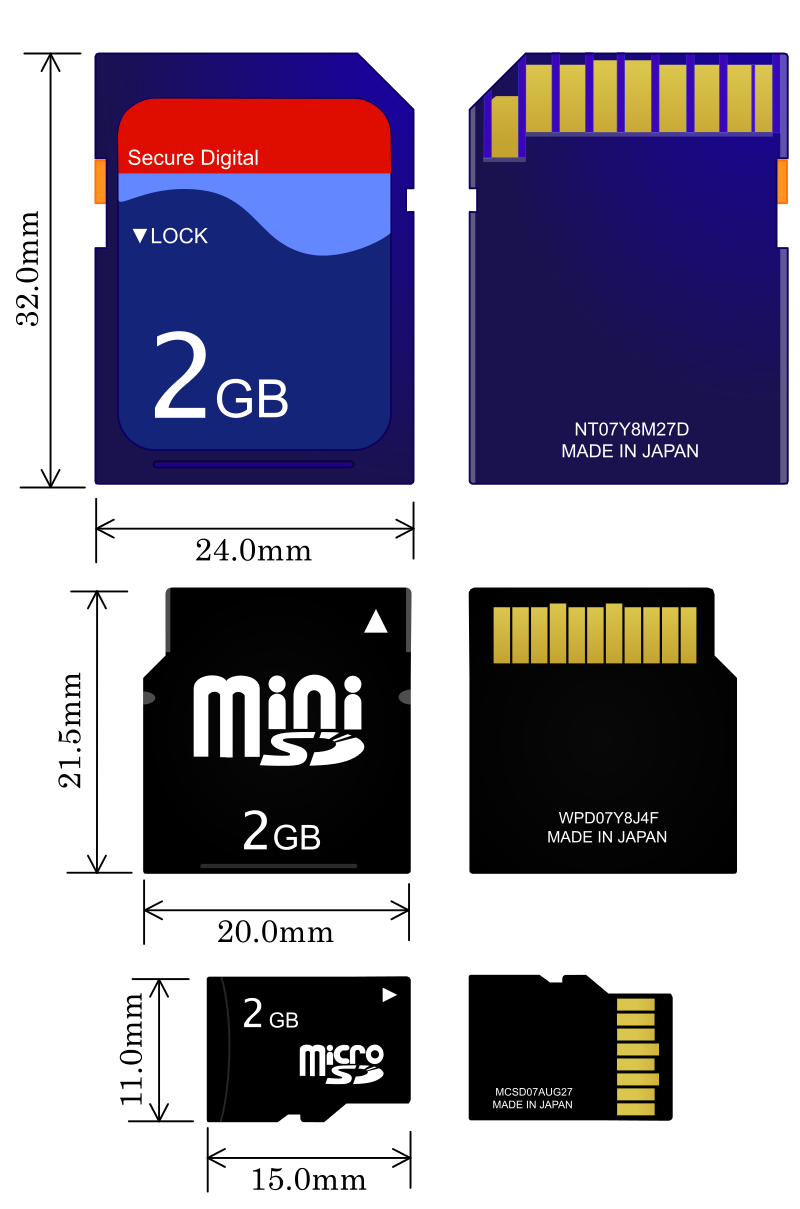
SD card
removable memory storage for portable devices
Digital Visual Interface
standard for transmitting digital video to a display
Pentium III
line of desktop and mobile microprocessors produced by Intel
.svg)
GeForce
GeForce is a brand of graphics processing units (GPUs) designed by Nvidia and marketed for the performance market. As of the GeForce 50 series, there have been nineteen iterations of the design. In August 2017, Nvidia stated that "there are over 200 million GeForce gamers".

iBook
iBook is a line of laptop computers designed, manufactured, and sold by Apple Computer from 1999 to 2006. The line targeted entry-level, consumer and education markets, with lower specifications and prices than the PowerBook, Apple's higher-end line of laptop computers. It was the first mass consumer product to offer Wi-Fi network connectivity, which was then branded by Apple as AirPort.

Athlon
thumb|Logo used since 2018 for Zen-based Athlon processors
thumb|Original AMD Athlon logo

WonderSwan
The is a handheld game console released in Japan by Bandai. Developed in collaboration with Gunpei Yokoi's company Koto Laboratory, it was the final piece of hardware Yokoi worked on before his death in 1997. Launched in Japan in March 1999 during the sixth generation of video game consoles, the WonderSwan was followed by two upgraded models, the WonderSwan Color and SwanCrystal, before Bandai discontinued the line in 2003. Throughout its lifespan, no version of the WonderSwan was officially released outside Japan.
7z
7z is a compressed archive file format that supports several different data compression, encryption and pre-processing algorithms. The 7z format initially appeared as implemented by the 7-Zip archiver. The 7-Zip program is publicly available under the terms of the GNU Lesser General Public License. The LZMA SDK 4.62 was placed in the public domain in December 2008. The latest stable version of 7-Zip and LZMA SDK is version 26.00.

AirPort
AirPort is a discontinued line of wireless routers and network cards developed by Apple Inc. using Wi-Fi protocols. In Japan, the line of products was marketed under the brand AirMac due to previous registration by I-O Data.
PocketStation
The PocketStation is a memory card peripheral by Sony Computer Entertainment for the PlayStation home video game console. It was released in Japan in 1999. The device acted not only as a memory card but was interactive itself via a small monochrome LCD and buttons on its case. Many PlayStation games included software that could be downloaded and played on the PocketStation. A release in Europe and North America was planned but was ultimately canceled. The PocketStation shares similarities with Sega's VMU for the Dreamcast.
Gigabit Ethernet
standard for Ethernet networking at a data rate of 1 gigabit per second
Linus's Law
claim about software development that given a large developer base, bugs will be fixed quickly
AMD K6-III
family of x86 microprocessors introduced in 1999
Apple Cinema Display
series of computer monitors sold by Apple Inc.
GeForce 256
series of GPUs

Microdrive
The Microdrive was a miniature, one-inch hard disk drive released in 1998 by IBM. The idea was originally created in 1992 by Timothy J. Riley and Thomas R. Albrecht at the Almaden Research Center in San Jose. A team of engineers and designers at IBM's Fujisawa, Japan facility helped make the creation of the drive possible.
MHTML
MHTML, an initialism of "MIME encapsulation of aggregate HTML documents", is a web archiving file format used to combine, in a single computer file, the HTML code and its companion resources (such as images) that are represented by external hyperlinks in the web page's HTML code. The content of an MHTML file is encoded using the same techniques that were first developed for HTML email messages, using the MIME content type multipart/related. MHTML files use an .mhtml or .mht filename extension.
RIVA TNT2
graphics processing unit
Chemical Markup Language
markup language and file format
Sun Ray
stateless thin client solution aimed at corporate environments
Acer Aspire
product line of desktop and laptop computers
Open eBook
legacy e-book format
FlexATX
[[File:Atxscale.svg|thumb|ATX motherboard size comparison; rear is on left.
Matrox G400
video card by Matrox
PocketZip
The PocketZip is a medium-capacity floppy disk storage system introduced by Iomega in 1999. It uses very small 54.5mm x 50.2mm x 2.0mm 40 MB disks. It was originally known as the "Clik!" drive until the click of death class action lawsuit regarding mass failures of Iomega's original Zip drives, after which it was renamed "PocketZip". In 2001, the company announced bigger-capacity 100 MB disks, which were never released.
Extended MMX
extension to MMX instruction set