Category
page 1Computer security exploits
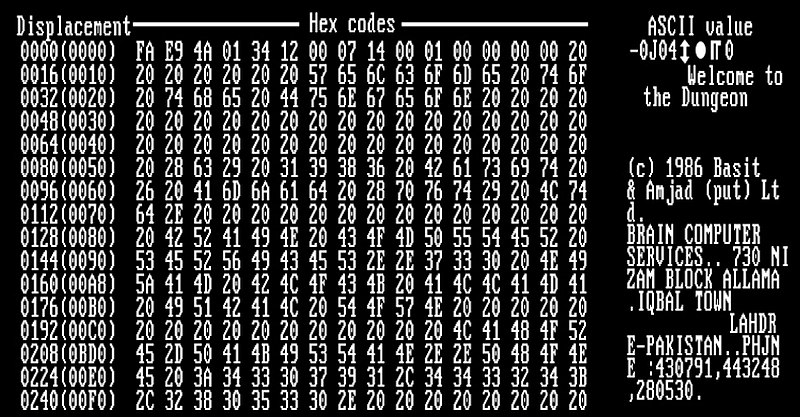
computer virus
type of computer program that, when executed, replicates itself by modifying other computer programs and inserting its own code

WannaCry ransomware attack
ransomware cyberattack

Heartbleed
Heartbleed is a security bug in some outdated versions of the OpenSSL cryptography library, which is a widely used implementation of the Transport Layer Security (TLS) protocol. It was introduced into the software in 2012 and publicly disclosed in April 2014. Heartbleed could be exploited regardless of whether the vulnerable OpenSSL instance is running as a TLS server or client. It resulted from improper input validation (due to a missing bounds check) in the implementation of the TLS heartbeat extension. Thus, the bug's name derived from heartbeat. The vulnerability was classified as a buffer
buffer overflow
anomaly in computer security and programming that could be exploited as a security vulnerability
exploit
software, data or commands that use a bug or vulnerability to compromise a computer system
port scanner
application designed to probe for open ports
pharming
Pharming is a cyberattack intended to redirect a website's traffic to another, fake site by installing a malicious program on the victim's computer in order to gain access to it. Pharming can be conducted either by changing the hosts file on a victim's computer or by exploitation of a vulnerability in DNS server software. DNS servers are computers responsible for resolving Internet names into their real IP addresses. Compromised DNS servers are sometimes referred to as "poisoned". Pharming requires unprotected access to target a computer, such as altering a customer's home computer, rather tha
race condition
situation in computer system that occurs when multiple processes try to access a common resource
payload
content of a message excluding headers and metadata
Common Vulnerabilities and Exposures
a list of publicly known cybersecurity vulnerabilities

wardriving
thumb|upright|A free public Wi-Fi access point in 2007
proof of concept
realization of a certain method or idea in order to demonstrate its feasibility
Vault 7
series of documents released by WikiLeaks in 2017
Shellshock
security bug in the Unix Bash shell
integer overflow
in programming, a condition that occurs when an arithmetic operation attempts to create a numeric value that is outside of the range that can be represented with a given number of digits
EternalBlue
EternalBlue is computer exploit software developed by the U.S. National Security Agency (NSA). It is based on a zero-day vulnerability in Microsoft Windows software that allowed users to gain access to any number of computers connected to a network. The NSA was aware of this vulnerability but did not disclose it to Microsoft for several years, as it intended to use the exploit as part of its offensive cyber operations. In 2017, the NSA discovered that the software had been stolen by a group of hackers known as the Shadow Brokers. Microsoft might have been informed of this and released security
voice phishing
form of criminal phone fraud, using social engineering over the telephone system to gain access to private personal and financial information for the purpose of financial reward

swatting
thumb|An FBI SWAT team during training
Log4Shell
Log4Shell (CVE-2021-44228) is a vulnerability reported in November 2021 in Log4j, a popular Java logging framework, involving arbitrary code execution and exploited as a zero-day vulnerability. The vulnerability had existed unnoticed since 2013 and was privately disclosed to the Apache Software Foundation, of which Log4j is a project, by Chen Zhaojun of Alibaba Cloud's security team on 24 November 2021.
return-oriented programming
computer security exploit technique that manipulates the call stack to hijack control flow
null character
control character whose bits are all 0
DNS spoofing
cyberattack in which corrupt DNS data is introduced into the DNS resolver's cache, causing the name server to return an incorrect result record, e.g. an IP address, diverting traffic to the attacker
dangling pointer
pointer that does not point to a valid object

KRACK
KRACK ("Key Reinstallation Attack") is a replay attack (a type of exploitable flaw) on the Wi-Fi Protected Access protocol that secures Wi-Fi connections. It was discovered in 2016 by the Belgian researchers Mathy Vanhoef and Frank Piessens of the University of Leuven. Vanhoef's research group published details of the attack in October 2017. By repeatedly resetting the nonce transmitted in the third step of the WPA2 handshake, an attacker can gradually match encrypted packets seen before and learn the full keychain used to encrypt the traffic.
drive-by download
unintended download of computer software from the Internet, either ① which a person has authorized but without understanding the consequences or ② download that happens without a person's knowledge, often a computer virus, spyware, malware
XZ Utils backdoor
backdoor discovered in 2024
memory safety
state of being protected from memory access bugs
dynamic linker
feature of an operating system that loads shared libraries and links them with a runnable software unit

Warchalking
thumb|Warchalking symbols
Warchalking is the drawing of symbols in public places to advertise an open Wi-Fi network.
Inspired by hobo symbols, the warchalking marks were conceived by a group of friends in June 2002 and published by Matt Jones who designed the set of icons and produced a downloadable document containing them. Within days of Jones publishing a blog entry about warchalking, articles appeared in dozens of publications and stories appeared on several major television news programs around the world.
POODLE
POODLE (which stands for "Padding Oracle On Downgraded Legacy Encryption") is a security vulnerability which takes advantage of the fallback to SSL 3.0. If attackers successfully exploit this vulnerability, on average, they only need to make 256 SSL 3.0 requests to reveal one byte of encrypted messages. Bodo Möller, Thai Duong and Krzysztof Kotowicz from the Google Security Team discovered this vulnerability; they disclosed the vulnerability publicly on October 14, 2014 (despite the paper being dated "September 2014"). On December 8, 2014, a variation of the POODLE vulnerability that affected

server-side request forgery
type of computer exploit where an attacker abuses the functionality of a server causing it to access or manipulate information in the realm of that server that would otherwise not be directly accessible to the attacker
row hammer
Computer security exploit
return-to-libc attack
computer security attack in which a subroutine return address on a call stack is replaced by an address of a subroutine already present in executable memory, bypassing the no-execute bit
Mimikatz
Mimikatz is both an exploit on Microsoft Windows that extracts passwords stored in memory and software that performs that exploit. It was created by French programmer Benjamin Delpy and is French slang for "cute cats".
heap overflow
type of buffer overflow
war dialing
Wardialing (or war dialing) is a technique to automatically scan a list of telephone numbers, usually dialing every number in a local area code to search for modems, computers, bulletin board systems (computer servers) and fax machines. Hackers use the resulting lists for various purposes: hobbyists for exploration, and crackers—malicious hackers who specialize in breaching computer security—for guessing user accounts (by capturing voicemail greetings), or locating modems that might provide an entry-point into computer or other electronic systems. It may also be used by security personnel, for
prompt injection
computer security attack against language-processing systems
stack buffer overflow
software anomaly
Stagefright
software bug in Android
Dirty COW
computer security vulnerability
threat
a possible danger that might exploit a computer vulnerability to breach security and therefore cause possible harm

format string attack
type of software vulnerability

vulnerability management
cyclical practice of identifying, classifying, prioritizing, remediating, and mitigating software vulnerabilities
covert channel
type of computer security attack that creates a capability to transfer information objects between processes that are not supposed to be allowed to communicate

virus hoax
message warning the recipients of a non-existent computer virus threat
Project 25
Standards for public safety digital mobile radio used in North America

buffer overflow protection
software security technique
cache poisoning
attack in which invalid entiries are placed into a cache
2021 Microsoft Exchange Server data breach
series of cyberattacks exploiting Microsoft's email and calendar server software
TCP reset attack
type of computer security exploit
DoublePulsar
thumb | right
DoublePulsar is a backdoor implant tool developed by the U.S. National Security Agency's (NSA) Equation Group that was leaked by The Shadow Brokers in early 2017. The tool infected more than 200,000 Microsoft Windows computers in only a few weeks, and was used alongside EternalBlue in the May 2017 WannaCry ransomware attack. A variant of DoublePulsar was first seen in the wild in March 2016, as discovered by Symantec.
responsible disclosure
ethical vulnerability disclosure model in which a vulnerability or an issue is withheld from public disclosure until it has been patched or after a period of time
time-of-check to time-of-use
class of software bugs
BlueKeep
BlueKeep () is a security vulnerability that was discovered in Microsoft's Remote Desktop Protocol (RDP) implementation, which allows for the possibility of remote code execution.
Idle scan
computer-related activity
Cloudbleed
Cloudbleed was a Cloudflare buffer overflow disclosed by Project Zero on February 17, 2017. Cloudflare's code disclosed the contents of memory that contained the private information of other customers, such as HTTP cookies, authentication tokens, HTTP POST bodies, and other sensitive data. As a result, data from Cloudflare customers was leaked to all other Cloudflare customers that had access to server memory. This occurred, according to numbers provided by Cloudflare at the time, more than 18,000,000 times before the problem was corrected. Some of the leaked data was cached by search engines.
BlueBorne
Bluetooth vulnerability, an attack vector
Windows Metafile vulnerability
security vulnerability in the way some versions of the Microsoft Windows operating system handled images in the Windows Metafile format
Armitage
Cyber attack management for Metasploit
threat modelling
process by which potential threats, such as structural vulnerabilities can be identified, enumerated, and prioritized – all from a hypothetical attacker’s point of view