Category
page 1Conflicts in 1939

World War II
World War II, or the Second World War, was a global conflict between two coalitions: the Allies and the Axis powers. Nearly all of the world's countries participated. Tanks and aircraft played major roles, the latter enabling the strategic bombing of cities and delivery of the only nuclear weapons used in war. World War II was the deadliest conflict in history, causing the death of 60 to 75 million people. Millions died as a result of massacres, starvation, disease, and genocides, including the Holocaust. After the Allied victory, Germany, Austria, Japan, and Korea were occupied, and German and Japanese leaders were tried for war crimes.
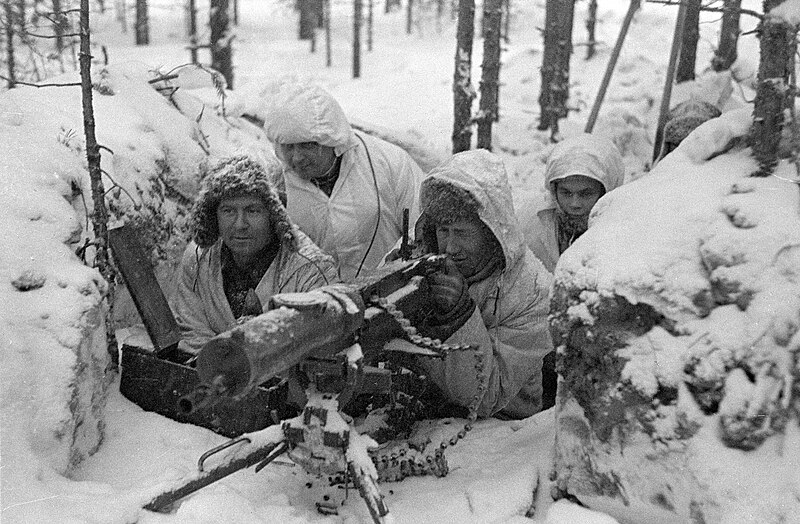
Winter War
1939–1940 war between the Soviet Union and Finland

1939 Invasion of Poland
German, Soviet, and Slovak attack on and takeover of Poland that marked the start of World War II

Phoney War
eight-month period at the start of World War II, during which there was only one limited military land operation on the Western Front

Soviet invasion of Poland
large-scale military attack performed by the USSR on the Second Polish Republic year 1939

Battles of Khalkhin Gol
1939 Soviet–Japanese battle in Mongolia
Battle of the River Plate
1939 first naval battle of the Second World War

Italian invasion of Albania
1939 World War II invasion
Saar Offensive
French ground operation into Saarland from 7 to 16 September 1939
1936–1939 Arab revolt in Palestine
nationalist uprising by Palestinian Arabs in Mandatory Palestine
occupation of Czechoslovakia
German military presence in Czechoslovakia between 1939–1945
Battle of Changsha
1939 first of four attempts by Japan to take the city of Changsha during the second Sino-Japanese War
Battle of Tolvajärvi
1939 first large offensive victory for the Finns in the Winter War
Slovak invasion of Poland
event during Nazi Germany's invasion of Poland in September 1939
Defence of the Reich
1939 strategic defensive aerial campaign fought by the Luftwaffe over German-occupied Europe and Germany itself during World War II
Catalonia Offensive
1938 battle in the Spanish war
Battle of Nanchang
1939 battle of the Second Sino-Japanese war
Battle of the Heligoland Bight
1939 first major aerial battle of the Second World War
Baltic Sea campaigns
1939–45 part of the Eastern Front during WWII
Bombing of Chongqing
1938 military campaign
Battle of Petsamo
military battle in 1939
Battle of South Guangxi
1939 battle
1939–1940 Winter Offensive
1939 military offensive of the Second Sino-Japanese War
Battle of Tuchola Forest
1939 battle
Battle of Barking Creek
aviation accident
Battle of Kunlun Pass
1939 battle
Battle of Suixian–Zaoyang
1939 battle
final offensive of the Spanish Civil War
1939 campaign in the Iberian Peninsula
Battle of Minorca
1939 act of the Spanish Civil War
Battle of Czajánek's barracks
1939 battle
Hainan Island Operation
1939 Japanese campaign in the Second Sino-Japanese War
Spanish coup of March 1939
Spanish coup d'état
Bombing of Xàtiva
1939 aerial bombing of a city
Cartagena uprising
1939 unsuccessful uprising against the Republican government of Juan Negrín in Cartagena, Spain
1939 Liechtenstein putsch
Failed 1939 coup attempt in Liechtenstein
S-Plan
The S-Plan or Sabotage Campaign or England Campaign was a campaign of bombing and sabotage against the civil, economic and military infrastructure of the United Kingdom from 1939 to 1940, conducted by members of the Irish Republican Army (IRA). It was conceived by Seamus O'Donovan in 1938 at the request of then IRA Chief of Staff Seán Russell. Russell and Joseph McGarrity are thought to have formulated the strategy in 1936. During the campaign there were 300 explosions/acts of sabotage, 10 deaths and 96 injuries.
Bombing of La Garriga
1939 aerial bombing of a city
Battle of Valsequillo
1939 battle