Category
page 1Conosa

Entamoeba histolytica
anaerobic parasitic protozoan
Entamoeba
Entamoeba is a genus of Amoebozoa found as internal parasites or commensals of animals. In 1875, Fedor Lösch described the first proven case of amoebic dysentery in St. Petersburg, Russia. He referred to the amoeba he observed microscopically as Amoeba coli; however, it is not clear whether he was using this as a descriptive term or intended it as a formal taxonomic name. The genus Entamoeba was defined by Casagrandi and Barbagallo for the species Entamoeba coli, which is known to be a commensal organism. Lösch's organism was renamed Entamoeba histolytica by Fritz Schaudinn in 1903; he later d

Entamoeba gingivalis
species of Tubulinea
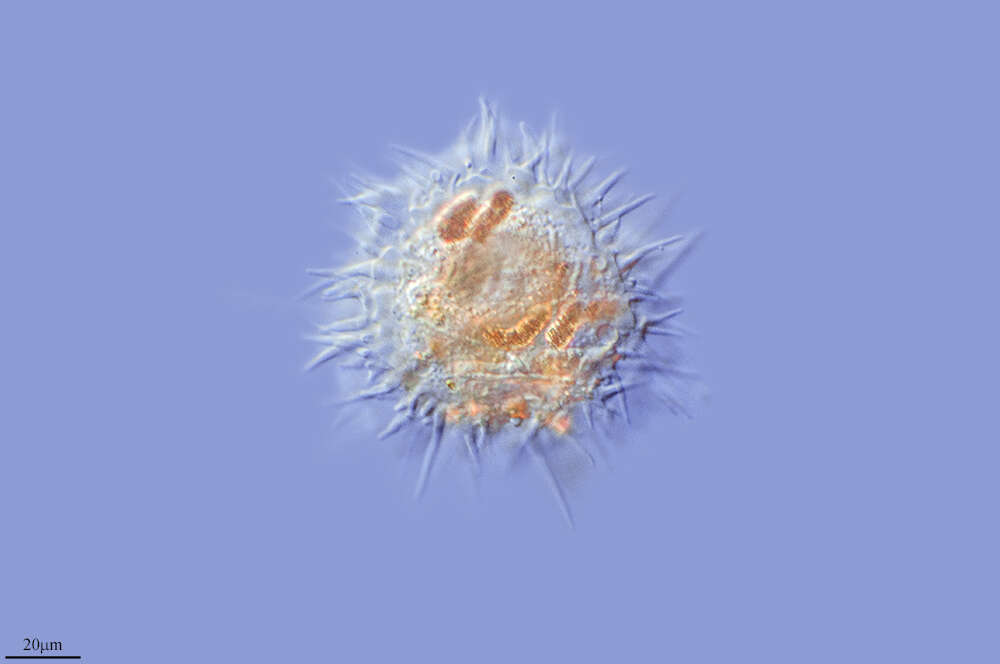
Conosa
Conosa is a grouping of Amoebozoa. It is subdivided into three groups: Archamoeba, Variosea and Mycetozoa.
Archamoebae
The Archamoebae are a group of protists originally thought to have evolved before the acquisition of mitochondria by eukaryotes. They include genera that are internal parasites or commensals of animals (Entamoeba and Endolimax). A few species are human pathogens, causing diseases such as amoebic dysentery. The other genera of archamoebae live in freshwater habitats and are unusual among amoebae in possessing flagella. Most have a single nucleus and flagellum, but the giant amoeba Pelomyxa has many of each.

Entamoeba coli
species of parasitic amoeba
Pelomyxa
Pelomyxa is a genus of giant flagellar amoebae, usually 500–800 μm but occasionally up to 5 mm in length, found in anaerobic or microaerobic bottom sediments of stagnant freshwater ponds or slow-moving streams.
Variosea
REDIRECT Conosa
Mastigamoebidae
REDIRECT Archamoebae
Endolimax
Endolimax is a genus of amoebozoa that are found in the intestines of various animals, including the species E. nana found in humans. Originally thought to be non-pathogenic, studies suggest it can cause intermittent or chronic diarrhea. Additionally, it is very significant in medicine because it can provide false positives for other tests, notably the similar species Entamoeba histolytica, the pathogen responsible for amoebic dysentery, and because its presence indicates the host has consumed fecal material. It forms cysts with four nuclei which excyst in the body and become trophozoites. End
Phalansterium
Phalansterium is a genus of single-celled flagellated organisms comprising several species, which form colonies. Phalansterium produces tetraspores.

Iodamoeba bütschlii
species of amoeba
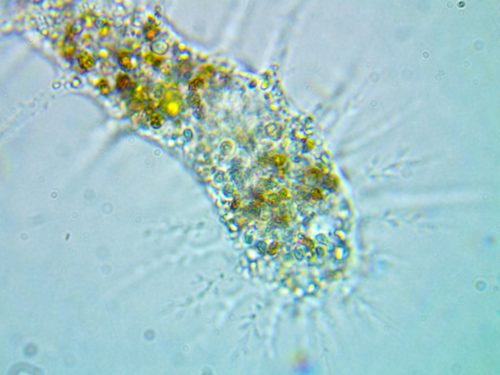
Mastigamoeba
Mastigamoeba is a genus of pelobionts, and treated by some as members of the Archamoebae group of protists. Mastigamoeba are characterized as anaerobic, amitochondriate organisms that are polymorphic. Their dominant life cycle stage is as an amoeboid flagellate. Species are typically free living, though endobiotic species have been described.