Category
page 1Constitutional state types

monarchy
A monarchy is a hereditary form of government in which political power is legally passed on to the family members of the monarch, a head of state who rules for life. While monarchs gain their power depending on specific succession laws, they can also gain their authority via election.

empire
thumb|300px|right|Diachronic map of the different empires of the modern era, during their existence.

federation
[[File:Map of unitary and federal states.svg|thumb|upright=1.7|

constitutional monarchy
type of monarchy in which power is restricted by a constitution
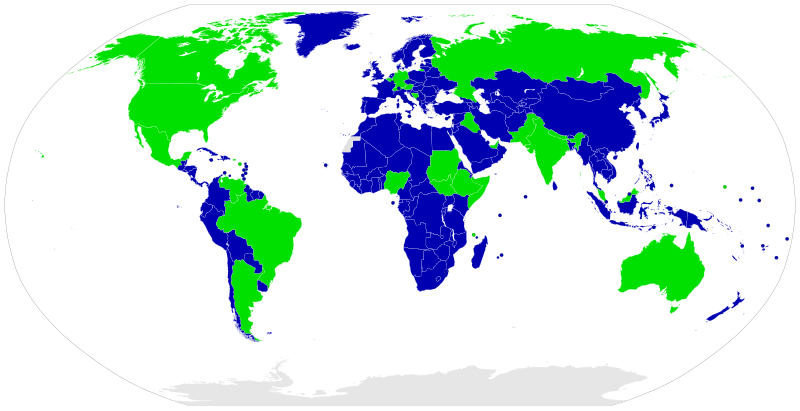
unitary state
state governed as a single unit with a supreme central government

confederation
A confederation (also known as a confederacy or league) is a political union of sovereign states or chiefdoms united for purposes of common action. Usually created by a treaty, confederations of states tend to be established for dealing with critical issues, such as defence, foreign relations, internal trade or currency, with the central government being required to provide support for all its members. Confederalism represents a main form of intergovernmentalism, defined as any form of interaction around states that takes place on the basis of sovereign independence or government.
.svg)
protectorate
A protectorate, in the context of international relations, is a state or dependent territory that foregoes an independent foreign policy in favour of alliance with a protecting power, normally in order to ensure its defence against regional aggressors. It is a dependent territory that enjoys autonomy over most of its internal affairs, while still recognizing the suzerainty of a more powerful sovereign state without being a possession. In exchange, the protectorate accepts treaty obligations which bind it to the protecting power in foreign policy. Protectorates are established formally by a tre

principality
A principality (or sometimes princedom) is a type of monarchical state or feudal territory ruled by a prince or princess. It can be either a sovereign state or a constituent part of a larger political entity. The term "principality" is often used to describe small monarchies, particularly those in Europe, where the ruler holds the title of prince or an equivalent.
federated state
territorial and constitutional community forming part of a federal union

Roman Tetrarchy
The Tetrarchy was the system instituted by Roman emperor Diocletian to govern the ancient Roman Empire by dividing it between two emperors, the augusti, and their junior colleagues and designated successors, the caesares. It was kept in place between AD 293 and 324.
military dictatorship
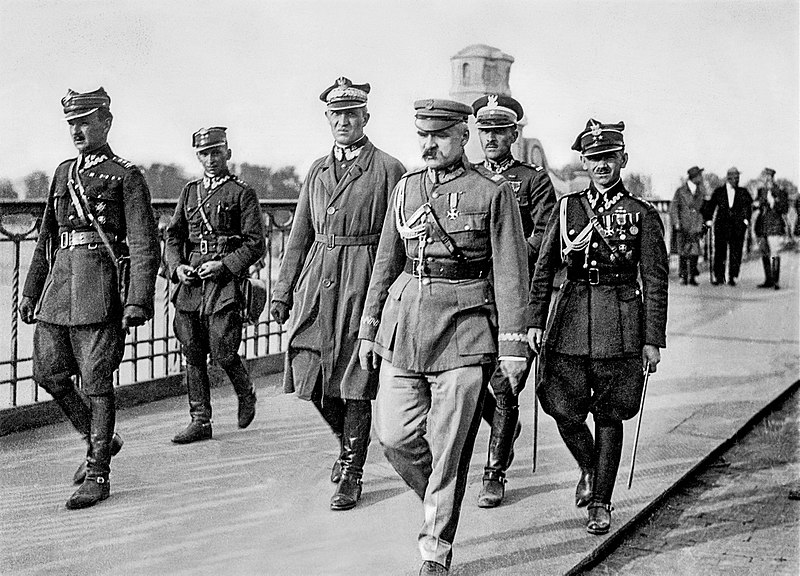
form of dictatorial military rule
condominium
form of subnational government in which multiple sovereign powers share sovereignty over a territory
associated state
minor partner in a formal, free relationship between a political territory
terra nullius
international law term meaning territory which has never been the subject of a sovereign nation
ethnarch
Ethnarch (pronounced , also ethnarches, ) is a term that refers generally to political leadership over a common ethnic group or homogeneous kingdom. The word is derived from the Greek words (ethnos, "tribe/nation") and (archon, "leader/ruler"). ''Strong's Concordance'' gives the definition of 'ethnarch' as "the governor (not king) of a district".
regional state
form of state
concessions and leases in international relations
proprietary colony
type of British colony especially in North America and the Caribbean in the 17th century
federacy
A federacy is a form of government where one or several substate units enjoy considerably more independence than the majority of the substate units. To some extent, such an arrangement can be considered to be similar to asymmetric federalism.