Category
page 1Countries in ancient Africa

Roman Empire
period of ancient Rome following the Republic

Roman Republic
period of ancient Roman civilization (509 BC–27 BC)
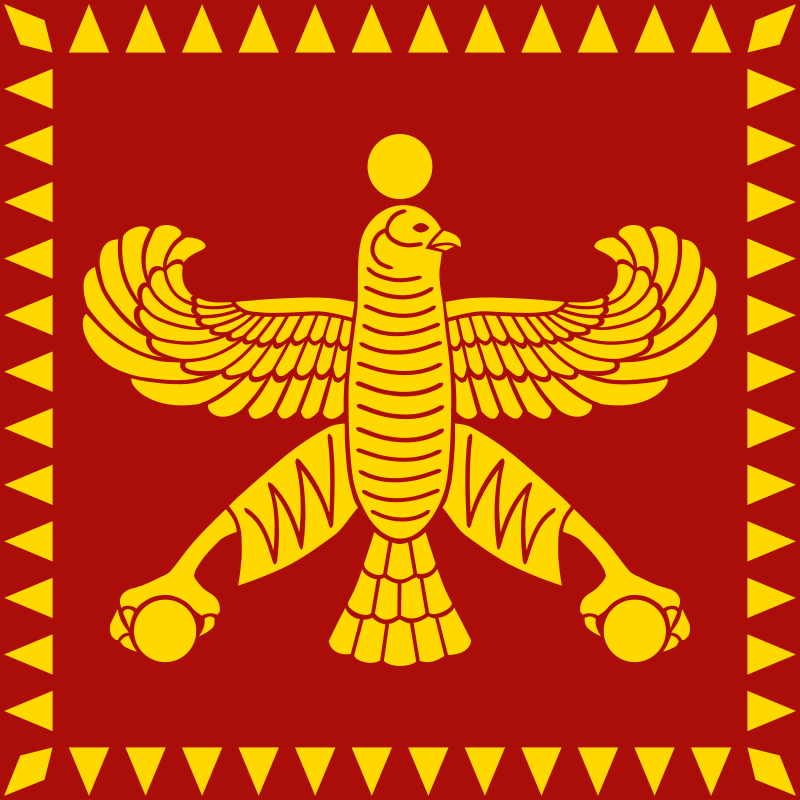
Achaemenid Empire
Iranian (Persian) empire (550–330 BC)

Sasanian Empire
last pre-Islamic Iranian empire (224–651 AD)

Kingdom of Aksum
trading nation in the area of Eritrea and Northern Ethiopia

Kingdom of Numidia
Numidia () was the ancient kingdom of the Numidians in northwest Africa, initially comprising the northern part of what is now Algeria,Tunisia and Libya. The polity was originally divided between the Massylii state in the east, with its capital at Cirta, and the Masaesyli state in the west, with its capital at Siga. During the Second Punic War (218–201 BC), Masinissa, king of the Massylii, defeated Syphax of the Masaesyli to unify Numidia into the first unified Berber state for Numidians in North Africa. Initially a sovereign state and an ally of Rome, the kingdom later alternated between bein

Cyrenaica
Cyrenaica ( ) or Kyrenaika (, , after the city of Cyrene), is the eastern region of Libya. Cyrenaica includes all of the eastern part of Libya between the 16th and 25th meridians east, including the Kufra District. The coastal region, also known as Pentapolis ("Five Cities") in antiquity, was part of the Roman province of Crete and Cyrenaica, later divided into Libya Pentapolis and Libya Sicca. During the Islamic period, the area came to be known as Barqa, after the city of Barca.
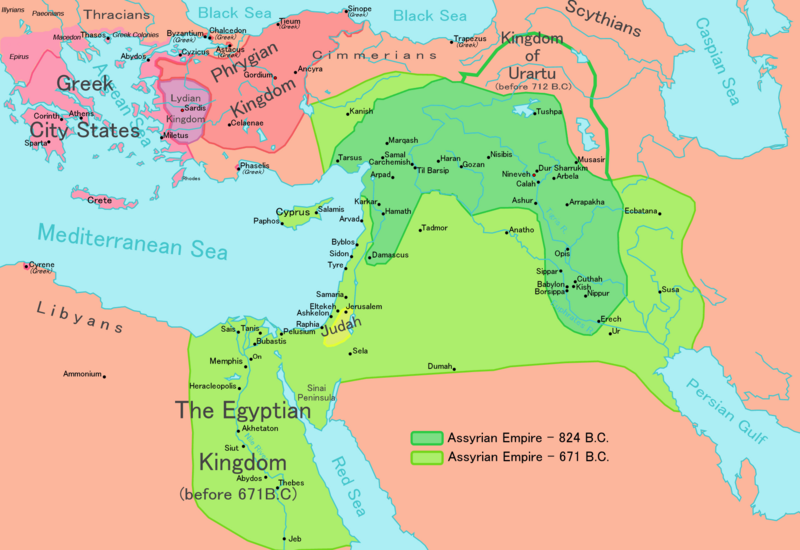
Neo-Assyrian Empire
historical state in Mesopotamia

Ancient Carthage
Phoenician city-state and empire

Land of Punt
ancient kingdom on the northern coast of the Horn of Africa

Mauretania
Mauretania (; ) is the Latin name for a region in the ancient Maghreb. It extended from central present-day Algeria to the Atlantic, encompassing northern present-day Morocco, and from the Mediterranean in the north to the Atlas Mountains. Its native inhabitants, of Berber ancestry, were known to the Romans as the Mauri and the Masaesyli.

Vandal Kingdom
Germanic Kingdom (435-534)

Alodia
Alodia, also known as Alwa (Greek: Ἀρούα, Aroua; , ʿAlwa), was a medieval kingdom in what is now central Sudan. Its capital was the city of Soba, located near modern-day Khartoum at the confluence of the Blue and White Nile rivers.
Dʿmt
'''''' (; theoretically vocalized , or , ) was a Ethio-Sabaean kingdom located in present-day Eritrea and the northern Tigray Region of Ethiopia.

Nobatia
Nobatia or Nobadia (; Greek: Νοβαδία, Nobadia; Old Nubian: ⲙⲓⲅⲛ̅ Migin or ⲙⲓⲅⲓⲧⲛ︦ ⲅⲟⲩⲗ, Migitin Goul lit. "''of Nobadia's land''") was a late antique kingdom in Lower Nubia, modern day southern Egypt. Together with the two other Coptic-Nubian kingdoms, Makuria and Alodia, it succeeded the kingdom of Kush. After its establishment in around 400, Nobadia gradually expanded by defeating the Blemmyes in the north and incorporating the territory between the second and third Nile cataract in the south. In 543, it converted to Coptic Christianity. It would then be annexed by Makuria, under unknown cir

Aethiopia
thumb|1747 map with all the oceans surrounding the African continent

Garamantes
thumb|upright=1.4|Map of the Roman Empire under Hadrian (ruled 117 – 138 AD), showing the location of the Garamantes kingdom, in the desert regions south of the Roman province of [[Africa proconsularis (Tunisia, Libya).]]
Kerma kingdom
Ancient Sudanese kingdom

Blemmyes
thumb|Location of the Blemmyes in Late Antiquity
The Blemmyes ( or Βλέμυες, Blémues , Latin: Blemmyae) were an Eastern Desert people who appeared in written sources from the 7th century BC until the 8th century AD. By the late 4th century, they had occupied Lower Nubia and established a kingdom. From inscriptions in the temple of Isis at Philae, a considerable amount is known about the structure of the Blemmyan state.
Ngoyo
Ngoyo was a kingdom of the Woyo ethnic group, located in the south of Cabinda and on the Atlantic coast of Central Africa, just north of the Congo River. In the 13th century it formed part of a confederation led by Vungu. Ngoyo tradition held that the kingdom's ancestors were among the earliest settlers in the area, leading their chiefs to title themselves the nfumu nsi ("lords of the earth"). The capital was Mbanza Ngoyo.

Libu
thumb|From right to left an Egyptian, an Assyrian, a Nubian, and four Libu men, Heinrich Menu von Minutoli|Heinrich von Minutoli (1820)
The Libu (; also transcribed Rebu, Libo, or Lebu) were an Ancient Libyan tribe of Berber origin, from which the name Libya derives.

Gaetuli
Gaetuli was the Romanised name of an ancient Berber people inhabiting Getulia. The latter district covered the large desert region south of the Atlas Mountains, bordering the Sahara. Other documents place Gaetulia in pre-Roman times along the Mediterranean coasts of what is now Algeria and Tunisia, and north of the Atlas. During the Roman period, according to Pliny the Elder, the Autololes Gaetuli established themselves south of the province of Mauretania Tingitana, in modern-day Morocco. They inhabited the southern slopes of the Aures and Atlas Mountains and probably reached as far as the Atl

Agisymba
thumb|right|400px|Map showing the "Agisymba" territory, during Roman explorations of Sub-Saharan Africa
Agisymba () was an unidentified country located in Africa mentioned by Ptolemy in the middle of the 2nd century AD.
Bura archaeological site
archaeological site in Téra Department, Niger
Barbara
Ancient Reigons in Northeast Africa