Category
page 1Craugastoridae
Craugastoridae
Craugastoridae, commonly known as fleshbelly frogs, is a family of New World direct-developing frogs. As delineated here, following the Amphibian Species of the World, it contains 129 species. They are found from the southern United States southwards to Central and South America.
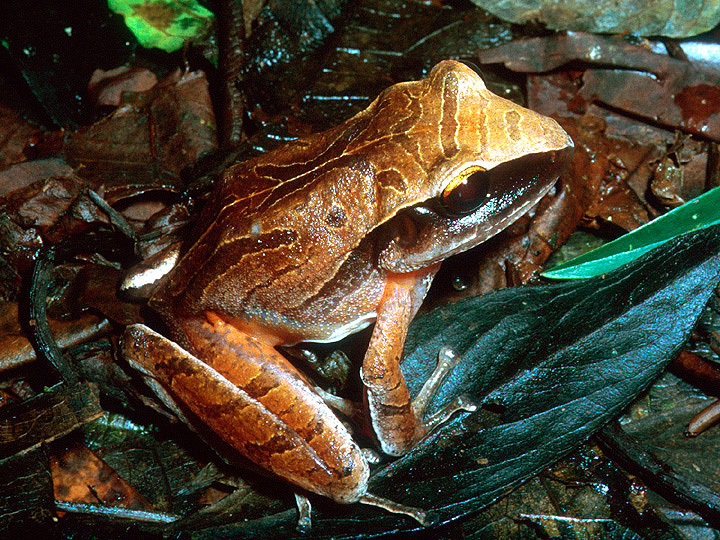
Craugastor
Craugastor is a large genus of frogs in the family Craugastoridae with 126 species.
Its scientific names means brittle-belly, from the Ancient Greek ' (, brittle, dry) and ' (, belly, stomach).
Dischidodactylus
Mount Duida frogs (Dischidodactylus) form a genus of brachycephaloid frogs endemic to the tepuis of southern Venezuela. The scientific name is derived from the Greek dischidos, meaning divided, and dactylos, meaning finger or toe, in reference to the divided ungual flap (see below).
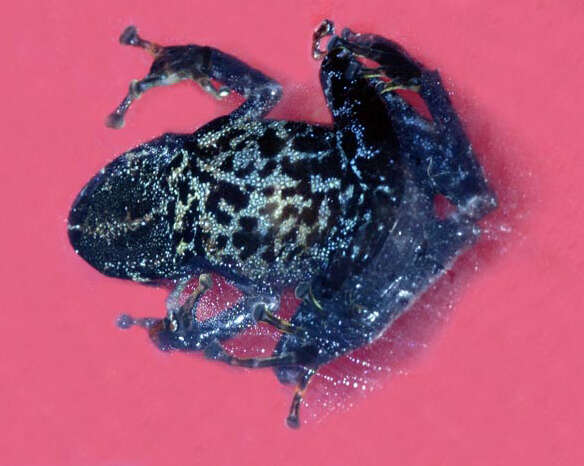
Ceuthomantis
Ceuthomantis is a small genus of craugastorid frogs, also treated as comprising their own monogeneric family Ceuthomantidae. They are found in the southern and eastern parts of the Guiana Highlands in Venezuela, Guyana, and Brazil. The generic name is derived from the Greek noun mantis, which means treefrog, and adjective keuthos, which means hidden, in allusion to the hidden existence of this genus in the tepuis of the Guiana Shield.

Haddadus
Haddadus is a genus of frogs in the family Craugastoridae. The genus has three species that are endemic to the Atlantic Forest of east and southeast Brazil. The genus is named for Célio F. B. Haddad, Brazilian herpetologist.
Atopophrynus syntomopus
Atopophrynus is a genus of frogs. It is monotypic, being represented by a single species, Atopophrynus syntomopus, also known as the Sonson frog. Its taxonomic placement within the superfamily Brachycephaloidea is uncertain, although many sources place it in the family Craugastoridae. It is endemic to Colombia and only known from its type series from Sonsón, in the Cordillera Central, Antioquia Department.

Geobatrachus walkeri
species of amphibian