Category
page 1Cretaceous insects
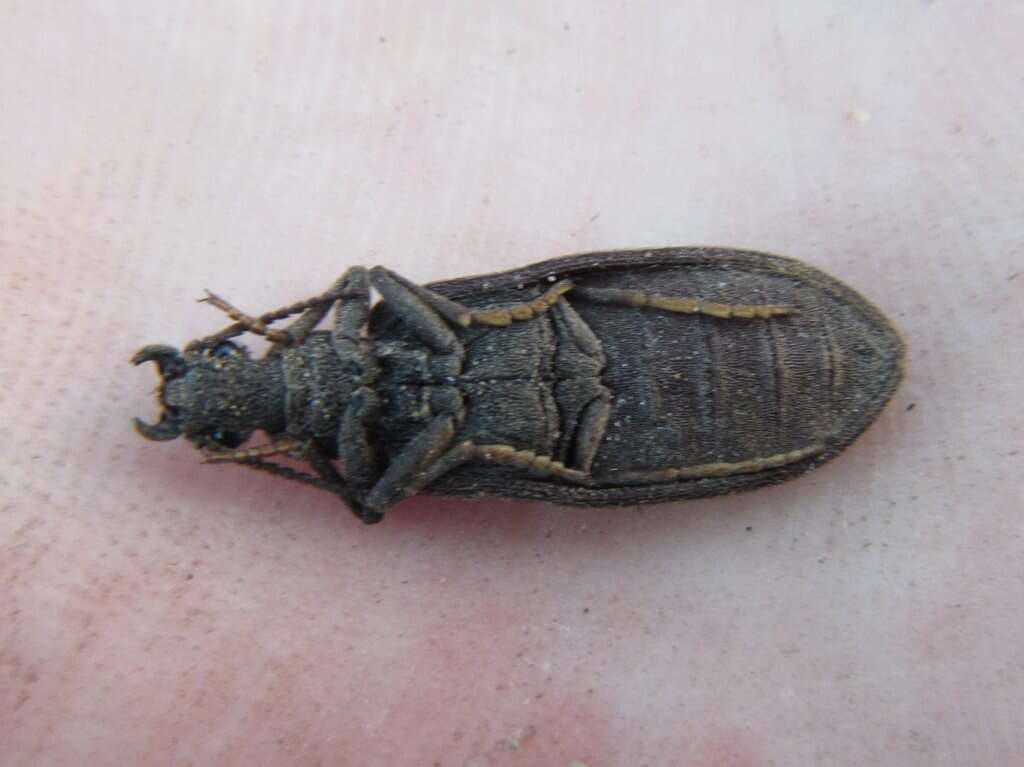
Ommatidae
The Ommatidae are a family of beetles in the suborder Archostemata. The Ommatidae are considered the extant beetle family that has most ancestral characteristics. There are only seven extant species, confined to Australia and South America. However, the geographical distribution was much wider during the Mesozoic spanning across Eurasia and Australia, suggesting that they were widespread on Pangea. So far, over 26 extinct genera containing over 170 species of these beetles have been described. Three extant genera have been assigned to this family: Omma, Tetraphalerus and Beutelius. The family
Sphecomyrminae
Sphecomyrminae is an extinct subfamily of ants in family Formicidae known from a series of Cretaceous fossils found in North America, Europe, and Asia. Sphecomyrminae contains eight genera, divided into two tribes Sphecomyrmini and Zigrasimeciini. The tribe Sphecomyrmini contains the six genera Armania, Cretomyrma, Gerontoformica, Orapia, Pseudarmania and Sphecomyrma; while Zigrasimeciini contains Boltonimecia and Zigrasimecia. A number of taxa have been removed from the subfamily and placed either in other subfamilies or are now treated as incertae sedis in Formicidae.
.jpg)
Sphecomyrma
Sphecomyrma is an extinct genus of ants which existed in the Cretaceous approximately 79 to 92 million years ago. The first specimens were collected in 1966, found embedded in amber which had been exposed in the cliffs of Cliffwood, New Jersey, by Edmund Frey and his wife. In 1967, zoologists E. O. Wilson, Frank Carpenter and William L. Brown, Jr. published a paper describing and naming Sphecomyrma freyi. They described an ant with a mosaic of features—a mix of characteristics from modern ants and aculeate wasps. It possessed a metapleural gland, a feature unique to ants. Furthermore, it was w

Pseudopulex
Pseudopulex is an extinct genus of primitive fleas that lived between the Middle Jurassic and Early Cretaceous periods in what is now modern-day China. The Latin root for the name Pseudopulex roughly translates to "false fleas".
Haidomyrmecinae
Haidomyrmecinae, occasionally called hell ants, are an extinct subfamily of ants (Formicidae) known from Cretaceous fossils primarily found in amber from North America, South America, Europe, and Asia, spanning the late Aptian to Campanian, around 113 to 79 million years ago. The subfamily was first proposed in 2003 but had been subsequently treated as the tribe Haidomyrmecini and placed in the extinct ant subfamily Sphecomyrminae. Reevaluation of the Haidomyrmecini in 2020 led to the elevation of the group back to the subfamily. The family contains nine genera and 13 species.
Saurophthirus
Saurophthirus is an extinct genus of giant stem-group flea, and the only member of the family Saurophthiridae. The type species, S. longipes is found in early Cretaceous strata of Baissa, Siberia. Two other species S. exquisitus and S. laevigatus are from the Lower Cretaceous Yixian Formation of China.
Kalligrammatidae
Kalligrammatidae, sometimes known as kalligrammatids or kalligrammatid lacewings, is a family of extinct insects in the order Neuroptera (lacewings) that contains twenty genera and a number of species. The family lived from the Middle Jurassic to the early Late Cretaceous before going extinct. Species of the family are known from Europe, Asia, and South America. The family has been occasionally described as "butterflies of the Jurassic" based on their resemblance to modern butterflies in morphology and ecological niche.

Omma
Omma is a genus of beetles in the family Ommatidae. Omma is an example of a living fossil. The oldest species known, O. liassicum, lived during the final stage of the Triassic (Rhaetian), over 200 million years ago, though the placement of this species in Omma has been questioned. Numerous other fossil species are known from the Jurassic and Cretaceous of Europe and Asia. The only living species is Omma stanleyi, which is endemic to Australia. Three other extant species endemic to Australia that were formerly part of this genus were moved to the separate genus Beutelius in 2020. Omma stanleyi
Maimetshidae
Maimetshidae is an extinct family of wasps, known from the Cretaceous period. While originally considered relatives of Megalyridae, they are now considered to probably be close relatives of Trigonalidae.
Praeichneumon
Praeichneumon is an extinct genus of ichneumon wasps from the Lower Cretaceous of Mongolia and the Russian region of Transbaikalia. It was originally described by Alexandr Pavlovich Rasnitsyn in 1983, who also added a second species in 1990. Three new species were described by D. S. Kopylov in 2012.