Category
page 1Cretaceous plants

Typha
Typha is a genus of about 30 species of monocotyledonous flowering plants in the family Typhaceae. These plants have a variety of common names, in British English bulrush or (mainly historically) reedmace, in American English cattail or punks, in Australia cumbungi or bulrush, in Canada bulrush or cattail, and in New Zealand raupō, bullrush, cattail, or reed.

Zingiberaceae
Zingiberaceae, the ginger family, is a family of flowering plants containing 58 genera and about 1600 described species distributed globally in the tropics and subtropics. They are aromatic perennial herbs with creeping rhizomes, sometimes tuberous. Basal leaf sheathing forms a pseudostem taller than their true stems which emerge unbranched. Flowers are typically zygomorphic (bilaterally symmetrical) and inflorescence is raceme. Fruit is typically a dry capsule and seeds are arillate.

Pistia stratiotes
Pistia is a genus of aquatic plants in the arum family, Araceae. It is the sole genus in the tribe Pistieae which reflects its systematic isolation within the family. The single species it comprises, Pistia stratiotes, is often called water cabbage, water lettuce, Nile cabbage, or shellflower. Its native distribution is uncertain but is probably pantropical; it was first scientifically described from plants found on the Nile near Lake Victoria in Africa. It is now present, either naturally or through human introduction, in nearly all tropical and subtropical fresh waterways and is considered a
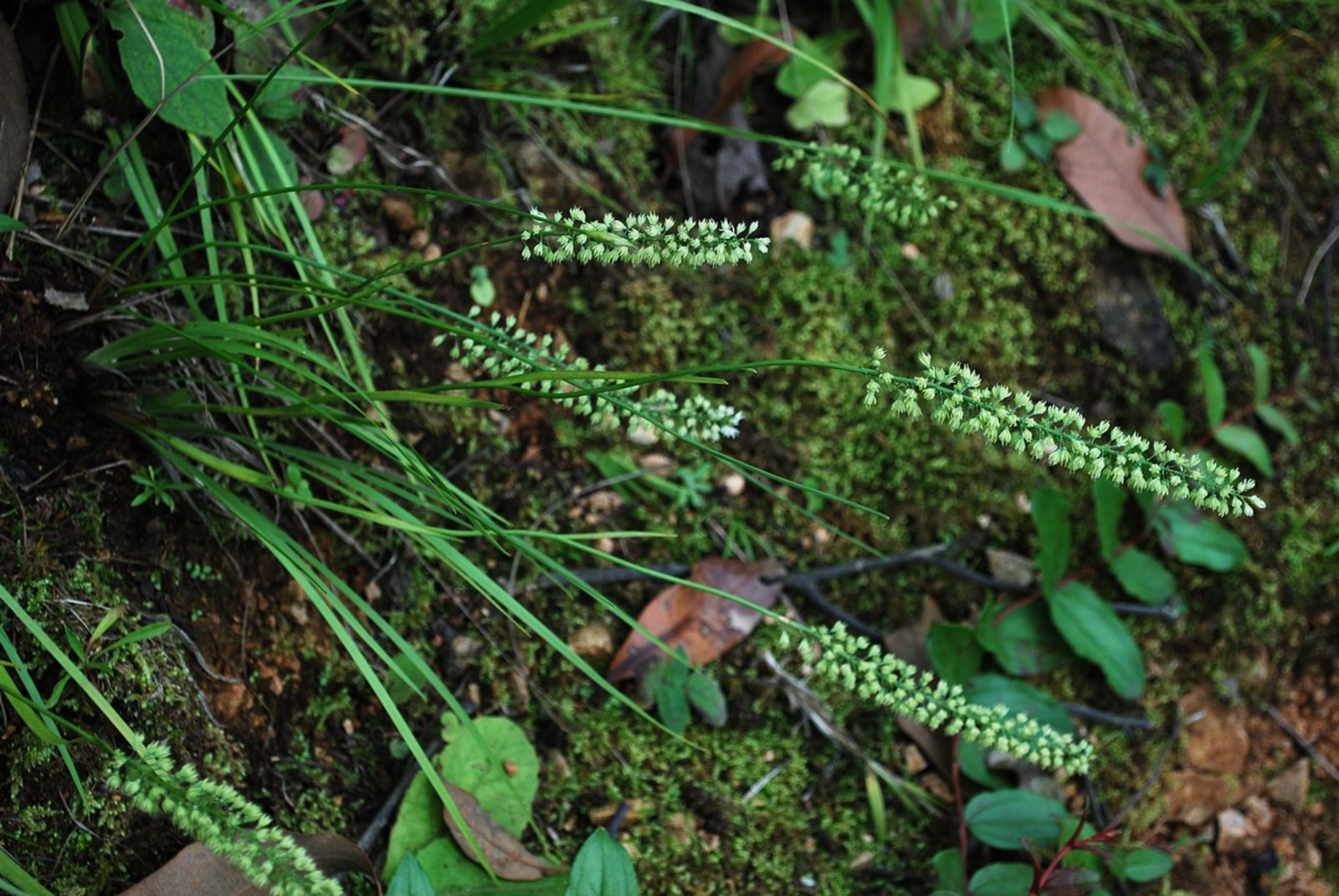
Tofieldiaceae
Tofieldiaceae is a family of flowering plants in the monocot order Alismatales. The family is divided into four genera, which together comprise 28 known species (Christenhusz & Byng 2016 ). They are small, herbaceous plants, mostly of arctic and subarctic regions, but a few extend further south, and one genus is endemic to northern South America and Florida. Tofieldia pusilla is sometimes grown as an ornamental.

Pteridospermatophyta
Pteridosperms, also known as seed ferns, are a polyphyletic grouping of extinct seed-producing plants. The earliest fossil evidence for plants of this type are the lyginopterids of late Devonian age. They flourished particularly during the Carboniferous and Permian periods. Pteridosperms declined during the Mesozoic Era and had mostly disappeared by the end of the Cretaceous Period, though Komlopteris seem to have survived into Eocene times, based on fossil finds in Tasmania.
Superasterids
The superasterids are members of a large clade (monophyletic group) of flowering plants, containing more than 122,000 species.
superrosids
The superrosids are members of a large clade (monophyletic group) of flowering plants, containing more than 88,000 species, and thus more than a quarter of all angiosperms.

Osmundastrum cinnamomeum
species of plant
Williamsonia
genus of plants (fossil)
Caytoniales
The Caytoniales are an extinct order of seed plants known from fossils spanning from the Middle Triassic (Anisian) to the Late Cretaceous (Campanian). They are regarded as "seed ferns" because they are seed-bearing plants with fern-like leaves. Although at one time considered angiosperms because of their berry-like cupules, that hypothesis was later disproven. Nevertheless, many authorities consider them likely ancestors or close relatives of angiosperms. The origin of angiosperms remains unclear, and they cannot be linked with any known seed plants groups with certainty.
Ginkgoites
Ginkgoites is a genus of extinct plants belonging to Ginkgoaceae. Fossils of these plants have been found around the globe during the Triassic, Jurassic, Cretaceous, with fossils also known from the Paleogene. The name was created as a form genus in 1919 by Albert Seward, who stated: "I... propose to employ the name Ginkgoites for leaves that it is believed belong either to plants generically identical with Ginkgo or to very closely allied types."
Williamsoniaceae
Williamsoniaceae is a family within the Bennettitales, an extinct group of seed plants. Members of this family are believed to have been around two meters tall and with widely serrate leaves along a central stem. Reproductive organs of the Williamsoniaceae have varied widely in the fossil record but almost all have been found to be borne on stalks emerging from a ring of leaves.
thumb|Fossils and schematic diagram of Pterophyllum (plant)|Pterophyllum bavieri from the Late Triassic ([[Rhaetian) of northern Iran, Shemshak Group, A and B: leaves attached to a branch C: complete leaf]]
Equisetites
Equisetites is an extinct genus of vascular plants within Equisetaceae, a family of vascular plants that reproduce by spores rather than seeds. The genus was named by Sternberg (1833) and contains at least 40 named species and two unnamed species, with the earliest known species being E. hemingwayi from the Westphalian of Yorkshire, England, though the affinity of this genus to modern Equistaceae is uncertain.
Cladophlebis
Cladophlebis is an extinct form genus of fern, which has been reported from the Permian to the end of the Cretaceous and from all continents of the world.
Tempskya
Tempskya is an extinct genus of tree fern that lived during the Cretaceous period. Fossils have been found across both the Northern and Southern hemispheres. The growth habit of Tempskya was unlike that of any living fern or any other living plant, consisting of multiple conjoined dichotomous branching stems enmeshed within roots that formed a "false trunk".
Araucaria haastii
species of plant
Cycadeoidaceae
Cycadeoidaceae is a family of bennettitalean plants which flourished in the Mesozoic era. Two genera, Cycadeoidea and Monanthesia, are currently recognised though most species are poorly known. They had a similar morphology to cycads, with thick, branchless trunks covered in scale leaves.
alt=Cycadeoidea_sp|thumb|Cycadeoidea (a member of the Cycadeoidaceae) on display at the [[Naturmuseum Senckenberg]]
Umaltolepis
Umaltolepis is an extinct genus of seed plant, known from the Early Jurassic to Early Cretaceous of Asia. Within the form classification system used within paleobotany, it refers to the seed-bearing reproductive structures, which grew on woody plants with strap-shaped Ginkgo-like leaves assigned to the genus Pseudotorellia.
Baieroxylon
Baieroxylon is an extinct prehistoric genus of plants belonging to the Ginkgoaceae family during the Triassic, Jurassic, and Cretaceous Periods.