Category
page 1Cricetidae

Hamster
Hamsters are rodents (order Rodentia) belonging to the subfamily Cricetinae, which contains 19 species classified in seven genera. They have become established as popular small pets. The best-known species of hamster is the golden or Syrian hamster (Mesocricetus auratus), which is the type most commonly kept as a pet. Other hamster species commonly kept as pets are the three species of dwarf hamster, Campbell's dwarf hamster (Phodopus campbelli), the winter white dwarf hamster (Phodopus sungorus) and the Roborovski hamster (Phodopus roborovskii), and the less common Chinese hamster (Cricetulus

Cricetidae
The Cricetidae are a family of rodents in the large and complex superfamily Muroidea. It includes true hamsters, voles, lemmings, muskrats, and New World rats and mice. At over 870 species, it is either the largest or second-largest family of mammals, and has members throughout the Americas, Europe and Asia.
Sigmodontinae
Sigmodontinae is a subfamily of rodents that includes New World rats and mice, with at least 376 species. Many authorities include the Neotominae and Tylomyinae as part of a larger definition of Sigmodontinae. When those genera are included, the species count numbers at least 508. Their distribution includes much of the New World, but the genera are predominantly South American, such as brucies. They invaded South America from Central America as part of the Great American Interchange near the end of the Miocene, about 5 million years ago. Sigmodontines proceeded to diversify explosively in the
Tylomyinae
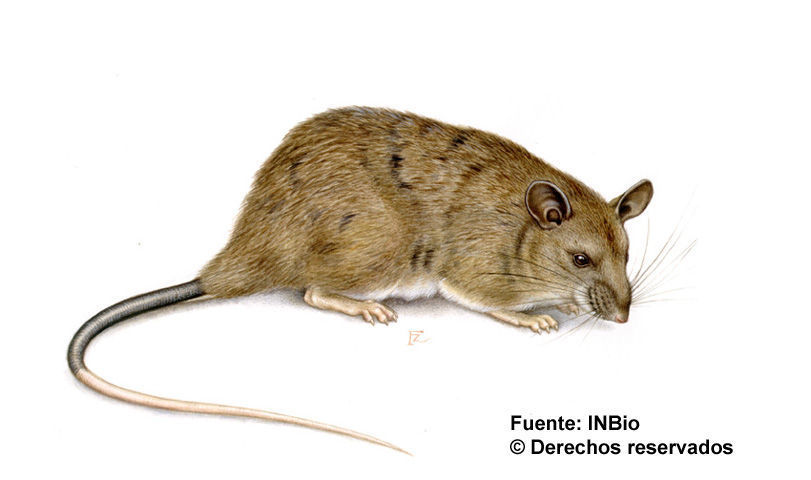
The subfamily Tylomyinae consists of several species of New World rats and mice including the vesper and climbing rats. They are not as well known as their relatives in the subfamilies Sigmodontinae and Neotominae. Many authorities place all three of these subfamilies in a single subfamily, Sigmodontinae.
New World rats and mice
informal group of mammals
Baranomyinae
Baranomyinae is an extinct subfamily of rodent from the Cricetidae, that inhabited Asia, Europe, North America in Pliocene epoch. It was first described by Miklós Kretzoi in 1955.
Incanomys
Incanomys is a monotypic genus of rodents in the family Cricetidae; it contains the sole species Incanomys mayopuma, also known as the Incan water rat. This small, semi-aquatic carnivorous mammal was discovered in Peru following a three-month research expedition in Machu Picchu.