Category
page 1Critical thinking

reason
Reason is the capacity to consciously apply logic by drawing valid conclusions from new or existing information, with the aim of seeking truth. It is associated with activities considered characteristic of humans, including philosophy, religion, science, language, and mathematics, and is generally considered a distinguishing ability possessed by humans. The term "reason" is sometimes used to refer to rationality, although the latter is more about its application.

paradox
A paradox is a logically self-contradictory statement or a statement that runs contrary to one's expectation. It is a statement that, despite apparently valid reasoning from true or apparently true premises, leads to a seemingly self-contradictory or a logically unacceptable conclusion. A paradox usually involves contradictory-yet-interrelated elements that exist simultaneously and persist over time. They result in "persistent contradiction between interdependent elements" leading to a lasting "unity of opposites".

critical thinking
analysis of facts, with certain levels of rigor and problem-solving abilities, to form a judgment
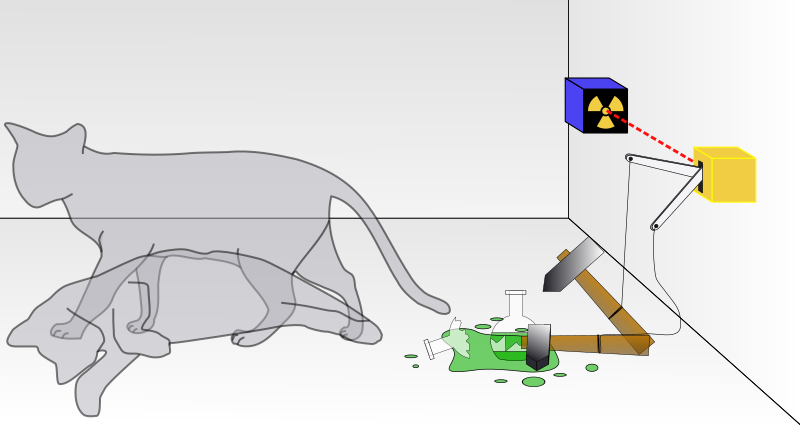
thought experiment
considering hypothesis, theory, or principle for the purpose of thinking through its consequences
explanation
An explanation is a set of statements usually constructed to describe a set of facts that clarifies the causes, context, and consequences of those facts. It may establish rules or laws, and clarifies the existing rules or laws in relation to any objects or phenomena examined.
.jpg)
insight
Insight is the understanding of a specific cause and effect within a particular context. The term insight can have several related meanings:
a piece of information
the act or result of understanding the inner nature of things or of seeing intuitively (called in Greek)
an introspection
the power of acute observation and deduction, discernment, and perception, called intellection or
an understanding of cause and effect based on the identification of relationships and behaviors within a model, system, context, or scenario (see artificial intelligence)
paradigm shift
fundamental change in the basic concepts and experimental practices of a scientific discipline.
nursing process
method of nursing care
Inventor's paradox
Solving a problem by solving a larger problem
practical reason
the use of reason to decide how to act
Reason Rally
public gathering
100 men versus a gorilla
thought experiment, debate, and internet meme