Category
page 1Cross symbols

X/x

T/t
T, or t, is the twentieth letter of the Latin alphabet, used in the modern English alphabet, the alphabets of other western European languages and others worldwide. Its name in English is tee (pronounced ), plural tees.

cross
thumb|A Greece|Greek cross (all arms of equal length) above a [[saltire, a cross whose limbs are slanted]]
.png)
swastika
thumb|The swastika is a symbol with many styles and meanings and has been used in many cultures and religions around the world for millennia.
thumb|The Cultural appropriation|appropriation of the swastika by the [[Nazi Party (1920–1945) is the most recognisable modern usage of the symbol in the Western world.]]

Τ
Tau (; uppercase Τ, lowercase τ or ; ) is the nineteenth letter of the Greek alphabet, representing the voiceless dental or alveolar plosive . In the system of Greek numerals, it has a value of 300.

Т
Cyrillic letter
%2001.svg)
ankh
thumb|upright=0.5|The ankh has a T-shape topped by a droplet-shaped loop.
The ankh or key of life is an ancient Egyptian hieroglyphic symbol used to represent the word for "life" and, by extension, as a symbol of life itself.

stations of the Cross
series of artistic representations, depicting Christ carrying the Cross to his crucifixion

Christian cross
symbol of Christianity

Iron Cross
military decoration in the Kingdom of Prussia, and later in the German Empire (1870–1918) and Nazi Germany

saltire
thumb|right|A diagonal cross (decussate cross, saltire, St. Andrew's Cross)

sign of the cross
ritual blessing
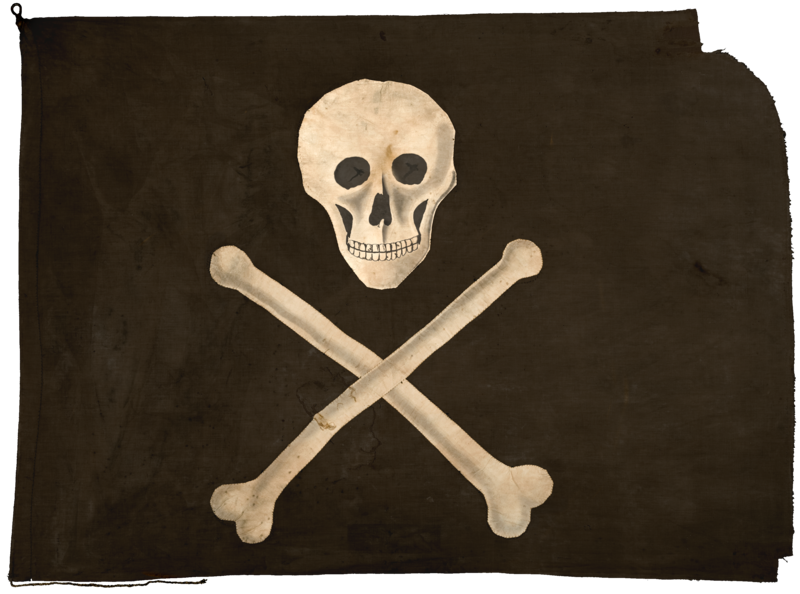
Jolly Roger
pirate flag

St George's Cross
red cross on a white background
orb
globular object sometimes topped with a cross; Christian symbol of authority
Knight's Cross of the Iron Cross
highest military award of Nazi Germany
cross of Lorraine
Christian and French patriotic symbol

Lauburu
thumbnail|right|A typical lauburu. Each arm can be drawn with three sweeps of a compass
Tau cross
Christian cross in the shape of a capital T
Secchi disk
scientific instrument for measuring turbidity
skull and crossbones
symbol of death

padrão
thumb|Replica of a placed by Diogo Cão on Cape Cross, Namibia.

taw
Taw, tav, or taf is the twenty-second and last letter of the Semitic abjads, including Arabic tāʾ , Aramaic taw 𐡕, Hebrew tav , Phoenician tāw 𐤕, and Syriac taw ܬ. In Arabic, it also gives rise to the derived letter ṯāʾ. Taw's original sound value has been claimed to be . It is related to the Ancient North Arabian 𐪉, South Arabian , and Geʽez .
Anarchist Black Cross
anarchist mutual support organization that supports lawbreakers in accordance with the goals of the revolution
Grapevine cross
Symbol of the Georgian Orthodox Church
Order of Michael the Brave
highest Romanian order of gallantry, for individuals and military units (1916–)

Balkenkreuz
thumb|right|upright=2.5|Various WWII styles of the Balkenkreuz; also see Luftwaffe for official specification versions
Occitan cross
heraldic cross and motif

Wilgefortis
Wilgefortis () is a female folk saint whose legend arose in the 14th century, and whose distinguishing feature is a large beard. According to the legend of her life, set in Portugal and Galicia, she was a teenage noblewoman who had been promised in marriage by her father to a Moorish king. To thwart the unwanted wedding, she had taken a vow of virginity, and prayed that she would be made repulsive. In answer to her prayers she sprouted a beard, which ended the engagement. In anger, Wilgefortis' father had her crucified.
Looped square
symbol
calvary
type of monumental public crucifix
cross potent
heraldic symbol
crossed fingers
hand gesture
flag of Saint David
flag used to represent Saint David and Wales
Cross of Saint James
heraldic symbol
Bolnisi cross
Symbol of Georgia taken from the Bolnisi Sioni church
Ქ/ქ Ⴕ/ⴕ
Georgian letter “khar” (ქან), “khan”, “k’an”, or “kani” (ქანი)
Ჯ/ჯ Ⴟ/ⴟ
Georgian letter “jhan” (ჯან), “jan”, or “jani” (ჯანი)
flags depicting the Southern Cross
Wikimedia list article
Brigid's cross
Cross woven from rushes, arms offset
Order of Christ Cross
cross symbol of Portugal
Cross and Crown
Christian symbol
X mark
mark shaped like X to indicate deletion or signify personal identity or authority
Macedonian Cross
variation of the Christian cross associated with North Macedonia

cross burning
in Ku Klux Klan tradition

Nestorian cross
cross associated with the Church of the East
Canterbury cross
variant of the Christian cross
Tursaansydän
250px|right|thumb|Variations of the symbol
The ' or (), also called ' (), is an ancient swastika-like symbol used in Northern Europe. The symbol originates from prehistoric times.
The was believed to bring good luck and protect from curses, and was used as a decorative motif on wooden furniture and buildings in Finland. A brick dating to the 14th or 15th century bearing a tursaansydän motif was found during restorations of the Häme Castle.
Luso Sundanese padrão
Sundanese archaeological site
Stations of the Resurrection
form of Christian devotion
cross moline
heraldic cross
signum manus
symbol on ancient manuscripts
Agadez cross
a type of cross found in the Agadez region
cruciform
Cruciform describes objects resembling a common cross or Christian cross. These include architectural shapes, biology, art, and design.
cross of Camargue
Christian cross representing the Camargue

Killamery
Killamery () is a village in County Kilkenny, Ireland. Located near the County Tipperary border, it is in a townland and civil parish of the same name. Killamery lies on the N76 national secondary road, halfway between Kilkenny to the northeast and Clonmel to the southwest.
Rose Cross
symbol of a cross with a rose at its centre, associated with Rosicrucianism and other mystical movements
fylfot
The fylfot or fylfot cross ( ) and its mirror image, the gammadion, are types of truncated swastika, associated with medieval Anglo-Saxon culture. It is a cross with perpendicular extensions, usually at 90° or close angles, radiating in the same direction. However at least in modern heraldry texts, such as Friar and Woodcock & Robinson (see ) the fylfot differs somewhat from the archetypal form of the swastika: always upright and typically with truncated limbs, as shown in the figure at right.
Stauros
thumb|Palisade|alt=
Stauros () is a Greek word for a stake or an implement of capital punishment. The Greek New Testament uses the word stauros for the instrument of Jesus' crucifixion, and it is generally translated as "cross" in religious texts, while also being translated as pillar or tree in Christian contexts.
Troll cross
Swedish-Norwegian superstitious protection sigil to ward off trolls or other malevolent magical creatures