Category
page 1Cryobiology

cloning
thumb|upright=1.35|Many organisms, including aspen trees, reproduce by cloning, often creating large groups of organisms with the same [[DNA. One example depicted here is quaking aspen.]]

hypothermia

in vitro fertilization
assisted reproductive technology procedure (ART)

freezing
thumb|Water dripping from a slab of [[ice and then freezing, forming icicles]]
Freezing is a phase transition in which a liquid turns into a solid when its temperature is lowered below its freezing point.
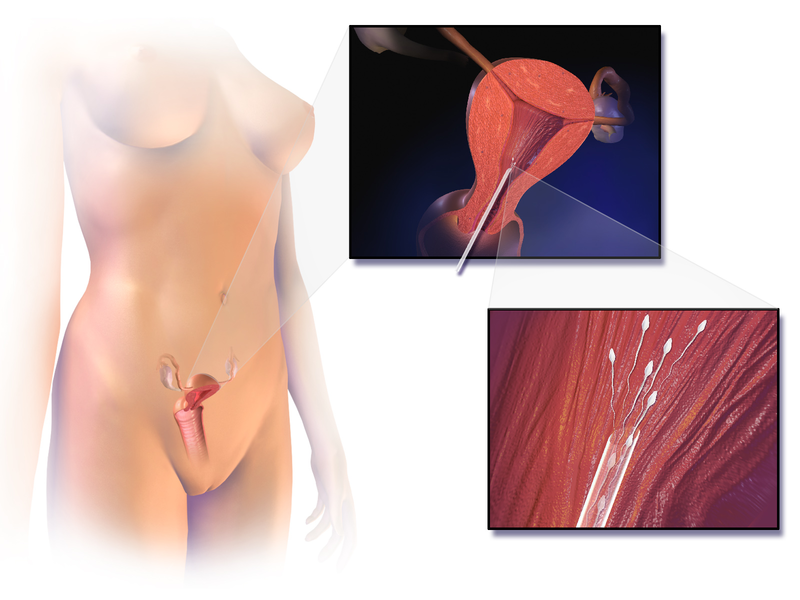
artificial insemination
pregnancy through in vivo fertilization
cryobiology
Cryobiology is the branch of biology that studies the effects of low temperatures on living things within Earth's cryosphere or in science. The word cryobiology is derived from the Greek words κρῧος [kryos], "cold", βίος [bios], "life", and λόγος [logos], "word". In practice, cryobiology is the study of biological material or systems at temperatures below normal. Materials or systems studied may include proteins, cells, tissues, organs, or whole organisms. Temperatures may range from moderately hypothermic conditions to cryogenic temperatures.

psychrophile
thumb|The lichen [[Xanthoria elegans can continue to photosynthesize at .]]
sperm bank
facility that collects and stores human semen from sperm donors for use by women who need donor-provided sperm to achieve a pregnancy or pregnancies.
glass transition
reversible transition in amorphous materials at which amorphous polymers go from hard to viscous
vitrification
Vitrification (, via French '''') is the full or partial transformation of a substance into a glass, that is to say, a non-crystalline or amorphous solid. Glasses differ from liquids structurally and glasses possess a higher degree of connectivity with the same Hausdorff dimensionality of bonds as crystals: dimH = 3. In the production of ceramics, vitrification is responsible for their impermeability to water.
ex-situ conservation
preservation of plants or animals outside their natural habitats
therapeutic hypothermia
medical procedure
antifreeze proteins
proteins that bind to ice and modify the growth of ice crystals

cryosurgery
Cryosurgery (with cryo from the Ancient Greek ) is the use of extreme cold in surgery to destroy abnormal or diseased tissue; thus, it is the surgical application of cryoablation.
Cryosurgery has been historically used to treat a number of diseases and disorders, especially a variety of benign and malignant skin conditions.
embryo transfer
conservation biology

Cryochemistry
Cryochemistry is the study of chemical interactions at temperatures below . It is derived from the Greek word cryos, meaning 'cold'. It overlaps with many other sciences, including chemistry, cryobiology, condensed matter physics, and even astrochemistry.
cryoprotectant
A cryoprotectant is a substance used to protect biological tissue from freezing damage (i.e. that due to ice formation). Arctic and Antarctic insects, fish and amphibians create cryoprotectants (antifreeze compounds and antifreeze proteins) in their bodies to minimize freezing damage during cold winter periods. Cryoprotectants are also used to preserve living materials in the study of biology and to preserve food products.
Frozen zoo
storage facility for genetic material
cold hardening
process by which an organism prepares for cold weather
Oocyte selection
procedure performed prior to in vitro fertilization
Frozen Ark
Frozen zoo project