Category
page 1Cryptographic hardware

SIM card
smartcard for cellular devices containing authentication information necessary for connecting to the cell network
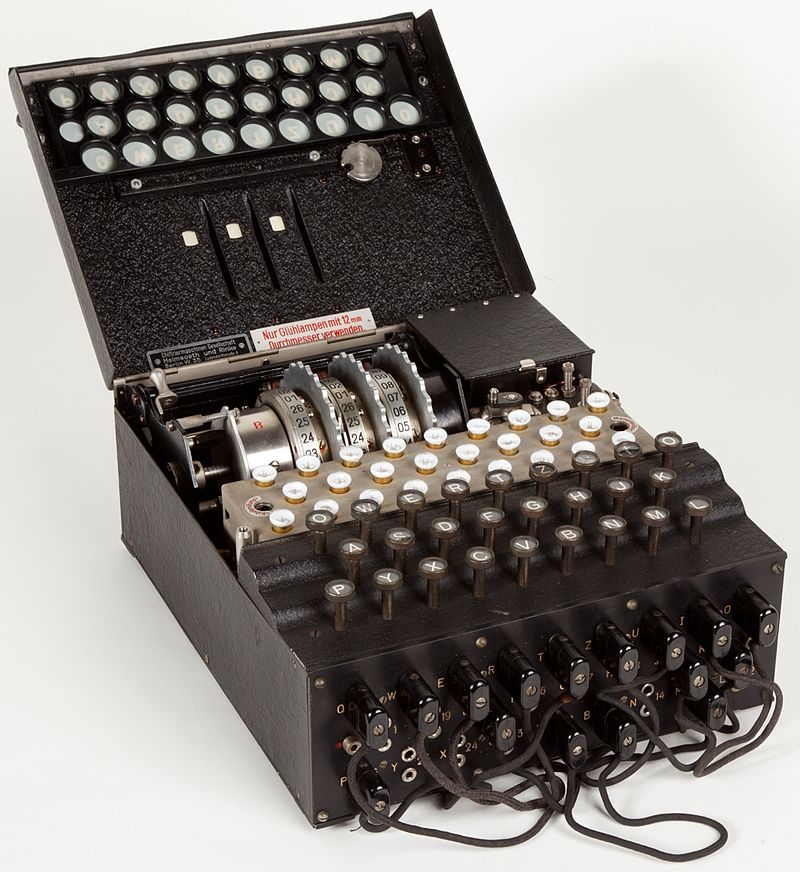
Enigma
German cipher machine

eSIM
alt=Comparison of SIM card sizes|thumb|Evolution of SIM cards. An eSIM is not removable.
Trusted Platform Module
international standard for a secure cryptoprocessor, a dedicated microcontroller designed to secure hardware through integrated cryptographic keys
Lorenz cipher
Cipher machines used by the German Army during World War II
hardware security module
physical computing device

YubiKey
The YubiKey is a collection of hardware authentication devices manufactured by Yubico AB (Nasdaq Stockholm: YUBICO), a company founded in 2007 by Jakob and Stina Ehrensvärd and headquartered in Stockholm, Sweden, with an American subdivision incorporated in Santa Clara California.
secure cryptoprocessor
device used for encryption

M-209
thumb|The M-209
In cryptography, the M-209, designated CSP-1500 by the United States Navy (C-38 by the manufacturer) is a portable, mechanical cipher machine used by the US military primarily in World War II, though it remained in active use through the Korean War. The M-209 was designed by Swedish cryptographer Boris Hagelin in response to a request for such a portable cipher machine, and was an improvement of an earlier machine, the C-36.

Typex
thumbnail|right|upright=1.2|Typex was based on the commercial Enigma machine, but incorporated a number of additional features to improve the security. This model, a Typex 22, was a late variant, incorporating two plugboards.
EFF DES cracker
machine to break the DES cypher by brute force
%204.jpg)
SIGABA
thumb|upright=1.2|SIGABA cipher machine at the National Cryptologic Museum, with removable rotor assembly on top
In the history of cryptography, the ECM Mark II was a cipher machine used by the United States for message encryption from World War II until the 1950s. The machine was also known as the SIGABA or Converter M-134 by the Army, or CSP-888/889 by the Navy, and a modified Navy version was termed the CSP-2900.

plugboard
thumb|IBM 402 accounting machine control panel wiring. This board was labeled "profit & loss summary."
thumb|Reverse side of the same 402 plugboard, showing the pins that make contact with the machine's internal wiring. The holes were called hubs.
A plugboard or control panel (the term used depends on the application area) is an array of jacks or sockets (often called hubs) into which patch cords can be inserted to complete an electrical circuit. Control panels are sometimes used to direct the operation of unit record equipment, cipher machines, and early computers. The array of holes is often
Siemens and Halske T52
World War II German cipher machine and teleprinter
trusted execution environment
secure area of a main processor
Fialka
In cryptography, Fialka (M-125) is the name of a Cold War-era Soviet cipher machine. A rotor machine, the device uses 10 rotors, each with 30 contacts along with mechanical pins to control stepping. It also makes use of a punched card mechanism. Fialka means "violet" in Russian. Information regarding the machine was quite scarce until c. 2005 because the device had been kept secret.
NEMA
coding machine
Lacida
The Lacida, also called LCD, was a Polish rotor cipher machine. It was designed and produced before World War II by Poland's Cipher Bureau for prospective wartime use by Polish military higher commands. Lacida was also known as Crypto Machine during a TNMOC Virtual Talk.