Category
page 1Culture of Peru
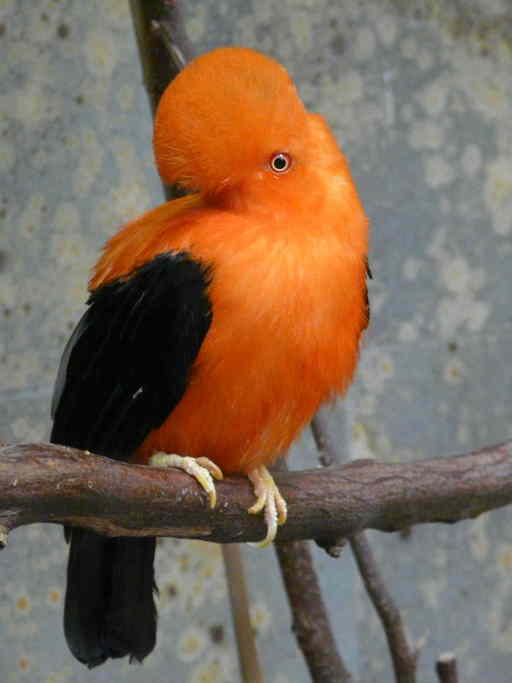
Andean Cock-of-the-rock
species of bird
Inti Raymi
Inca religious festival
shrunken head
specially prepared human head
Ica stones
decorated andesite stones found in Ica Province, Peru
Pacha Kamaq
Inca god creator and animator of all the universe, worshiped mainly on the coast

Supay
thumb|200px|Supay, as interpreted in a Peruvian festival
In the Quechua, Aymara, and Inca mythologies, '''''' (from "shadow"; ) was originally an ambivalent spirit, both benevolent and harmful, a denizen of the Incan netherworld (Hurin Pacha) who might enter the world of the living as "shadow", perhaps attempting to bring someone as companion into the world of the dead.

marinera
thumbnail|Marinera Norteña
Marinera is a partner dance that originated along the coastal regions of Peru, using handkerchiefs as props. The dance is a re-enactment of an ancient Mochic dance, modernised with a mix of Spanish contradanza and Andean zamacueca, and is a stylized reenactment of a courtship, showing a blend of the different cultures of Peru. The dance has gained recognition throughout South America and is known as the most prominent traditional dance of Peru. The city of Trujillo has been recognized as the national birthplace of the marinera since 1986. The Marinera Festival, a cul
Andean music
music and musical traditions of indigenous people of Andean region

huayno
Huayno (Waynu in Quechua) is a genre of popular Andean music and dance. It is especially common in Peru, western Bolivia, northwest Argentina and northern Chile, and is popular among the indigenous peoples, especially the Quechua people. The history of Huayno dates back to colonial Peru as a combination of traditional rural folk music and popular urban dance music. High-pitched vocals are accompanied by a variety of instruments, including quena (flute), harp, siku (panpipe), accordion, saxophone, charango, lute, violin, guitar, and mandolin. Some elements of huayno originate in the music of th

morenada
The Morenada is an Andean folk dance whose origins is from Bolivia. This dance is practiced mainly in Bolivia as well as in Peru and in recent years with Bolivian immigration in Chile, Argentina and other countries.
culture of Peru
pattern of human activity and symbolism associated with Peru and its people
Peruvian literature
literature from Peru, past and present
Queshuachaca
QueshuachacaThe name gets spelled very differently, mostly with the first element varying between and the second between .
music of Peru
music and musical traditions of Peru

Ekeko
thumb|Representation of the Ekeko in La Paz, [[Bolivia]]
Pishtaco
thumb|upright=1.15|Pishtako, Peruvian Retablos|Peruvian Retablo, Ayacucho
A '''''' (in Northern Quechua "slaughterer, cutthroat"), (in Southern Quechua, similar meaning) or (in Aymara,"slaughterer") is a folkloric boogeyman figure in the Andes region of South America, particularly in Peru and Bolivia, which extracts the fat of its victims.
música criolla
genre of Peruvian music
saya afroboliviana
music and dance of Afro-Bolivian people, born in Los Yungas in Bolivia
tapada limeña
Style of dress in Lima, Peru
Ministry of Culture
ministry of Peru
Pukllay
thumb|right|alt=Evo Morales and Eli Salguero at Pujllay|Former Bolivian President Evo Morales and Culture Minister [[Elizabeth Salguero attend the Pukllay festival which their administration has nominated for UNESCO recognition]]
Pukllay or phukllay (Quechua for to play, play / carnival, other spellings pucllay, pugllay, phujllay, pujhllay, pujllay, puqhllay) is a traditional festival held in the central Andes. The word "play" refers to either the clouds or the blossoms "playing" in the winds at the end of the rainy season and thus harvesting time. The Bolivian Pukllay is connected to the Chri
Llamerada
thumb|Llamerada is a dance that is practiced in Bolivia and Peru. The dance is inspired by llama herders and shepherds.
Llamerada It is a representation of the llama muleteers who went from the highlands altiplano to the valleys to exchange products, using the llama as a means of transporting products. It is also a remembrance of the task of herding llamas and has historical religious value as a ritual of good fortune.
Peruvian cumbia
Peruvian musical style derived from the Colombian cumbia
amauta
thumb | right | alt=Group of amautas in Plaza Murillo | Group of amautas in Plaza Murillo
Amauta (meaning "master" or "wise one" in Quechua) was a title for teachers in the Inca Empire, especially of children of the nobility.
According to Fray Martin de Murua, a missionary in Peru, education in the Inca empire was instituted in schools called Yachaywasi or "Houses of Knowledge" in Cuzco. Students were children of the Inca nobility, the future rulers. The subjects were the moral standards, religion, government tenets, statistics, math, science, "Runa-Simi" language variety of Cuzco, Khipu inter