Category
page 1Cycads
.JPG)
Cycadales
Cycads —constituting the division Cycadophyta—are seed plants with a stout, woody cylindrical trunk with a crown of large, hard, stiff, evergreen and usually pinnate (feather-shaped) leaves. The species are dioecious, that is, individual plants of a species are either male or female. Cycads vary in size from having trunks only a few centimeters to several meters tall. They typically grow slowly and have long lifespans. They superficially resemble palms or ferns, but are not closely related to either group. Cycads are gymnosperms. Cycads have specialized pollinators, usually a specific beetle,
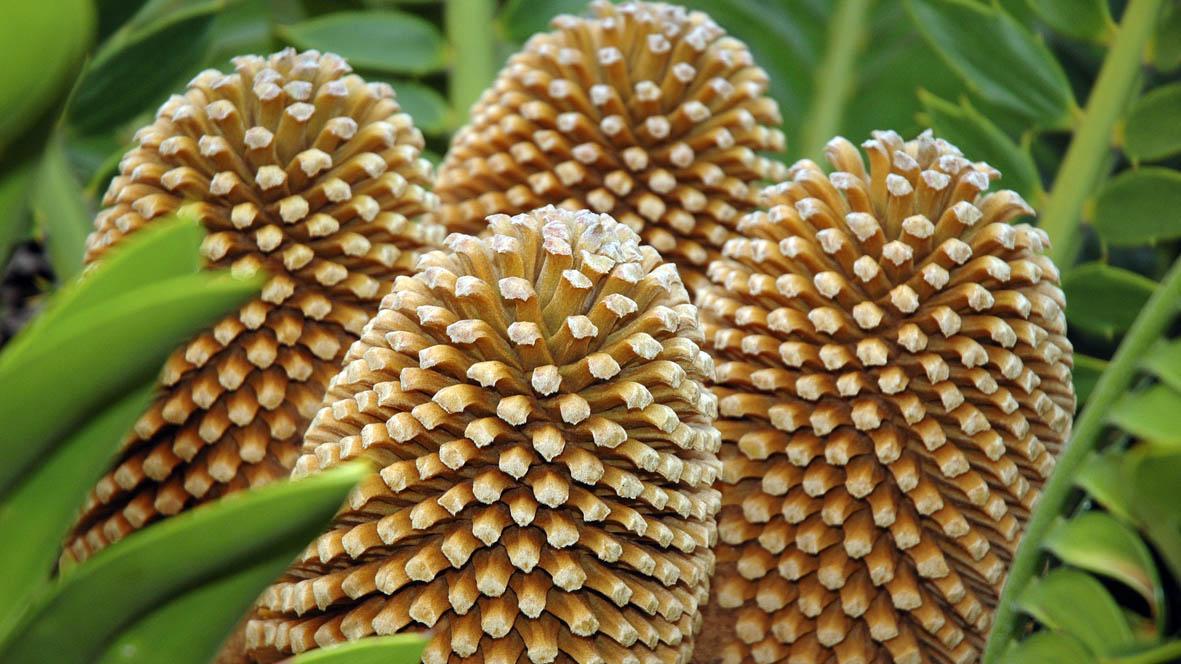
Zamiaceae
The Zamiaceae are a family of cycads that are superficially palm or fern-like. They are divided into two subfamilies with eight genera and about 150 species in the tropical and subtropical regions of Africa, Australia and North and South America.

Stangeria eriopus
Stangeria eriopus is a cycad endemic to southern Africa. It is the sole species in the genus Stangeria.
cycasin
Cycasin is a carcinogenic and neurotoxic glucoside found in cycads such as Cycas revoluta and Zamia pumila. Symptoms of poisoning include vomiting, diarrhea, weakness, seizures, and hepatotoxicity. In metabolic conditions, cycasin is hydrolyzed into glucose and methylazoxymethanol (MAM), the latter of which dissociates into formaldehyde and diazomethane.