Category
page 1Cyclopidae

Cyclops
genus of copepods

Cyclopidae
Cyclopidae is a family of copepods containing more than half of the 1,200 species in the order Cyclopoida in over 70 genera.
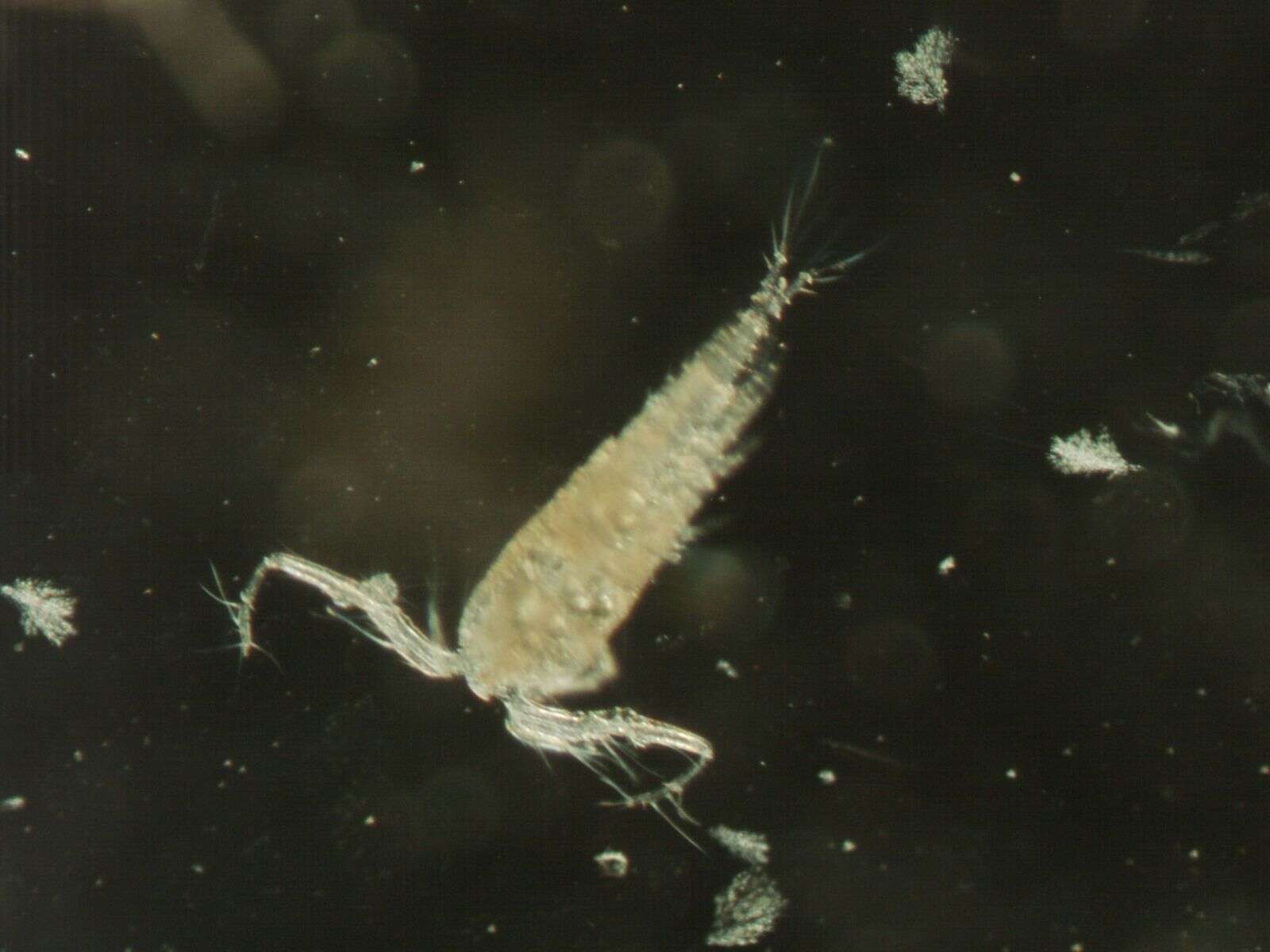
Mesocyclops
Mesocyclops is a genus of copepod crustaceans in the family Cyclopidae. Because the various species of Mesocyclops are known to prey on mosquito larvae, it is used as a nontoxic and inexpensive form of biological mosquito control.
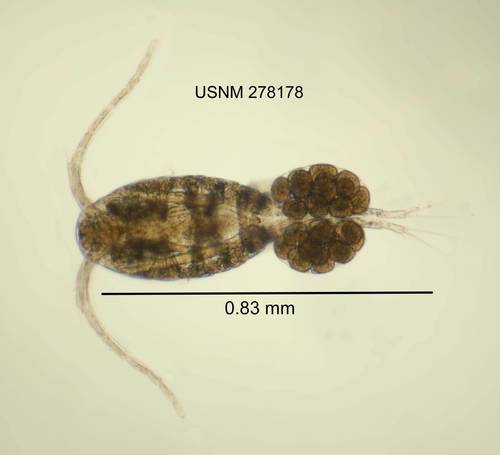
Tropocyclops
Tropocyclops is a genus of copepod crustaceans in the family Cyclopidae. It contains the following species:

Acanthocyclops
Acanthocyclops is a genus of copepod crustaceans in the family Cyclopidae. It was originally described by Friedrich Kiefer as a subgenus of Cyclops, and contains the following species:
Thermocyclops
Thermocyclops is a genus of crustacean in family Cyclopidae. It was first described and later extensively researched by Friedrich Kiefer, who discovered some 20 species. The species and subspecies of the genus inhabit fresh and brackish waters alike (rarely ground waters) all around the world, although most are from tropical areas.
Afrocyclops pauliani
species of copepod

Thermocyclops parvus
species of arthropods
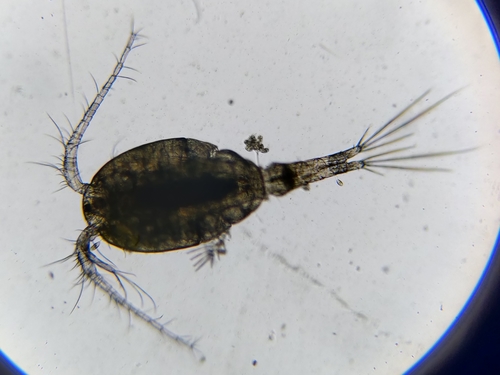
Macrocyclops
Macrocyclops is a genus of copepods belonging to the family Cyclopidae. There are currently 13 described species found in fresh water habitats throughout the world:
Macrocyclops albidus
species of arthropods
Afrocyclops
Afrocyclops is a genus of copepod crustaceans in the family Cyclopidae, containing the following species:
Afrocyclops alter Kiefer, 1935
Afrocyclops curticornis (Kiefer, 1932)
Afrocyclops doryphorus Kiefer, 1935
Afrocyclops gibsoni (Brady, 1904)
Afrocyclops herringi Alekseev & Sanoamuang, 2006
Afrocyclops ikennus Onabamiro, 1957
Afrocyclops lanceolatus Kiefer, 1935
Afrocyclops nubicus (Chappuis, 1922)
Afrocyclops pauliani Lindberg, 1951
Afrocyclops propinquus (Kiefer, 1932)
Afrocyclops sparus Dussart, 1974
Halicyclops
Halicyclops is a genus of copepods belonging to the family Cyclopidae. There are currently 94 described species found in brackish habitats throughout the world:
Metacyclops
Metacyclops is a genus of copepod crustaceans in the family Cyclopidae containing 61 species, of which three are listed on the IUCN Red List – M. campestris from Brazil (conservation dependent), M. gasparoi from Italy (vulnerable), and M. postojnae from Slovenia (vulnerable).
Microcyclops
Microcyclops is a genus of copepods, containing the following species:
Bryocyclops
Bryocyclops is a genus of freshwater-dwelling cyclopoid copepods. The prefix Bryo- for Bryophyta (Mosses) refers to the fact that the first few species were described from mosses.

Diacyclops
Diacyclops is a genus of cyclopoid copepods in the family Cyclopidae. There are more than 120 described species in Diacyclops.
thumb|Diacyclops thomasi
Cyclops bicuspidatus
species of crustacean
Acanthocyclops hypogeus
species of Maxillopoda

Megacyclops
thumb | 220x124px | right | Copepod Megacyclops
Megacyclops is a genus of copepods, containing the following species:
Metacyclops postojnae
species of Maxillopoda
Mesocyclops pehpeiensis
species of arthropods
Diacyclops thomasi
species of arthropods
Metacyclops campestris
species of Maxillopoda
Muscocyclops therasiae
species of Maxillopoda
Metacyclops gasparoi
species of Maxillopoda
Muscocyclops
Muscocyclops is a genus of copepod crustaceans in the family Cyclopidae, comprising three species found only in South America. Two of the species – Muscocyclops bidentatus and Muscocyclops therasiae – are endemic to the Distrito Federal in Brazil, and are listed as conservation dependent on the IUCN Red List. The third species is Muscocyclops operculatus.
Mesocyclops insulensis
species of Maxillopoda
Tropocyclops federensis
species of Maxillopoda
Tropocyclops nananae
species of Maxillopoda

Mesocyclops aspericornis
species of arthropods
Mesocyclops longisetus
species of arthropods
Ponticyclops boscoi
Ponticyclops is a genus of copepods in the family Cyclopidae. It is monotypic, being represented by the single species Ponticyclops boscoi. It is endemic to Brazil, where its natural habitat is swamps.