Category
page 1Data management

copyright
A copyright is a type of intellectual property that gives its owner the exclusive legal right to copy, distribute, adapt, display, and perform a creative work, usually for a limited time. The creative work may be in a literary, artistic, educational, or musical form. Copyright is intended to protect the original expression of an idea in the form of a creative work, but not the idea itself. A copyright is subjected to limitations based on public interest considerations, such as the fair use doctrine in the United States and fair dealing doctrine in the United Kingdom.

data
thumb|right|200px|These are some of the different types of data: Geographical, Cultural, Scientific, Financial, Statistical, Meteorological, Natural, Transport

big data
information assets characterized by such a high volume, velocity, and variety to require specific technology and analytical methods for its transformation into value

metadata
thumb|In the 21st century, metadata typically refers to digital forms, but traditional card catalogs contain metadata, with cards holding information about books in a library (author, title, subject, etc.).

backup
In information technology, a backup, or data backup is a copy of computer data taken and stored elsewhere so that it may be used to restore the original after a data loss event. The verb form, referring to the process of doing so, is "back up", whereas the noun and adjective form is "backup". Backups can be used to recover data after its loss from data deletion or corruption, or to recover data from an earlier time. Backups provide a simple form of IT disaster recovery; however not all backup systems are able to reconstitute a computer system or other complex configuration such as a computer c

data center
building or room where computer servers and related equipment are operated
business intelligence
techniques and tools for acquisition and transformation of raw data into meaningful and useful information for business analysis purposes
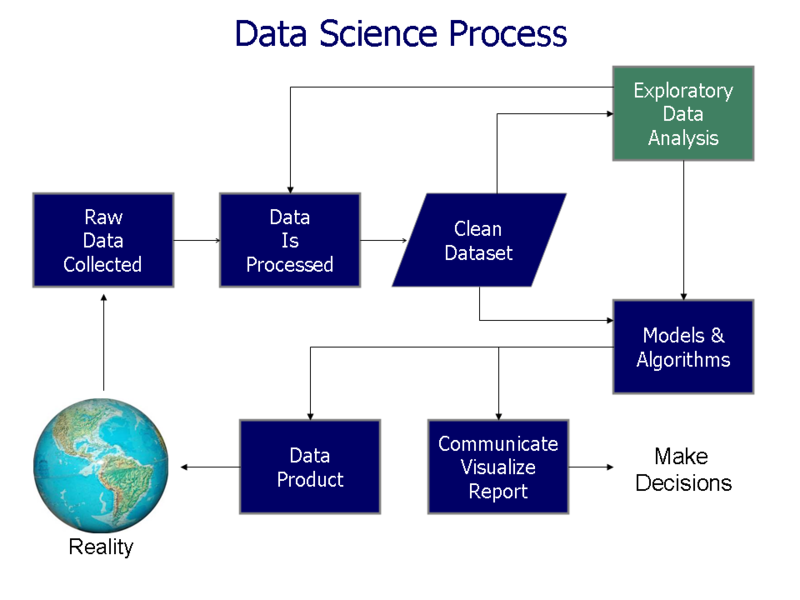
data analysis
activity for gaining insight from data
𝑛-tuple
In mathematics, a tuple is a finite sequence (or ordered list) of numbers. More generally, it is a sequence of mathematical objects, called the elements of the tuple. An -tuple is a tuple of elements, where is a non-negative integer. There is only one 0-tuple, called the empty tuple. A 1-tuple and a 2-tuple are commonly called a singleton and an ordered pair, respectively. The term "infinite tuple" is occasionally used for "infinite sequences".

NoSQL database management system
NoSQL (originally meaning "Not only SQL" or "non-relational") refers to a type of database design that stores and retrieves data differently from the traditional table-based structure of relational databases. Unlike relational databases, which organize data into rows and columns like a spreadsheet, NoSQL databases use a single data structure—such as key–value pairs, wide columns, graphs, or documents—to hold information. Since this non-relational design does not require a fixed schema, it scales easily to manage large, often unstructured datasets. NoSQL systems are sometimes called "Not only S
database normalisation
reduction of data redundancy
storage area network
network which provides access to consolidated, block level data storage
Cambridge Analytica
2013–2018 British political consulting firm
abstraction
technique for arranging complexity of computer systems
query language
computer language used to make queries into databases and information systems such as SQL or XQuery
data recovery
process of salvaging inaccessible data from corrupted or damaged secondary storage
database transaction
unit of work performed within a database management system
data management
disciplines related to managing data as a resource
cut, copy, and paste
user-interface method of transferring data between sites
linked data
structured data and method for its publication
online analytical processing
information system approach to facilitate and manage multi-dimensional data analysis
distributed database
database in which data is stored across different physical locations
database administrator
profession
data storage
recording (storing) of information (data) in a storage medium (physical or digital)
Netvibes
Netvibes is a French brand of Dassault Systèmes that previously ran a web service offering a dashboard and feed reader. Currently, the company offers business intelligence tools.
computer-aided software engineering
type of software tool used to design and implement applications
data security
protecting digital data from destructive forces and from the unwanted actions of unauthorized users
address space
range of discrete addresses, each of which may correspond to a network host, peripheral device, disk sector, a memory cell or other logical or physical entity
learning object
in education and data management
content management
process of managing information or experiences built with an audience in mind
database schema
visual representation of database system relationships
association rule learning
method for discovering interesting relations between variables in databases

ADO.NET
ADO.NET is a data access technology from the Microsoft .NET Framework and .NET that provides communication between relational and non-relational systems through a common set of components.
ADO.NET is a set of computer software components that programmers can use to access data and data services from a database. It is a part of the base class library that is included with the Microsoft .NET Framework. It is commonly used by programmers to access and modify data stored in relational database systems, though it can also access data in non-relational data sources. ADO.NET is sometimes considered a
data dictionary
set of metadata that contains definitions and representations of data elements
inverted index
specialized database index to accelerate full-text search
data lake
system or repository of data stored in its natural/raw format
database engine
underlying software component that a database management system (DBMS) uses to create, read, update and delete (CRUD) data from a database
data deduplication
data processing technique to eliminate duplicate copies of repeating data
IT disaster recovery
set of policies, tools and procedures to enable the recovery or continuation of vital technology infrastructure and systems following a natural or human-induced disaster, focusing on the IT or technology systems supporting critical business functions
database server
server which uses a database application that provides database services to other computer programs or to computers
document-oriented database management system
computer program designed for storing, retrieving and managing semi-structured, document-oriented information
key–value database system
data storage paradigm designed for storing, retrieving, and managing associative arrays
enterprise information system
type of information system
data integration
combining data from different sources and providing a unified view
NewSQL
NewSQL is a class of relational database management systems that seek to provide the scalability of NoSQL systems for online transaction processing (OLTP) workloads while maintaining the ACID guarantees of a traditional database system.
distributed data storage
computer network with 2 or more nodes to store information
FAIR data
principles for data to facilitate machine readability without human intervention
master data management
process of identifying, collecting, and integrating critical data of an organization in a single place
dashboard
type of software or components thereof

astroinformatics
thumb|upright=1.25|Hyperion proto-supercluster unveiled by measurements and examination of archive data
concurrency control
measures to ensure concurrent computing operations generate correct results
pseudonymization
Pseudonymization is a data management and de-identification procedure by which personally identifiable information fields within a data record are replaced by one or more artificial identifiers, or pseudonyms. A single pseudonym for each replaced field or collection of replaced fields makes the data record less identifiable while remaining suitable for data analysis and data processing.

datafication
Datafication is a technological trend turning many aspects of our life into data, which is then converted into information, thereby manifesting as a new form of value.
data archaeology
study of old data sources
two-phase commit protocol
type of atomic commitment protocol

DMAIC
DMAIC or define, measure, analyze, improve and control (pronounced də-MAY-ick) refers to a data-driven improvement cycle used for optimizing and stabilizing business processes and designs. The DMAIC improvement cycle is the core tool used to drive Six Sigma projects. However, DMAIC is not exclusive to Six Sigma and can be used as the framework for other improvement applications.
object storage
computer data storage architecture that manages data as objects

data governance
Data governance is an organization’s ability to ensure the high quality of its data and its proper use through clearly defined rules.
Learning object metadata
data model
schedule
abstract model to describe execution of transactions running in the system