Category
page 1Deductive reasoning
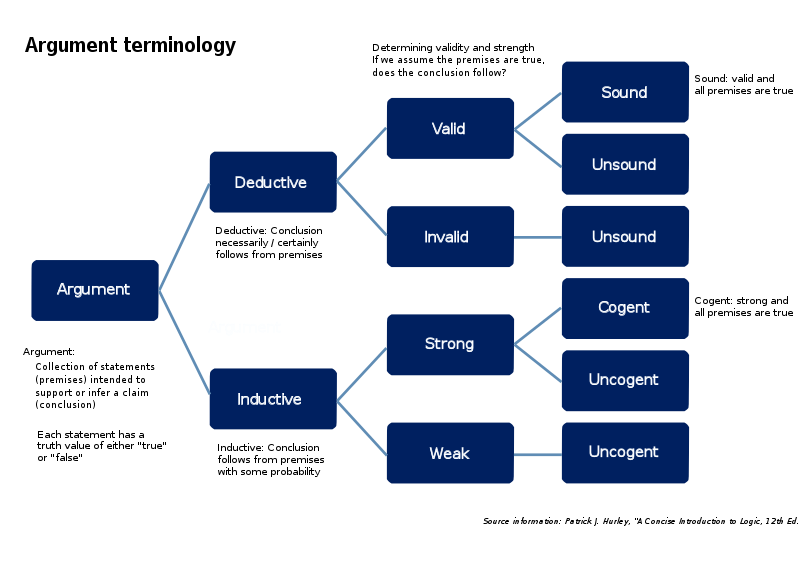
deductive reasoning
method of reasoning by which premises understood to be true produce logically certain conclusions

statistical inference
process of deducing properties of an underlying probability distribution by analysis of data
logical consequence
fundamental concept in logic
validity
logical correctness of an argument's steps, regardless of the truth of the premises
natural deduction
kind of proof calculus
soundness
In logic, soundness can refer to either a property of arguments or a property of formal deductive systems.
formal fallacy
deductive argument that is invalid due to faulty reasoning, regardless of the truthiness of the conclusion
deduction theorem
theorem
Bulverism
Bulverism is a rhetorical fallacy that combines circular reasoning, the genetic fallacy and ad hominem with presumption or condescension. The Bulverist presumes that a speaker's argument is false or invalid and then explains why the speaker made that argument (even if said argument is actually correct) by attacking the speaker or the speaker's motive.
Apriorism
Apriorism (sometimes a priorism or a-priorism) in modern times, refers to epistemological positions that assume that certain knowledge can be justified without reference to experience, or, in a narrower sense, that knowledge is entirely possible without any experience. The truth of statements is to be proven by logical deduction from true premises. Only those presuppositions come into question that can be regarded as necessities of reason independent of any experience. Critics accuse apriorism of committing a “petitio principii”, i.e. proving something that is already assumed to be true. Johan
turnstile
mathematical symbol
Implied powers
powers implicitly authorized by the U.S. Constitution