Category
page 1Dendrobranchiata

Dendrobranchiata
Dendrobranchiata is a suborder of decapods, commonly known as prawns (though this may be ambiguous). There are 540 extant species in seven families, and a fossil record extending back to the Devonian. They differ from related animals, such as Caridea and Stenopodidea, by the branching form of the gills (hence their scientific name Dendrobrachiata) and by the fact that they do not brood their eggs, but release them directly into the water. They may reach a length of over and a mass of , and are widely fished and farmed for human consumption.

Penaeidae
Penaeidae is a family of marine crustaceans in the suborder Dendrobranchiata, which are often referred to as penaeid shrimp or penaeid prawns. The Penaeidae contain many species of economic importance, such as the tiger prawn, whiteleg shrimp, Atlantic white shrimp, and Indian prawn. Many prawns are the subject of commercial fishery, and farming, both in marine settings, and in freshwater farms. Lateral line–like sense organs on the antennae have been reported in some species of Penaeidae. At , the myelinated giant interneurons of pelagic penaeid shrimp have the world record for impulse conduc
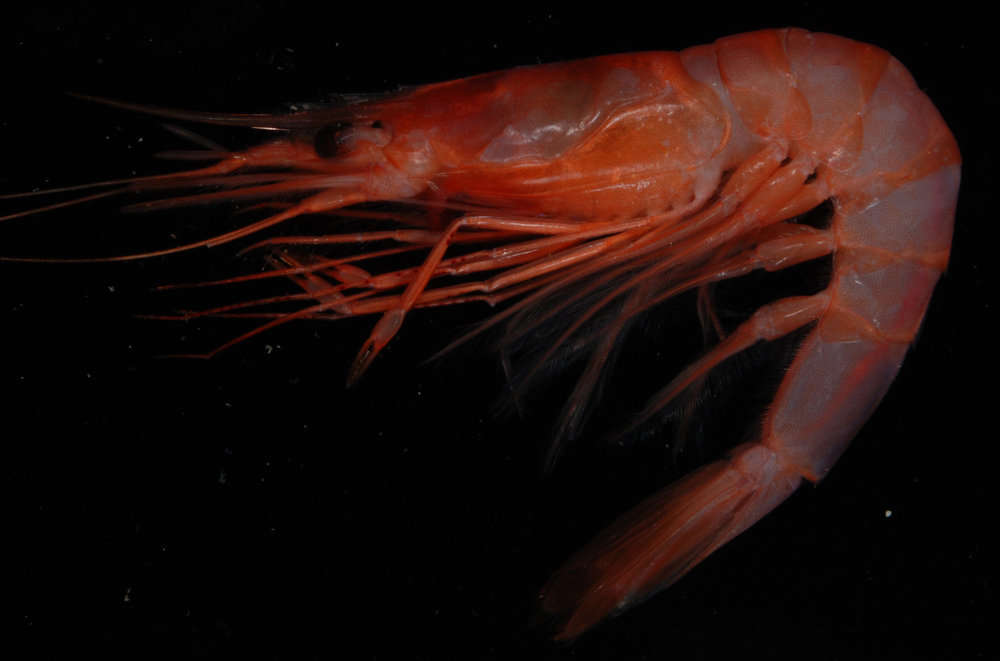
Penaeoidea
Penaeoidea is the larger of the two superfamilies of prawns. It comprises eight families, three of which are known only from fossils. The fossil record of the group stretches back to Aciculopoda, discovered in Famennian sediments in Oklahoma.
† Aciculopodidae (1 genus, 1 species)
† Aegeridae (2 genera, 25 species)
Aristeidae (10 genera, 28 species)
Benthesicymidae (5 genera, 43 species)
† Carpopenaeidae (1 genus, 3 species)
Penaeidae (48 genera, 286 species)
Sicyoniidae (1 genus, 53 species)
Solenoceridae (10 genera, 86 species)

Benthesicymidae
Benthesicymidae is a family of pelagic and bathypelagic shrimps in the suborder Dendrobranchiata. Because they live in the deep ocean, these shrimp are difficult to collect, and much is still unknown about their ecology and evolution. Recent work by Vereshchaka & Lunina has clarified evolutionary relationships within the family. Evidence for fossil Benthesicymidae have been collected from the Late Santonian of Lebanon.

Sergestidae
Sergestidae is a family of prawns which have lived since at least the Middle Jurassic (Bajocian/Bathonian of Monte Fallano Plattenkalk). It contains the following genera:
Acetes H. Milne-Edwards, 1830
Allosergestes Judkins & Kensley, 2008
Casertanus Bravi et al., 2014 †
Cretasergestes Garassino & Schweigert, 2006 †
Deosergestes Judkins & Kensley, 2008
Eusergestes Judkins & Kensley, 2008
Neosergestes Judkins & Kensley, 2008
Paleomattea Maisey & G. P. de Carvalho, 1995 †
Parasergestes Judkins & Kensley, 2008
Sergestes H. Milne-Edwards, 1830
Sergia Stimpson, 1860
Sicyonella Borradaile, 1910

Aristeidae
Aristeidae is a family of Dendrobranchiata decapod crustaceans known as deep-sea shrimps, gamba prawns or gamba shrimps. Some species are subject to commercial fisheries.

Aristaeomorpha foliacea
species of crustacean

Sergia lucens
species of crustacean
Sergestoidea
Sergestoidea is a superfamily of prawns, divided into two families – the Luciferidae and the Sergestidae.

Lucifer
genus of crustaceans

Acetes
Acetes is a genus of small prawns that resemble krill, which is native to the western and central Indo-Pacific, the Atlantic coast of the Americas, Pacific coast of South America and inland waters of South America. Although most are from marine or estuarine habitats, the South American A. paraguayensis is a fresh water species. Several of its species are important for the production of shrimp paste in Southeast Asia, including Acetes. japonicus, which is the world's most heavily fished species of wild shrimp or prawn in terms of total tonnage and represent the majority of non-human animals kil
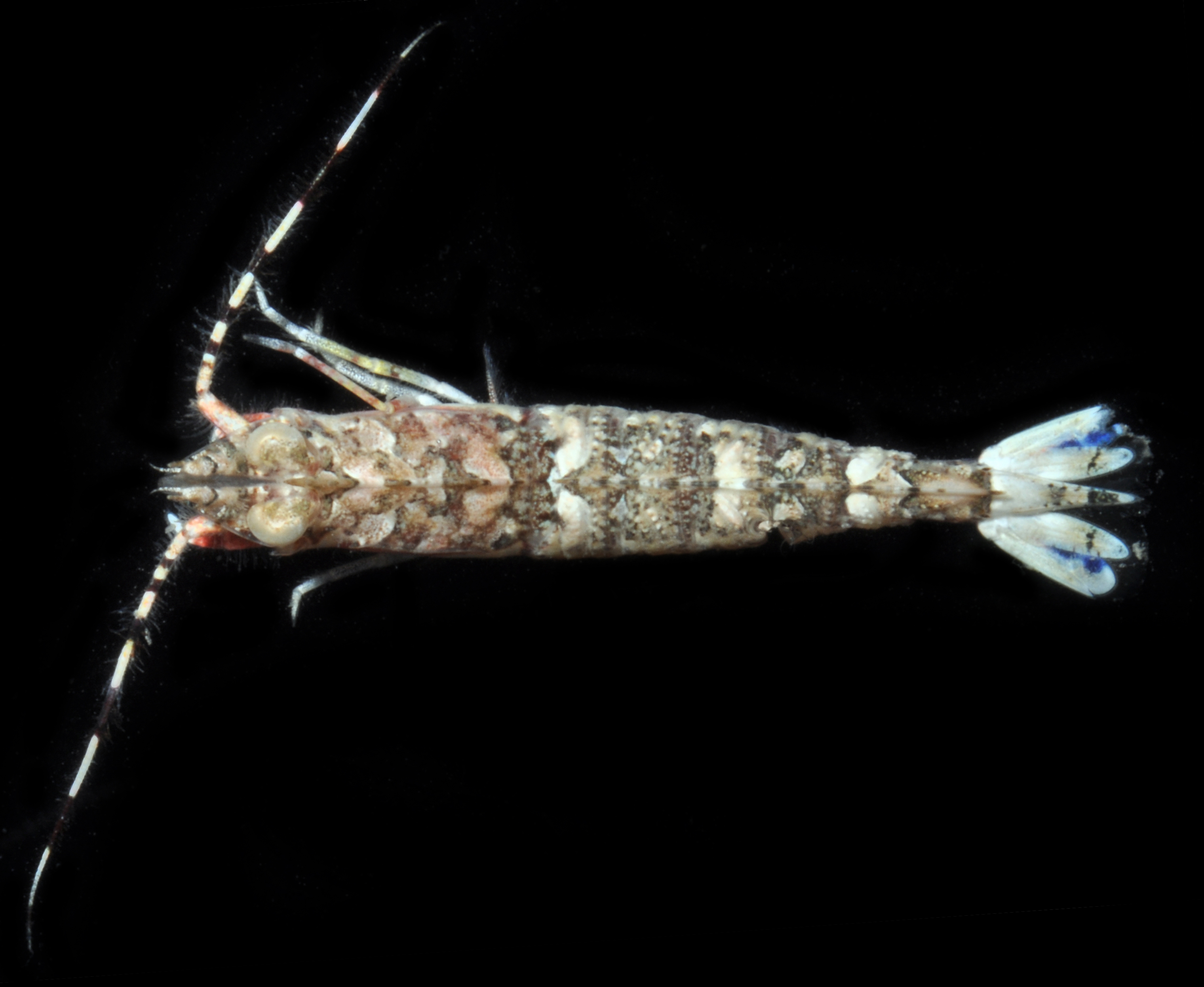
Sicyonia
Sicyonia is a genus of prawns, placed in its own family, Sicyoniidae. It differs from other prawns in that the last three pairs of its pleopods are uniramous, rather than biramous as seen in all other prawns.

Acetes japonicus
species of crustacean
shrimp fishing
fisheries for shrimp and prawns
Aristaeomorpha
Aristaeomorpha is a genus of deep water prawns from the family Aristeidae.
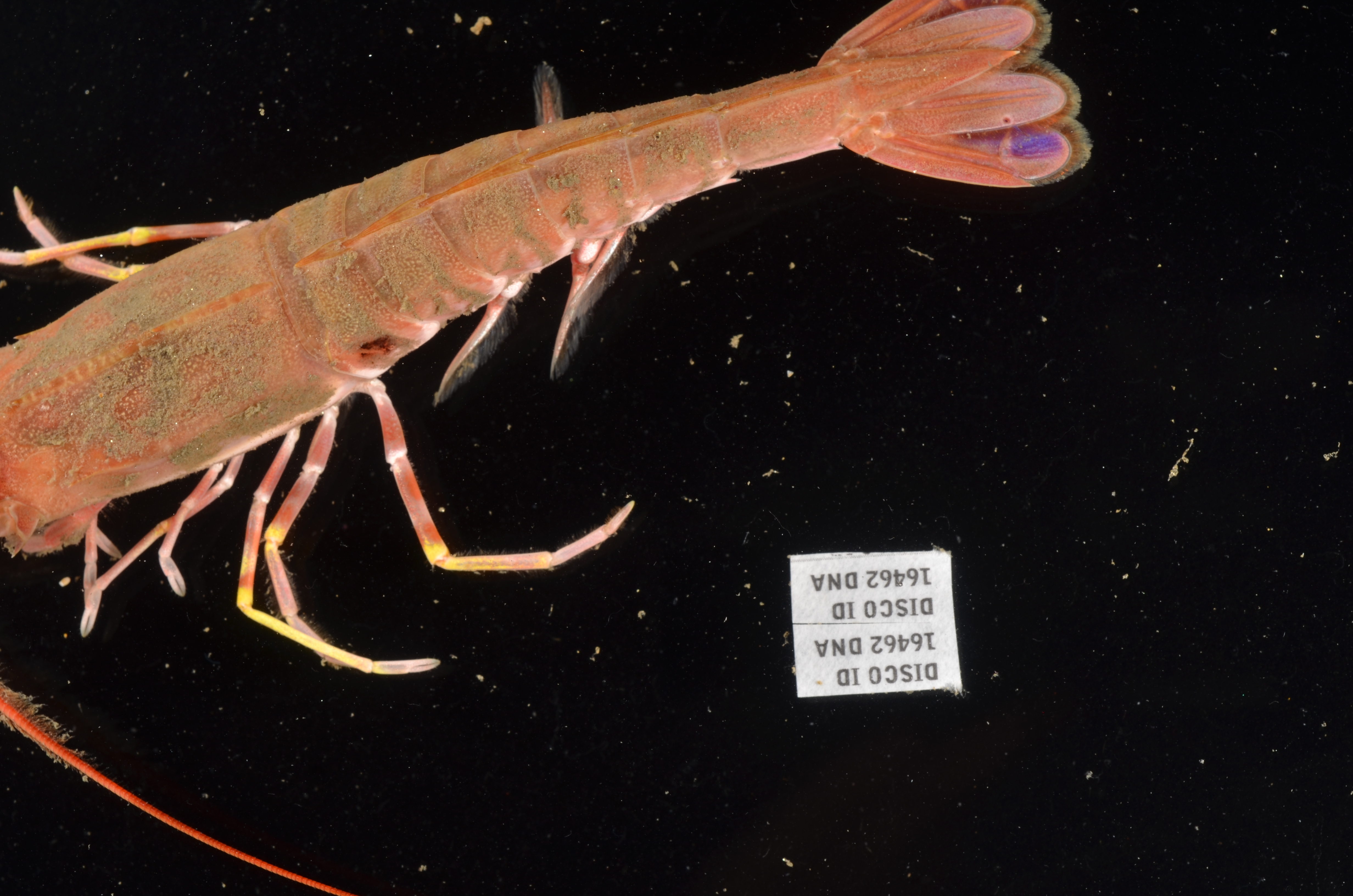
Aristeus
genus of crustaceans
Aeger
Aeger is a genus of fossil prawns. They first occur in the Early Triassic (Paris biota), and died out at the end of the Late Cretaceous. A total of 21 species are known, which makes this the most diverse genus in the family Aegeridae.
Aegeridae
Aegeridae is a family of fossil prawns, one of the earliest Mesozoic shrimp families. It contains the genera Aeger, Acanthochirana, Anisaeger and Distaeger. The main diagnostic character of Aegeridae is the presence of numerous spines or thin setae on the third maxilliped.

Luciferidae
Luciferidae is a family of prawns belonging to the superfamily Sergestoidea. Members of this family are small and are characterised by bioluminescence. Another characteristic of this family is the loss or reduction of some appendages.
Sicyonia ingentis
species of crustacean

Gennadas
Gennadas is a genus of shrimps in the family Benthesicymidae.
Benthesicymus
Benthesicymus is a genus of prawns, containing the following species:
Acanthochirana
Acanthochirana is an extinct genus of prawn that existed during the upper Jurassic period. It was named by E. Strand in 1928. They are distinguished from the related genus Aeger by the presence of teeth on the rostrum, which are absent in Aeger.
Austropenaeus
Austropenaeus is a monotypic genus of deepwater prawn. Its only species is Austropenaeus nitidus which is native to the deep water surrounding South Africa.

Gennadas elegans
species of crustacean
Aristaeopsis
Aristaeopsis is a monotypic genus of deepwater prawn. Its only species Aristaeopsis edwardsiana, commonly known as Carabineros shrimp or cardinal prawn, is the target of commercial fisheries. The scientific name honours Henri Milne-Edwards.
Carpopenaeus
Carpopenaeus is an extinct genus of prawn, which existed during the Upper Jurassic and Cretaceous periods. It contains three species.