Category
page 1Denominations (currency)

yen
official currency of Japan

dollar
[[File:Countries that use the dollar.svg|thumb|upright=1.5|

rupee
thumb|
Rupee (, ) is the common name for the currencies of India, Mauritius, Nepal, Pakistan, Seychelles, and Sri Lanka, and of former currencies of Afghanistan, Bahrain, Kuwait, Oman, the United Arab Emirates (as the Gulf rupee), British East Africa, Burma, German East Africa (as Rupie/Rupien), and Tibet. In Indonesia and the Maldives, the unit of currency is known as rupiah and rufiyaa respectively, cognates of the word rupee.

ruble
thumb|5,000 Russian rubles of the 2023 series, the highest available nominal in circulation
thumb|500 Belarusian rubles of the 2009 series, the highest available nominal in circulation, though it is rarely seen

dinar
thumb|300px|right|Nations in dark green currently use a currency known as the dinar. Nations in light green previously used a dinar. States of former Yugoslavia appear in the inset to the lower left.

Dirham
thumb|Nations in red currently use the dirham. Nations in green use a currency with a subdivision named dirham.
The dirham, dirhem or drahm is a unit of currency and of mass. It is the name of the currencies of Morocco, the United Arab Emirates and Armenia, and is the name of a currency subdivision in Jordan, Libya, Qatar and Tajikistan. It was historically a silver coin.

thaler
thumb|300px|Four thalers and one double thaler, compared to a U.S. Quarter (United States coin)|quarter (bottom center):
Clockwise from top left:
Saxe-Altenburg 1616 (reverse),
Saxony 1592,
Austria 1701 (obverse),
Saxony 1592 (obverse),
Center: double thaler, Austria 1635 (obverse).
A thaler, or taler ( ; , previously spelled ), is one of the large silver coins minted in the states and territories of the Holy Roman Empire and the Habsburg monarchy during the Early Modern period. A thaler size silver coin has a diameter of about and a weight of about 25 to 30 grams (roughly 1 ounce). The word
cent
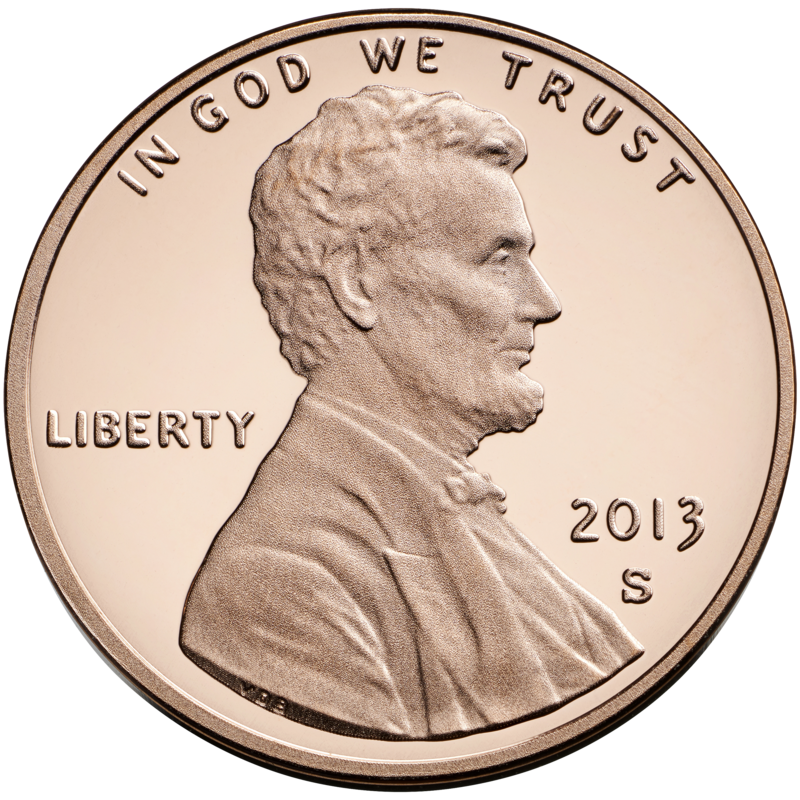
monetary unit in many national currencies

peso
thumb|right|300px|
The peso is the monetary unit of several Spanish-speaking countries in Latin America, as well as the Philippines. Originating in the Spanish Empire, the word translates to "weight". In most countries of the Americas, the symbol commonly known as dollar sign, "$", was originally used as an abbreviation of "pesos" and later adopted by the dollar. The dollar itself actually originated from the peso or Spanish dollar in the late 18th century. The sign "₱" is used in the Philippines.

shilling
thumb|250px|A 1933 UK shilling
thumb|250px|1956 Elizabeth II UK shilling showing English and Scottish reverses
pound
currency in some nations

franc
The franc is any of various units of currency. One franc is typically divided into 100 centimes. The name is said to derive from the Latin inscription (King of the Franks) used on early French coins and until the 18th century, or from the French franc, meaning "frank" (and "free" in certain contexts, such as , "free kick").

guilder
thumb|280px|Florence gulden (1341)

kopeck
right|thumb|1997 kopeyka (Russian ruble|Russia)
right|thumb|1992 kopiyka (Ukrainian hryvnia|Ukraine)
crown
currency in some states in Europe

escudo
right|thumb|Joanna of Castile|Juana and Charles I. 1504–1555. AV Escudo (24 mm, 3.38 g, 9 h). [[Seville mint.]]
right|thumb|Portuguese coin of 1 escudo, 1987
The escudo (Portuguese: 'shield') is a unit of currency which is used in Cape Verde, and which has been used by Portugal, Spain and their colonies. The original coin was worth 16 silver . The Cape Verdean escudo is, and the Portuguese escudo was, subdivided into 100 . Its symbol is the , a letter S with two vertical bars superimposed used between the units and the subdivision (for example, ).

piastre
thumb|alt= 10 Egyptian piastres (copper-nickel alloy composition and silver color); coin's obverse depicts Muhammad Ali Mosque from a flat perspective, coin reverse contains a Kufic font inscription of “Jumhuriyat Masr Al-Arabia”, translating to the Arab Republic of Egypt, below which the denomination of 10 piastres is written as number hovering over the word “qurush”, translating to piastres, which bends with the curvature of the coins edge, which is surrounded by the Gregorian (1984) and Hijra (1404) dates. | Image of 10 Egyptian piastres (currently valueless, thus absent from circulation)
t
mark
currency or unit of account in many nations
yuan
one of several Chinese currencies, historical and present; name of currency unit in some east Asian languages
fils
subdivision of currency used in many Arab countries
Abbasi
Persian silver coin
denomination
proper description of a currency amount, usually for coins or banknotes
som
unit of currency used in Turkic-speaking countries in Central Asia
hacksilver
thumb|The mixed Viking Cuerdale Hoard, deposited in England before c. 910, also contains 8,600 coins, as well as these ingots and pieces of jewellery and plate.
thumb|Hacksilver from the medieval period, Museum für Hamburgische Geschichte, Hamburg, Germany.
thumb|Viking age settlement, eighth to eleventh centuries; trade and raid routes are marked green.