Category
page 1Dermatology

dermatology
Dermatology is the branch of medicine dealing with the skin. It is a specialty with both medical and surgical aspects. A dermatologist is a specialist medical doctor who has undergone advanced training (typically 4 years beyond medical school) and manages diseases related to skin. Dermatological conditions, including inflammatory diseases, infections, cancers, hair loss, and cosmetic issues are common in the population, and sometimes difficult to diagnose or treat, requiring the services of a dermatologist. In addition to these routine issues, some conditions such as serious burns, angiodema,
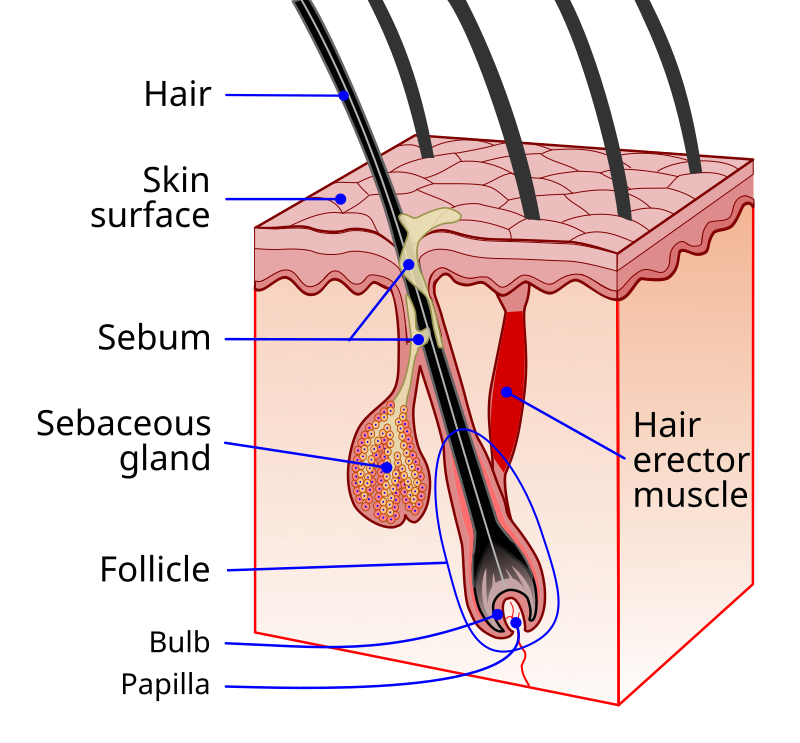
hair follicle
organ found in the dermal layer of the mammalian skin that regulates hair growth
hair removal
temporary removal of body hair
actinic keratosis
human disease
arrector pili muscle
type of muscle

hematidrosis
Hematidrosis, also called hematohidrosis, haematidrosis, hemidrosis and blood sweat, is a very rare condition in which a human sweats blood. The term is from Greek / (αἷμα/αἵματος), meaning blood, and (ἱδρώς), meaning sweat.
Polymorphous light eruption
medical condition
Rete pegs
cellular structures which help bind epithelium to underlying connective tissue
psychodermatology
Psychodermatology is the treatment of skin disorders using psychological and psychiatric techniques by addressing the interaction between mind and skin. Though historically there has not been strong scientific support for its practice, there is some newer evidence that behavioral treatments may be effective in the management of chronic skin disorders. The theory as a whole has not garnered enough conclusive and experimentally replicable data to support incorporation into the scientific mainstream.
Henle's layer
anatomical structure of hair follicle