Category
page 1Destiny

destiny
thumb|Fate, by Alphonse Mucha
.jpg)
predestination
Predestination, in theology, is the doctrine that all events have been willed by God, usually with reference to the eventual fate of the individual soul. Explanations of predestination often seek to address the paradox of free will, whereby God's omniscience seems incompatible with human free will. In this usage, predestination can be regarded as a form of religious determinism; and usually predeterminism, also known as theological determinism.

Moirae
In ancient Greek religion and mythology, the Moirai ()often known in English as the Fateswere the personifications of destiny. In certain accounts, they were considered as three sisters: Clotho (the spinner), Lachesis (the allotter), and Atropos (the inevitable, a metaphor for death), though their number and names varied over time according to the author. Their Roman equivalent is the Parcae.

fatalism
thumb|right|Destiny, painting by Thomas Cooper Gotch|T. C. Gotch (1885–1886), [[Adelaide, Art Gallery of South Australia]]
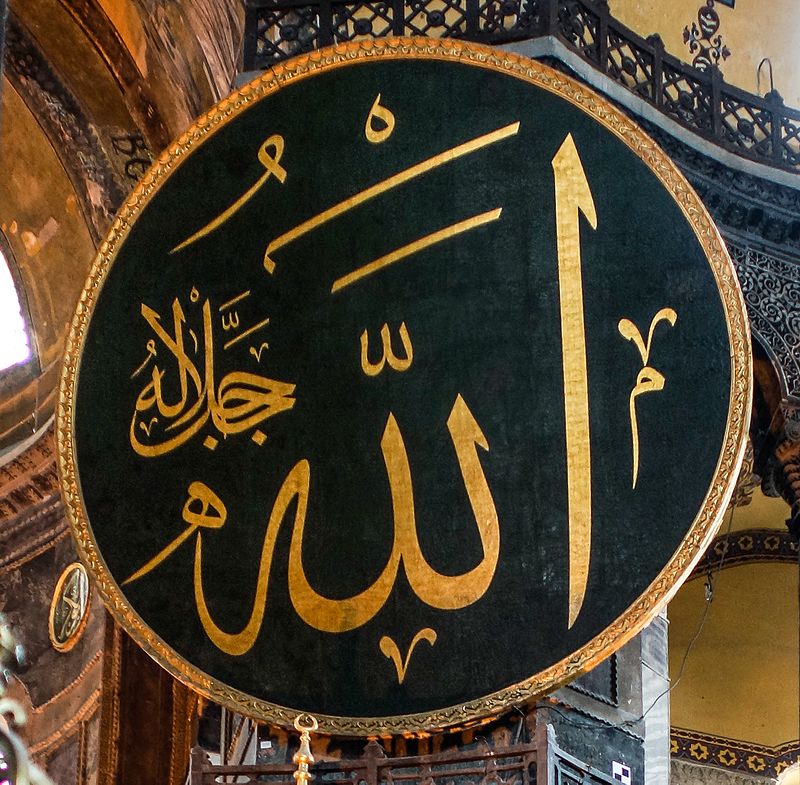
Inshallah
Inshallah, usually called the , is an Arabic-language expression meaning or . It is mentioned in the Quran, surah Al-Kahf (23-24), which requires its use when mentioning intended actions. It signifies that nothing, neither action nor thought, happens without God's permission.

Ananke
thumb|Ananke as represented by a modern illustration of Plato's Republic
Predestination in Islam
Concept of Divine Fate in Islamic teachings

Parcae
thumb|Les Parques ("The Parcae," ca. 1885) by Alfred Agache (painter)|Alfred Agache
thumb|The Three Parcae (1540-1550), by Marco Bigio, in Villa Barberini, Rome
thumb|Fireback with Parcae
amor fati
Latin phrase
Sic transit gloria mundi
Latin phrase
fylgja
In Nordic folklore and mythology, a fylgja (Old Norse: , Old Swedish: fylghia, older Dalecarlian: fylgja) is a supernatural being or spirit which accompanies a person in connection to their fate or fortune. They can appear to people in their sleep as dream-women, or appear to them while awake, often in the disembodied spiritual form of an enemy.

wyrd
thumb|Poster for the Norwegian magazine Urd (magazine)|Urd by [[Andreas Bloch and Olaf Krohn|upright]]
Wyrd is a concept in Anglo-Saxon culture roughly corresponding to fate or personal destiny. The word is ancestral to Modern English weird, whose meaning has drifted towards an adjectival use with a more general sense of "supernatural" or "uncanny", or simply "unexpected".
Tale of the doomed prince
ancient Egyptian literary text

Fate of the unlearned
an eschatological question about the ultimate destiny of people who have not been exposed to a particular theology or doctrine and thus have no opportunity to embrace it

shikata ga nai
Japanese locution: 'it cannot be helped'