Category
page 1Dipluridae

Dipluridae
The family Dipluridae, known as curtain-web spiders (or confusingly as funnel-web tarantulas, a name shared with other distantly related families) are a group of spiders in the infraorder Mygalomorphae, that have two pairs of booklungs, and chelicerae (fangs) that move up and down in a stabbing motion. A number of genera, including that of the Sydney funnel-web spider (Atrax), used to be classified in this family but have now been moved to Atracidae.
Masteria
Masteria is a genus of curtain web spiders that was first described by L. Koch in 1873. They occur in the tropics of Central to South America, Asia and Micronesia, with one species found in Australia. M. petrunkevitchi males are long and females are long. M. lewisi, M. barona, and M. downeyi are slightly smaller and have only six eyes. Most species in the genus have six eyes, but two (Masteria caecia and Masteria pecki) have no eyes.
Trechona
Trechona is a genus of South American curtain web spiders that was first described by C. L. Koch in 1850. The venom of at least one species is considered potentially dangerous to humans.
Harmonicon
genus of arachnids
Diplura
genus of arachnids

Linothele
Linothele is a genus of curtain web spiders that was first described by Ferdinand Karsch in 1879. All but one of the described species are from South America (Bolivia, Brazil, Colombia, Ecuador, Peru and Venezuela) and adjacent Panama. The exception is L. septentrionalis from the far-away Bahamas, although it has certain features that suggest it may belong in another genus.

Striamea
Striamea is a genus of South American curtain web spiders that was first described by Robert Raven in 1981. it contains only two species, both found in Colombia: S. gertschi and S. magna.
Diplura lineata
species of arachnid
Masteria toddae
species of arachnid
Allothele regnardi
species of arachnid
Siremata
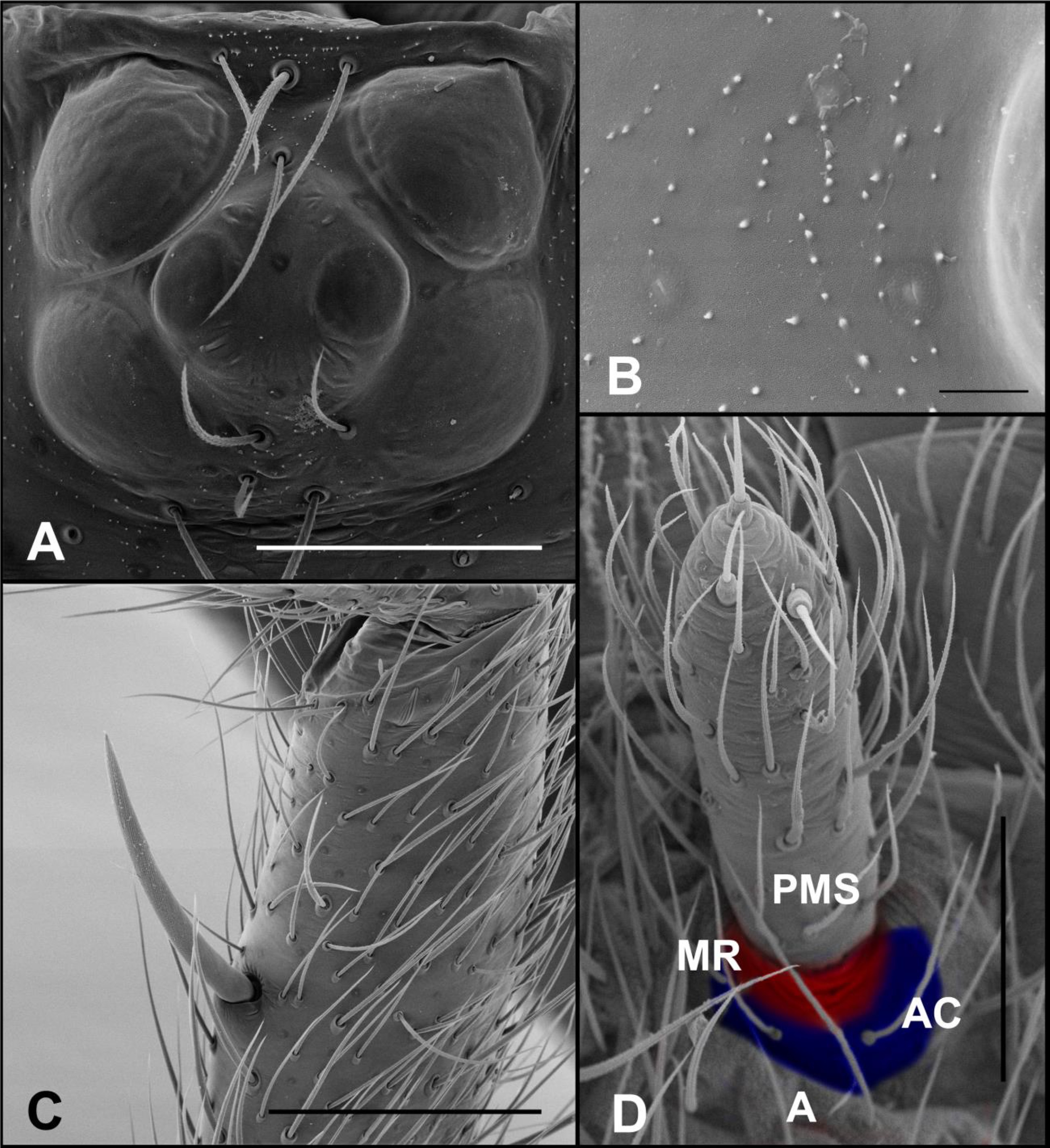
Siremata is a genus of curtain web spiders first described by V. Passanha & Antônio Domingos Brescovit in 2018. it contains only three species.