Category
page 1Diprotodonts

Diprotodontia
Diprotodontia () is the largest extant order of marsupials, with about 155 species, including the kangaroos, wallabies, possums, koala, wombats, and many others. Extinct diprotodonts include the hippopotamus-sized Diprotodon, and Thylacoleo, the so-called "marsupial lion".

honey possum
species of marsupial

Hypsiprymnodon moschatus
species of mammal

Phalangeriformes
Phalangeriformes is a paraphyletic suborder of about 70 species of small to medium-sized arboreal marsupials native to Australia, New Guinea, and Sulawesi. The species are commonly known as possums, gliders, and cuscus. The common name "(o)possum" for various Phalangeriformes species derives from the creatures' resemblance to the opossums of the Americas (the term comes from Powhatan language aposoum "white animal", from Proto-Algonquian *wa·p-aʔɬemwa "white dog"). However, although opossums are also marsupials, Australasian possums are more closely related to other Australasian marsupials suc
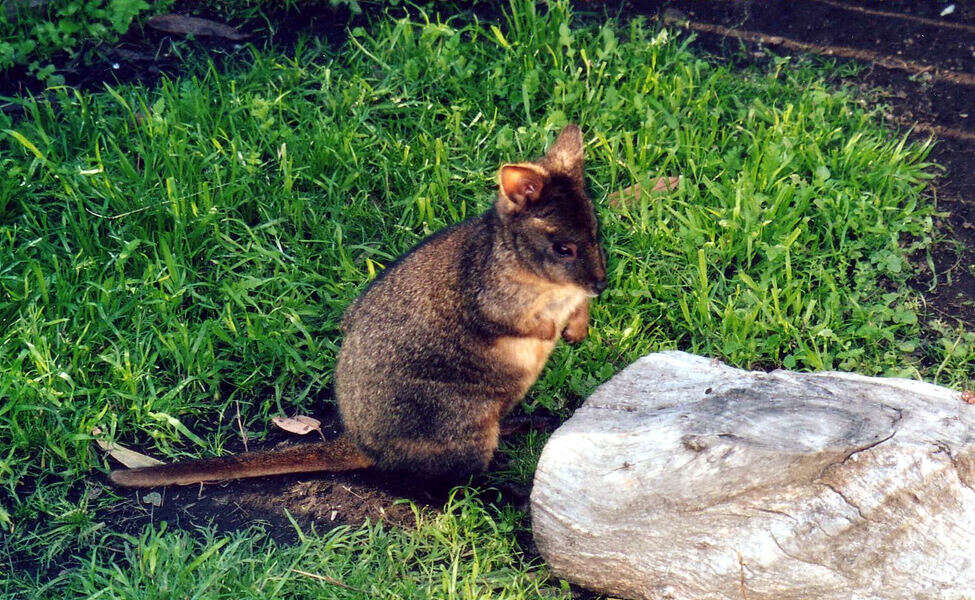
Macropodiformes
The Macropodiformes (), also known as macropods, are one of the three suborders of the large marsupial order Diprotodontia. They may in fact be nested within one of the suborders, Phalangeriformes. Kangaroos, wallabies and allies, bettongs, potoroos and rat kangaroos are all members of this suborder.
Hypsiprymnodontidae
The Hypsiprymnodontidae are a family of macropods, one of two families containing animals commonly referred to as rat-kangaroos. The single known extant genus and species in this family, the musky rat-kangaroo, Hypsiprymnodon moschatus, occurs in northern Australia. During the Pleistocene, this family included the megafauna genus Propleopus.
Ekaltadeta
Ekaltadeta is an extinct genus of marsupials related to the modern musky rat-kangaroos. Ekaltadeta was present in what is today the Riversleigh formations in Northern Queensland from the Late Oligocene to the Miocene, and the genus includes three species. The genus is hypothesized to have been either exclusively carnivorous, or omnivorous with a fondness for meat, based on the chewing teeth found in fossils. This conclusion is based mainly on the size and shape of a large buzz-saw-shaped cheek-tooth, the adult third premolar, which is common to all Ekaltadeta.
Balbaridae
The Balbaridae are an extinct family of basal macropods. The synapomorphies are divided into two areas, the dental and cranial. The dental area of this taxa can be described as having the molar lophodont and brachyodont with a hypolophid formed by lingually displaced component of posthypocristid and linked to a buccal crest from the entoconid. Molars have a hypocingulid, first lower molar compressed with the "forelink" absent. First incisor with lingual and dorsal enamel ridgelets. The third lower premolar of some taxa have a posterobuccal cusp (cusp at the back close to the cheek). The skull
Hypsiprymnodon
Hypsiprymnodon is a genus of macropods. The sole extant species is Hypsiprymnodon moschatus, the musky rat-kangaroo. The genus includes four known fossil species.