Category
page 1Discosea

Acanthamoeba
Acanthamoeba is a genus of amoebae that are commonly recovered from soil, fresh water, and other habitats.
The genus Acanthamoeba has two stages in its life cycle, the metabolically active trophozoite stage and a dormant, stress-resistant cyst stage. In nature, Acanthamoeba species are generally free-living bacterivores. However, they are also opportunistic pathogens able to cause serious and potentially fatal infections in humans and other animals.
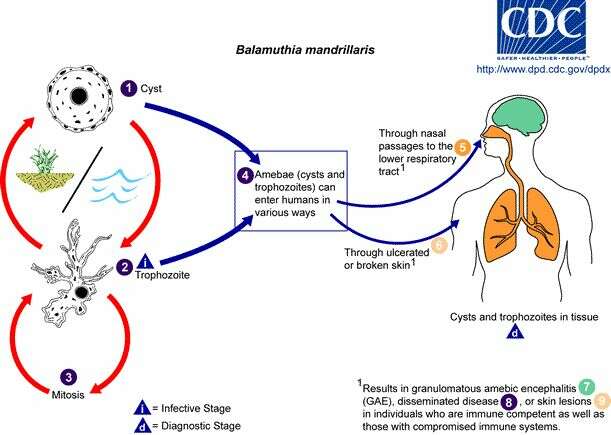
Balamuthia mandrillaris
species of Tubulinea
Acanthamoebidae
Acanthamoebidae is a family of single-celled eukaryotes within the group Amoebozoa.
Acanthamoeba keratitis
Human disease
Discosea
Discosea is a class of Amoebozoa, consisting of naked amoebae with a flattened, discoid body shape. Members of the group do not produce tubular or subcylindrical pseudopodia, like amoebae of the class Tubulinea. When a discosean is in motion, a transparent layer called hyaloplasm forms at the leading edge of the cell (see lamellipodium). In some discoseans, short "subpseudopodia" may be extended from this hyaloplasm, but the granular contents of the cell do not flow into these, as in true pseudopodia. Discosean amoebae lack hard shells, but some, like Cochliopodium and Korotnevella secrete int
Vannellidae
The Vannellidae are a family of Amoebozoa, which are found in soil, fresh- and salt water. The most common genus is Vannella.
Dactylopodida
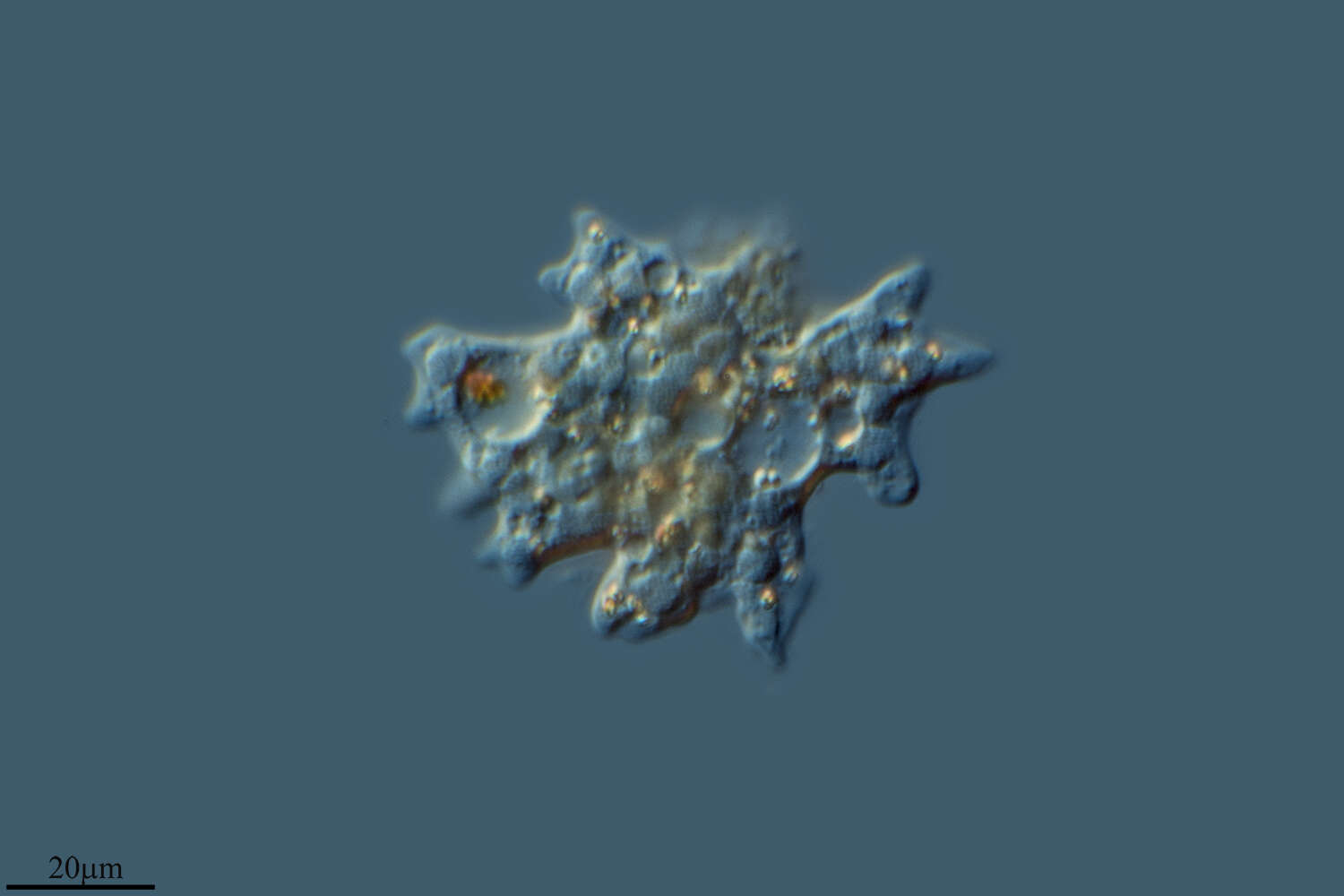
Dactylopodida is an Amoebozoa grouping.
Flabellinia
The Flabellinia are a subclass of Amoebozoa. During locomotion the cells are flattened and have a clear layer called hyaloplasm along the front margin. Some form slender subpseudopodia projecting outward from the hyaloplasm, but the cell mass does not flow into these as in true pseudopodia, and advances without a definite central axis as in the Tubulinea. They also lack distinctive features like shells and flagella, and are united mainly by evidence from molecular trees.
Mayorella
Mayorella is a genus of small amoeboid protists in the phylum Amoebozoa. The genus consists of amoebae that exhibit pseudopodia and feed on a variety of organisms through phagocytosis, making them an important group in microbial ecology across most environments worldwide. Mayorella species have been found in soil, freshwater and marine environments.
Thecamoebidae
Thecamoebidae is an Amoebozoa family.
Paramoebidae
Paramoebidae is a family of Amoebozoa, classified under Dactylopodida. It has also been classified under gymnamoebae. It includes the genera Korotnevella, Hollandella, and Paramoeba.
Paramoeba
Paramoeba is a genus of common parasites, including species that can cause infection in fish, crabs (including the "blue crab", Callinectes sapidus), sea urchins and others.
Thecamoeba
Thecamoeba is a genus of Amoebozoa with a tough pellicle simulating a shell.
Himatismenida
Himatismenida is an Amoebozoa order, in the class Discosea, along with Glycostylida and Dermamoebida. It contains species such as Cochliopodium gallicum.
Cochliopodium
Cochliopodium is a Himatismenida genus.
Vannella
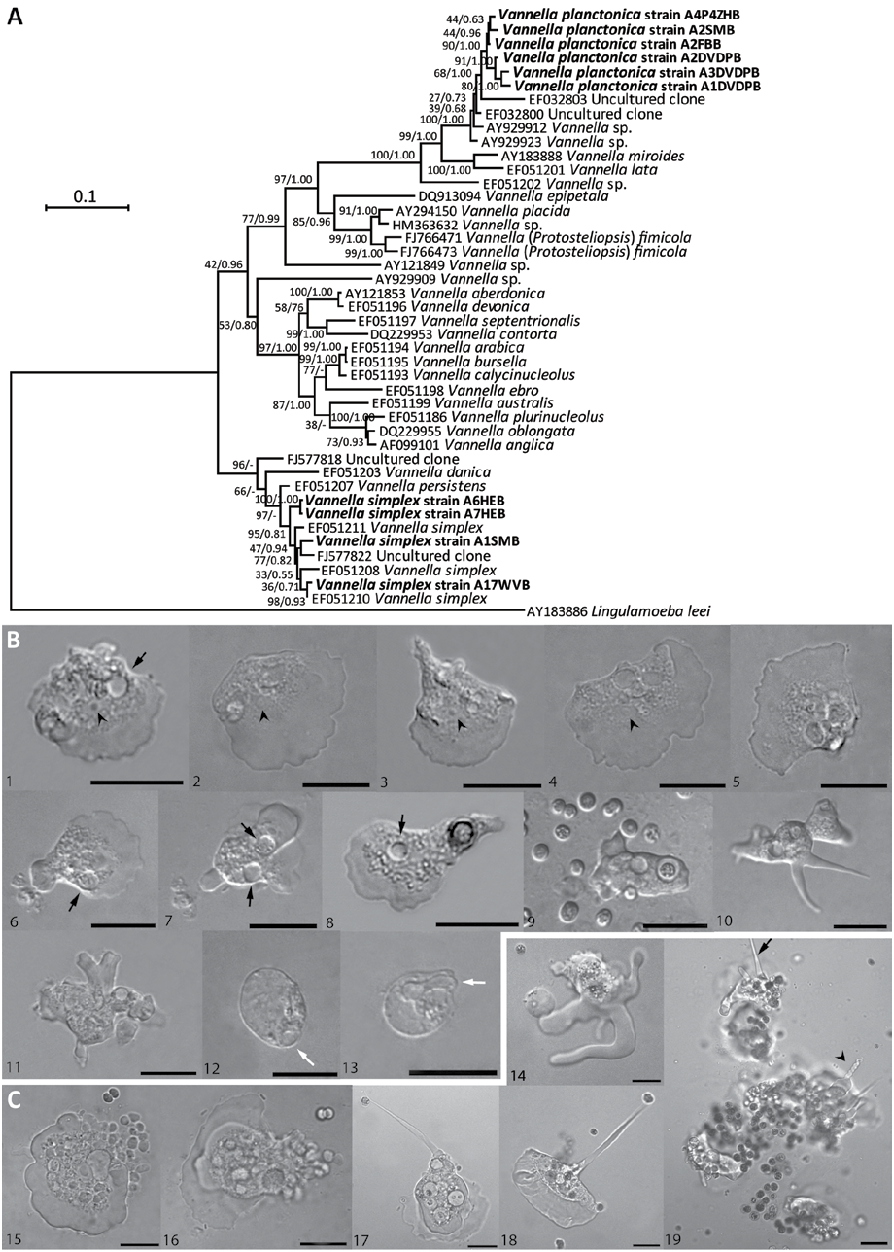
Vannella is a genus of Amoebozoa.
Vexilliferidae
Vexilliferidae is a family of Amoebozoa, classified under Dactylopodida.
Acanthamoeba polyphaga
species of protozoan