Category
page 1Division (mathematics)
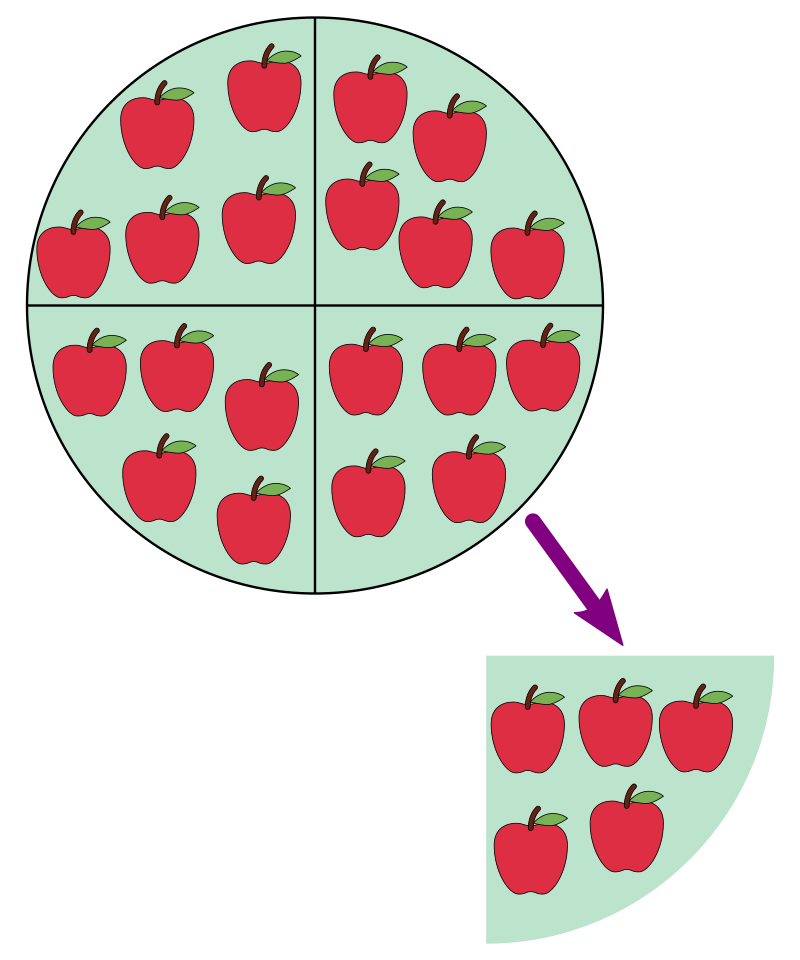
division
arithmetic operation; one of the four basic operations of arithmetic (others being addition, subtraction, multiplication).The division of two natural numbers is the process of calculating the number of times one number is contained within one another

divisor
thumb|The divisors of 10 illustrated with Cuisenaire rods: 1, 2, 5, and 10

division by zero
the result yielded by a real number when divided by zero
divisibility rule
shorthand way of determining whether a given number is divisible by a fixed divisor
remainder
In mathematics, the remainder is the amount "left over" after performing some computation. In arithmetic, the remainder is the integer "left over" after dividing one integer by another to produce an integer quotient (integer division). In algebra of polynomials, the remainder is the polynomial "left over" after dividing one polynomial by another. The modulo operation is the operation that produces such a remainder when given a dividend and divisor.
Euclidean division
division with remainder of integers
long division
standard division algorithm
polynomial long division
dividing polynomials similar to long division for regular numbers
division sign
mathematical division symbol
Ruffini's rule
Polynomial division computation method
division by two
mathematical operation
Trial division
primality test
Fizz Buzz
group word game to teach mathematical division
division algorithm
algorithm for quotient and remainder of integer division
synthetic division
algorithm for Euclidean division of polynomials
ratio scale
level of measurement meaningful as a divisor (except when =0); has non-arbitrary zero point; often a scalar magnitude (>=0)
galley division
most widely used method of division prior to 1600