Category
page 1Drinkware
.jpg)
cup
thumb|Rococo cup with saucer, circa 1753, [[soft-paste porcelain with overglaze enamelling, Vincennes porcelain]]
.jpg)
jug
thumb|French ceramic jug
250px|thumb|Covered cream jug, 1735, silver, Cleveland Museum of Art (US)
A jug is a type of container commonly used to hold and serve liquids, but not normally to drink from directly. It has an opening, sometimes narrow, from which to pour or drink, and has a handle, and usually a pouring lip. Jugs throughout history have been made of metal, ceramic, or glass, and plastic is now common.

mug
upright=1.35|thumb|A mug of tea with milk
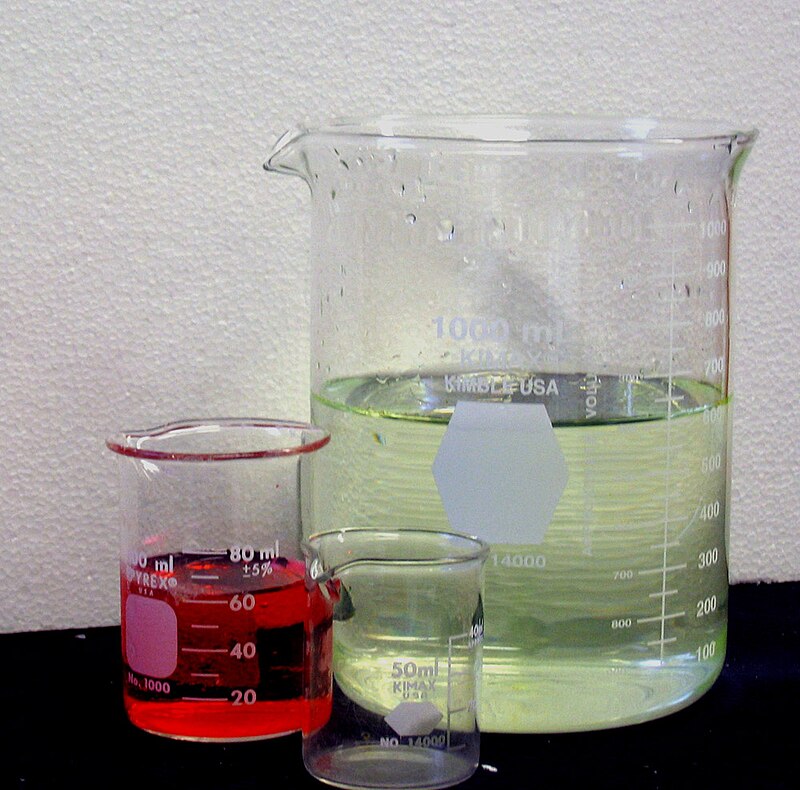
beaker
cylindrical, open-topped laboratory container
%2C%20Spain%20-%2048244034452.jpg)
rhyton
thumb|Silver rhyton with goat protome and death of Orpheus, –410 BC, housed in the [[Vassil Bojkov Collection, Sofia, Bulgaria.
The horn in a continuous and graceful curve makes a right-angled bend. Its lower two thirds are covered by flutes with arc-shaped upper tips. A figural scene below the flaring rim represents the murder of Orpheus. The musician is the central figure, fallen to his right knee, flanked by three attacking Thracian women. He holds a six-string lyre on his right hand and with his left one, wrapped in his mantle, a knobbed wooden stick, with which he tries vainly to protect

kylix
thumb|292x292px|Silver kylix with Helen of Troy|Helen and [[Hermes, BC]]
In the pottery of ancient Greece, a kylix ( , ; ; also spelled cylix; : kylikes , ) is the most common type of cup in the period, usually associated with the drinking of wine. The cup often consists of a rounded base and a thin stem under a basin. The cup is accompanied by two handles on opposite sides.
ciborium
liturgical container
canteen
drinking vessel
Pythagorean cup
practical joke device
cocktail shaker
device used to mix alcoholic beverages
beer stein
drinking vessel
beverage coaster
article used to rest beverages upon
drinking horn
horn of a bovid used as a drinking vessel
paper cup
cup mostly made of paper or card

demitasse
thumb|right|Demitasse set with metal frames and spoons
beaker
drinking vessel without a foot or handle
tumbler
flat-bottomed drinking glass
disposable cup
drinking cup intended for a single use

guksi
thumb|upright=1.35|A guksi
Guksi or guksie (or ; ) is a type of drinking cup, traditionally duodji crafted by the Sami people of northern Scandinavia and Finland from carved birch burl.

kulhar
thumb|upright=1.35|Tea served in a kulhar
A kulhar (Hindi: कुल्हड़ and Urdu: کلہڑ) or kulhad, matir bhar () or simply bhar (), sometimes called a shikora, is a traditional handleless pottery cup from South Asia that is typically undecorated and unglazed, and is meant to be disposable. Kulhars are almost never reused.
cage cup
luxury Late Roman glass vessel

porrón
thumb|Porrón

tankard
thumb|A wooden tankard found on board the 16th-century carrack [[Mary Rose]]
A tankard is a form of drinkware consisting of a large, roughly cylindrical, drinking cup with a single handle. In recent centuries tankards were typically made of silver or pewter, but they can be made of other materials, for example glass, wood, pottery, or boiled leather. A tankard may have a hinged lid, and tankards featuring glass bottoms are also fairly common. Beer steins have a similar shape and use.
%20-%20Walters%2057799.jpg)
kovsh
thumbnail|right|A kovsh by Vasilli Matveev Kunkin from 1758; in the collection of the Walters Art Museum
The Kovsh is a traditional drinking vessel or ladle from Russia. It is oval-shaped like a boat with a single handle and may be shaped like a water bird or a Norse longship. Originally the Kovsh was made from wood and used to serve and drink mead, with specimens excavated from as early as the tenth century. Metal Kovsh began to appear around the 14th century, although it also continued to be carved out of wood and was frequently brightly painted in peasant motifs. By the 17th century, the Ko
Skull cup
Cup made from a skull

loving cup
shared drinking container traditionally used at weddings and banquets

Breweriana
thumb|A collage consisting of six beer labels, a typical breweriana item.
Breweriana refers to articles containing a brewery or brand name, such as beer cans, beer bottles, bottle openers, beer labels, tin signs, beer mats, beer steins, beer trays, beer tap, wooden cases and neon signs.
kero cup
thumb|Tiwanaku held at the Cleveland Museum of Art
A '''' (also spelled kero, quero, and locally also qero) is an ancient Andean cup used to drink liquids like alcohol, or more specifically, chicha. They can be made from wood, ceramics, silver, or gold. Metal or gold cups are also called aquilas''. They were traditionally used in Andean feasts.

jue
ritual vessel
sake set
flask and cups to serve sake
tazza
shallow cup on a stemmed foot
plastic cup
cup made of plastic
berkemeyer
thumb|Still life with blackberry pie, a painting by Willem Heda showing a berkemeyer lying on its side and a standing [[rummer.]]
A Berkemeyer is a drinking glass with a wide, flared bowl, dating from 15th-century Germany and the Netherlands, and still made today. They have a characteristic green or yellow colour caused by iron impurities in the sand used for glass production. The thick, hollow stem is covered with prunts providing a secure grip for hands greasy from feasting, similar to the Römer.
Moomin mug
series of collectible mugs with Moomin characters

zun
thumb|A zun with taotie dating to the [[Shang dynasty]]
thumb|A rare Xi zun in the shape of an ox
thumb|Western Zhou goose-shaped bronze zun. [[National Museum of China]]
grole
thumb|A grole with 8 spouts
A grole ( ; ; or ; ) is a multi-spouted, and often ornately carved, wooden bowl with a small lid. Groles are always round and relatively shallow, with an interior capacity for liquid proportionate to the number of spouts. The bowl is local to the Savoy region of France and the adjacent Aosta Valley region in northwest Italy, and is usually available and enjoyed during après-ski or after dinner - especially one of fondue or raclette.
Lota (vessel)
Vessel used in South Asia
moustache cup
drinking cup with a semicircular ledge inside
quaich
thumb|Sycamore and silver quaich
A quaich , archaically quaigh or quoich, is a special kind of shallow two-handled drinking cup or bowl traditional in Scotland. It derives from the Scottish Gaelic (), meaning a cup.
jia
Chinese ritual vessel
Stirrup spout vessel
type of ceramic vessel used by indigenous cultures of South America, with a handle shaped as a stirrup
Akelei covered beaker
type of covered beaker
Imperial Eagle beaker
holy Roman Empire drinking vessel
Cocktail strainer
bar tool
claw beaker
type of drinking vessel used in early medieval Europe
Toby Jug
type of jug
puzzle jug
trick drinking vessel
Tiki mugs
Ceramic drinking vessel
Krosno Glassware
glassware manufacturer in Poland
band cup
type of ancient Greek cups
Kronkåsa
thumb|right|A kronkåsa that belonged to Gustaf Banér and Christina Sture (1589)|241x241pxA kronkåsa (, plural kronkåsor) is a form of elaborate drinking cup that was used during the Renaissance in Sweden.
thumb|227x227px|Depiction of drinking using kronkåsor, from the Historia de Gentibus Septentrionalibus by [[Olaus Magnus]]
koozie
thumb|Koozies
zarf
thumb|A couple of coffee cups inserted into zarfs (, Swiss-made for Turkish market)
A zarf (plural: zarfs, zarves; ; Arabic: ) is a cup holder, usually of ornamented metal, for a coffee cup without a handle (demitasse or fincan).