Category
page 1Dutch cheeses
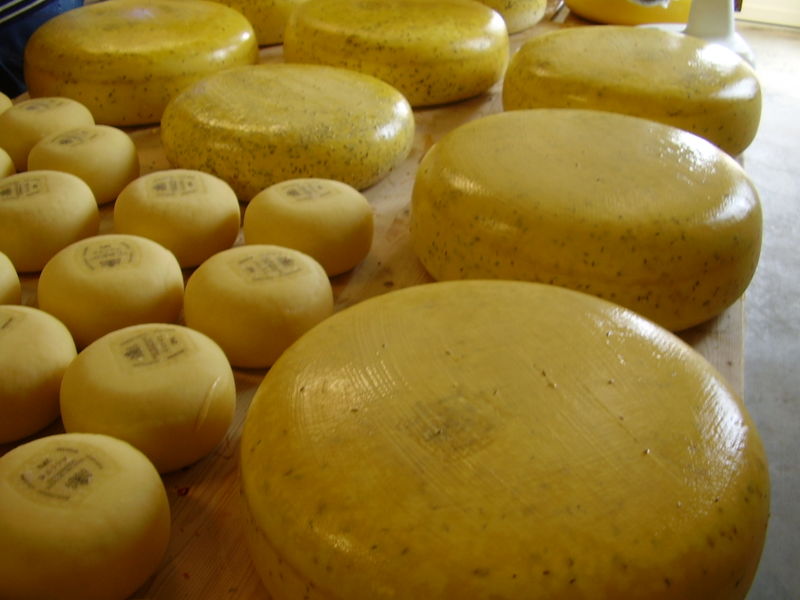
Gouda
Dutch yellow cheese made from cow's milk
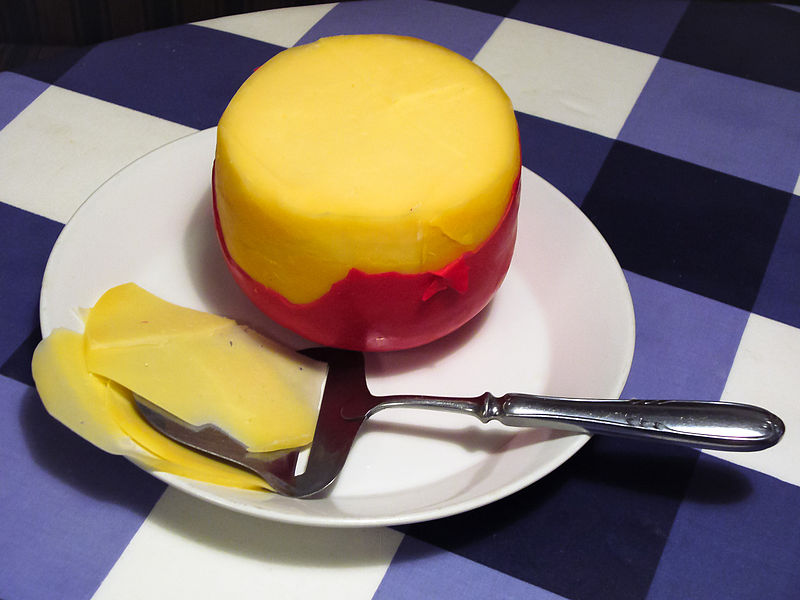
Edam
Dutch cheese

Limburger
Limburger, commonly known as Limburg (in southern Dutch contexts Rommedoe, and in Belgium Herve cheese), is a cheese that originated in the Herve area of the historical Duchy of Limburg, which had its capital in Limbourg-sur-Vesdre, now in the French-speaking Belgian province of Liège. The cheese is especially known for its strong smell caused by the bacterium Brevibacterium linens.
Maasdam cheese
Dutch cheese

Leerdammer
Leerdammer () is a Dutch semihard cheese made from cow's milk. It has an ageing time of around 3–12 months. It has a creamy white texture and was made to be similar in appearance and flavour to Emmental. Its sweet and somewhat nutty flavour becomes more pronounced with age. It also has distinct holes. Advertisement campaigns have used the slogan "De lekkerste kaas tussen de gaten" ("the tastiest cheese between the holes").
Leyden cheese
Dutch cheese
Dutch cheese markets
Traditional market
Boerenkaas
thumb|start=19|The making of Boerenkaas in 1943
Boerenkaas (; ) is a Dutch cheese, most of which is handmade from raw milk. The milk may be from cows, goats, sheep or buffalo; at least half of it must be from the farm where the cheese is made. The cheese may also contain cumin or other seeds, herbs, and spices.
list of Dutch cheeses
Wikimedia list article
Graskaas
Graskaas (a Dutch term that translates as "grass cheese") is the cheese made from the first milkings after cows are led to pasture, having spent the winter indoors. This milk is rich and produces a mild-flavored and creamy cheese; Cheese made from milk produced by cows indoors is called hooikaas, "hay cheese". Meikaas, "May cheese", is similar to graskaas, but is ripened even shorter. Graskaas is typically available in early summer, though an exceptionally mild spring in the year 1596 caused graskaas to be available on the Delft market on 28 March.
Kanterkaas
Kanterkaas is a Dutch yellow cheese made from cow's milk. Apart from the plain variety, there is Kanterkomijnekaas which is flavored with cumin and Kanternagelkaas flavored with both cumin and cloves. is Dutch for 'edge' and refers to the sharp angle at the point where the side of the cheese wheel meets the base. It was granted a Protected Designation of Origin by the European Union in 2000 and may only be produced in the province of Friesland and the Westerkwartier area. The unprotected name Frisian clove cheese (, or simply Nagelkaas) is commonly used for other Dutch cheeses which are simila
Friesian Clove
Frisian cheese
Beemster cheese
A particular Dutch cow's milk cheese