Category
page 1Dynamically typed programming languages

PHP
PHP is a general-purpose scripting language geared towards web development. It was created by Danish-Canadian programmer Rasmus Lerdorf in 1993 and released in 1995. The PHP reference implementation is now produced by the PHP Group. PHP was originally an abbreviation of Personal Home Page, but it now stands for the recursive backronym PHP: Hypertext Preprocessor.

JavaScript
JavaScript (JS) is a programming language and core technology of the Web, alongside HTML and CSS. It was created by Brendan Eich in 1995. As of 2025, the overwhelming majority of websites (98.9%) uses JavaScript for client side webpage behavior.
Python
general-purpose programming language

Perl
Perl is a high-level, general-purpose, interpreted, dynamic programming language. Though Perl is not officially an acronym, there are various backronyms in use, including "Practical Extraction and Reporting Language".

Ruby
general-purpose programming language

Lua
Lua is a lightweight, high-level, multi-paradigm programming language designed mainly for embedded use in applications. Lua is cross-platform software, since the interpreter of compiled bytecode is written in ANSI C, and Lua has a relatively simple C application programming interface (API) to embed it into applications.
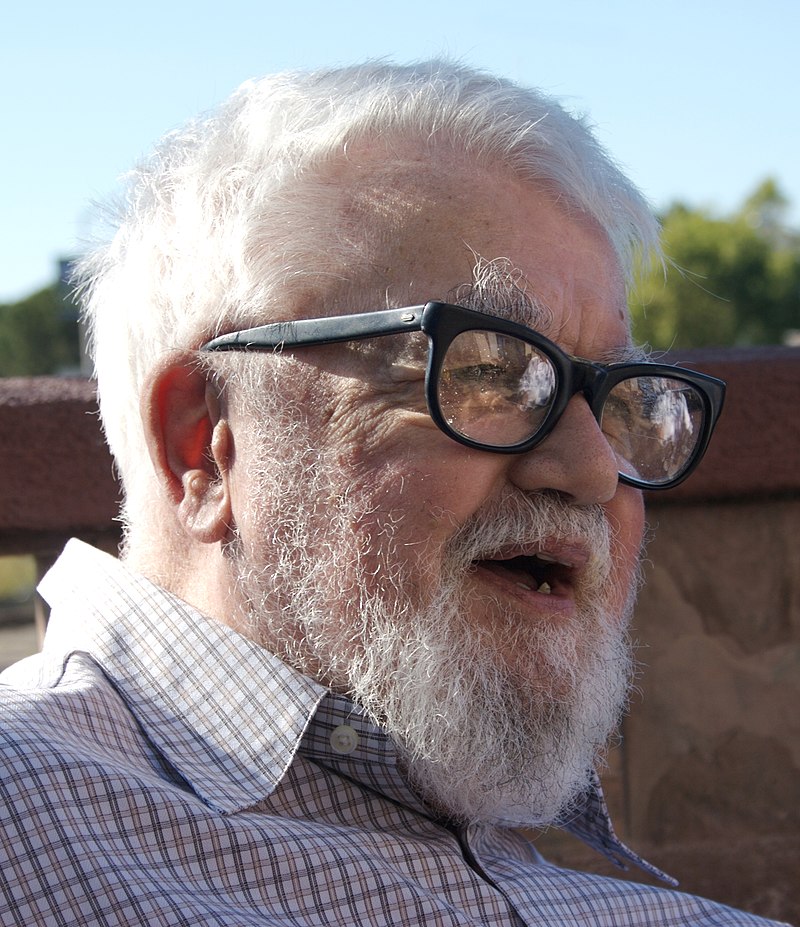
Lisp
functional programming language based on the lambda calculus

MATLAB
MATLAB (Matrix Laboratory) is a proprietary multi-paradigm programming language and numeric computing environment developed by MathWorks. MATLAB allows matrix manipulations, plotting of functions and data, implementation of algorithms, creation of user interfaces, and interfacing with programs written in other languages.

R
programming language for statistical analysis

Prolog
Prolog is a logic programming language that has its origins in artificial intelligence, automated theorem proving, and computational linguistics.

Scratch
programming language learning environment

Scheme
dialect of the Lisp programming language

Smalltalk
Smalltalk is a purely object-oriented programming language that was originally created in the 1970s for educational use, specifically for constructionist learning, but later found use in business. It was created at Xerox PARC by Learning Research Group (LRG) scientists, including Alan Kay, Dan Ingalls, Adele Goldberg, Ted Kaehler, Diana Merry, and Scott Wallace.
Objective-C
Objective-C is a high-level general-purpose, object-oriented programming language that adds Smalltalk-style message passing (messaging) to the C programming language. Originally developed by Brad Cox and Tom Love in the early 1980s, it was selected by NeXT for its NeXTSTEP operating system. Due to Apple macOS’s direct lineage from NeXTSTEP, Objective-C was the standard language used, supported, and promoted by Apple for developing macOS and iOS applications (via their respective application programming interfaces (APIs), Cocoa and Cocoa Touch) from 1997, when Apple purchased NeXT, until the in

Logo
computer programming language

APL
functional, symbolic programming language for operating on multidimensional arrays

Tcl
scripting language
.jpg)
PowerShell
PowerShell is a shell program developed by Microsoft for task automation and configuration management. As is typical for a shell, it provides a command-line interpreter for interactive use and a script interpreter for automation via a language defined for it. Originally only for Windows, known as Windows PowerShell, it was made open-source and cross-platform on August 18, 2016, with the introduction of PowerShell Core. The former is built on the .NET Framework and the latter on .NET (previously .NET Core).

PostScript
PostScript (PS) is a page description language and dynamically typed, stack-based programming language. It is most commonly used in the electronic publishing and desktop publishing realm, but as a Turing complete programming language, it can be used for many other purposes as well. PostScript was created at Adobe Systems by John Warnock, Charles Geschke, Doug Brotz, Ed Taft and Bill Paxton from 1982 to 1984. The most recent version, PostScript 3, was released in 1997.

Clojure
Clojure (, like closure) is a dynamic and functional dialect of the programming language Lisp on the Java platform.

Erlang
programming language
Dart
programming language
Apache Groovy
programming language
Julia
high-performance dynamic programming language
Common Lisp
ANSI-standardized dialect of Lisp
AppleScript
AppleScript is a scripting language created by Apple Inc. that facilitates automated control of Mac applications. First introduced in System 7, it is currently included in macOS in a package of automation tools. The term AppleScript may refer to the scripting language, to a script written in the language, or to the macOS Open Scripting Architecture that underlies the language.
Mathcad
Mathcad is computer software for the verification, validation, documentation and re-use of mathematical calculations in engineering and science, notably mechanical, chemical, electrical, and civil engineering. Released in 1986 for MS-DOS, it introduced live editing (WYSIWYG) of typeset mathematical notation in an interactive notebook, combined with automatic computations. It was originally developed by Mathsoft, and since 2006 has been a product of Parametric Technology Corporation.
Hack
programming language
Clipper
programming language
Squeak
Squeak is an object-oriented, class-based, and reflective programming language. It was derived from Smalltalk-80 by a group that included some of Smalltalk-80's original developers, initially at Apple Computer, then at Walt Disney Imagineering, where it was intended for use in internal Disney projects. The group later was supported by HP Labs and SAP.

REBOL
Rebol ( ; historically REBOL) is a cross-platform data exchange language and a multi-paradigm dynamic programming language designed by Carl Sassenrath for network communications and distributed computing. It introduces the concept of dialecting: small, optimized, domain-specific languages for code and data, which is also the most notable property of the language according to its designer Carl Sassenrath:
Oz
programming language
Icon
programming language

SuperCollider
SuperCollider is an environment and audio programming language released originally in 1996 by James McCartney for real-time audio synthesis and algorithmic composition.
J
programming language
Wolfram Language
programming language and environment
Io
programming language
Self
programming language
MUMPS
MUMPS ("Massachusetts General Hospital Utility Multi-Programming System"), or M, is an imperative, high-level programming language with an integrated transaction processing key–value database. It was originally developed at Massachusetts General Hospital for managing patient medical records and hospital laboratory information systems.

Pharo
Pharo is a cross-platform implementation of the classic Smalltalk-80 programming language and runtime system. It is based on the OpenSmalltalk virtual machine (VM) named Cog, which evaluates a dynamic, reflective, and object-oriented programming language with a syntax closely resembling Smalltalk-80. It is free and open-source software, released under a mix of MIT, and Apache 2 licenses.
Arc
dialect of the Lisp programming language.
BeanShell
BeanShell is a small, free, embeddable Java source interpreter with object scripting language features, written in Java. It runs in the Java Runtime Environment (JRE), dynamically executes standard Java syntax and extends it with common scripting conveniences such as loose types, commands, and method closures, like those in Perl and JavaScript.
E
programming language
Euler
extension and generalization of ALGOL 60
Incr Tcl
object-oriented extensions for the Tcl programming language
Geometric Description Language
computer programming language
newLISP
newLISP is a scripting language, a dialect of the Lisp family of programming languages. It was designed and developed by Lutz Mueller. Because of its small resource requirements, newLISP can be used for embedded systems applications. Many functions are built in, including networking functions, support for distributed and multicore processing, and Bayesian statistics. newLISP is free and open-source software released under the GNU General Public License, version 3 or later.
Joy
programming language
Object REXX
object-oriented scripting language for the operating system OS/2
Harbour
programming language, primarily used to create database/business programs
Magik
object-oriented programming language that supports multiple inheritance and polymorphism
Lasso
Programming language
K
programming language
FL
programming language
Ballerina
programming language
PicoLisp
PicoLisp is a programming language, a dialect of the language Lisp. It runs on operating systems including Linux and others that are Portable Operating System Interface (POSIX) compliant. Its most prominent features are simplicity and minimalism. It is built on one internal data type: a cell. On the language level, a programmer can use three different data types (numbers, symbols, and lists) being represented by cells and differentiated by bits at the end of the cell. It is free and open-source software released under an MIT License (X11).