Category
page 1Echinocereeae
.jpg)
Polaskia
Polaskia (named after American amateur Charles Polaski) is a genus of tree-like cacti reaching 4–5 m high, comprising 2 species. Both present primitive characteristics, but Polaskia chichipe is nearer to Myrtillocactus while Polaskia chende is nearer to Stenocereus. The genus is found in the Mexican states of Puebla and Oaxaca.
==Description==
The tree-like, highly branched species of the Polaskia genus reach heights of growth of between 4 and 5 meters and form dense crowns 3 to 4 meters above the ground. Its bright green shoots repeatedly fork and grow 1 to 2 meters long. The 7 to 12 ribs are

Strophocactus brasiliensis
species of cactus
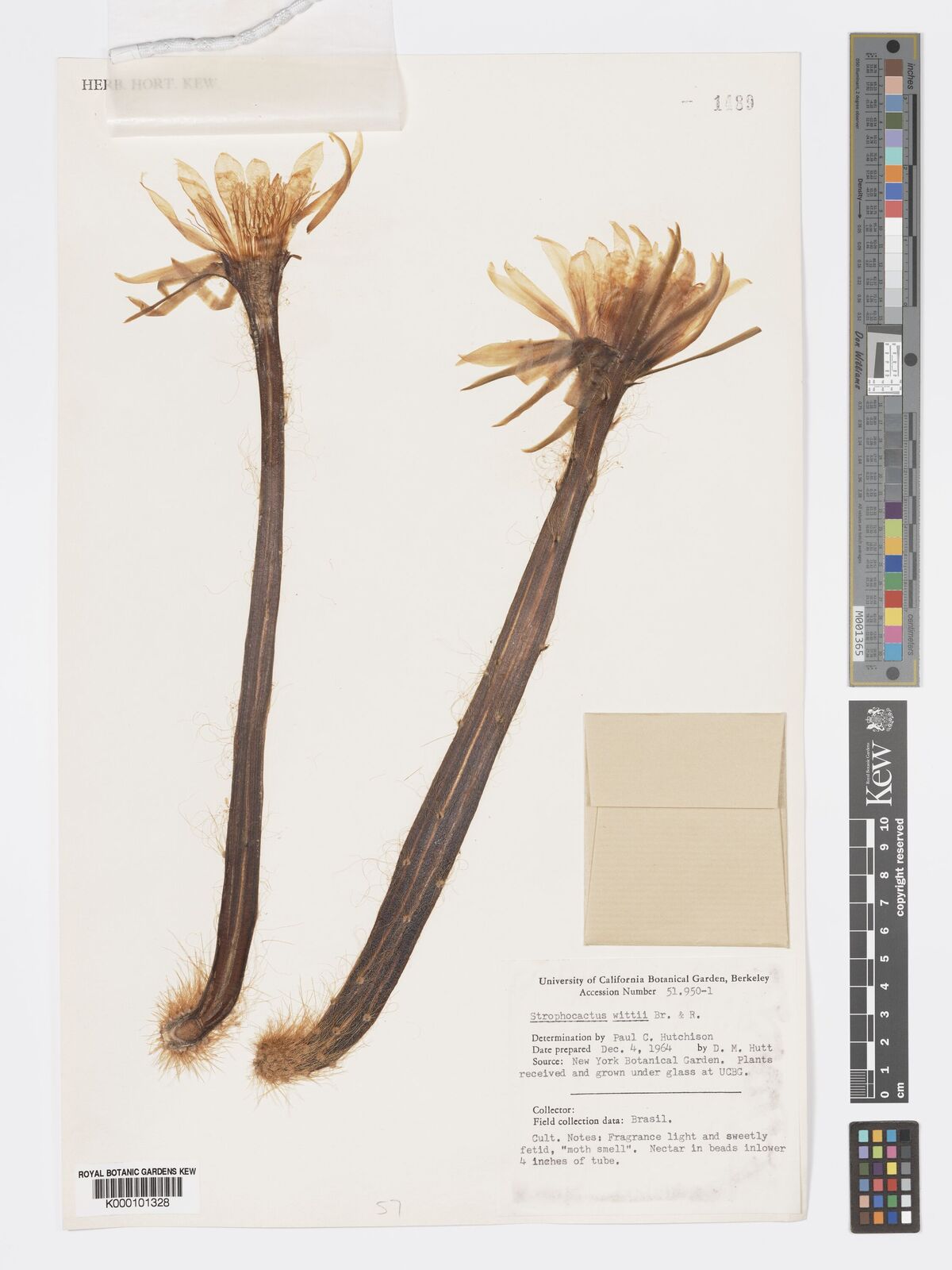
Strophocactus wittii
species of plant

Deamia testudo
species of plant in the family Cactaceae
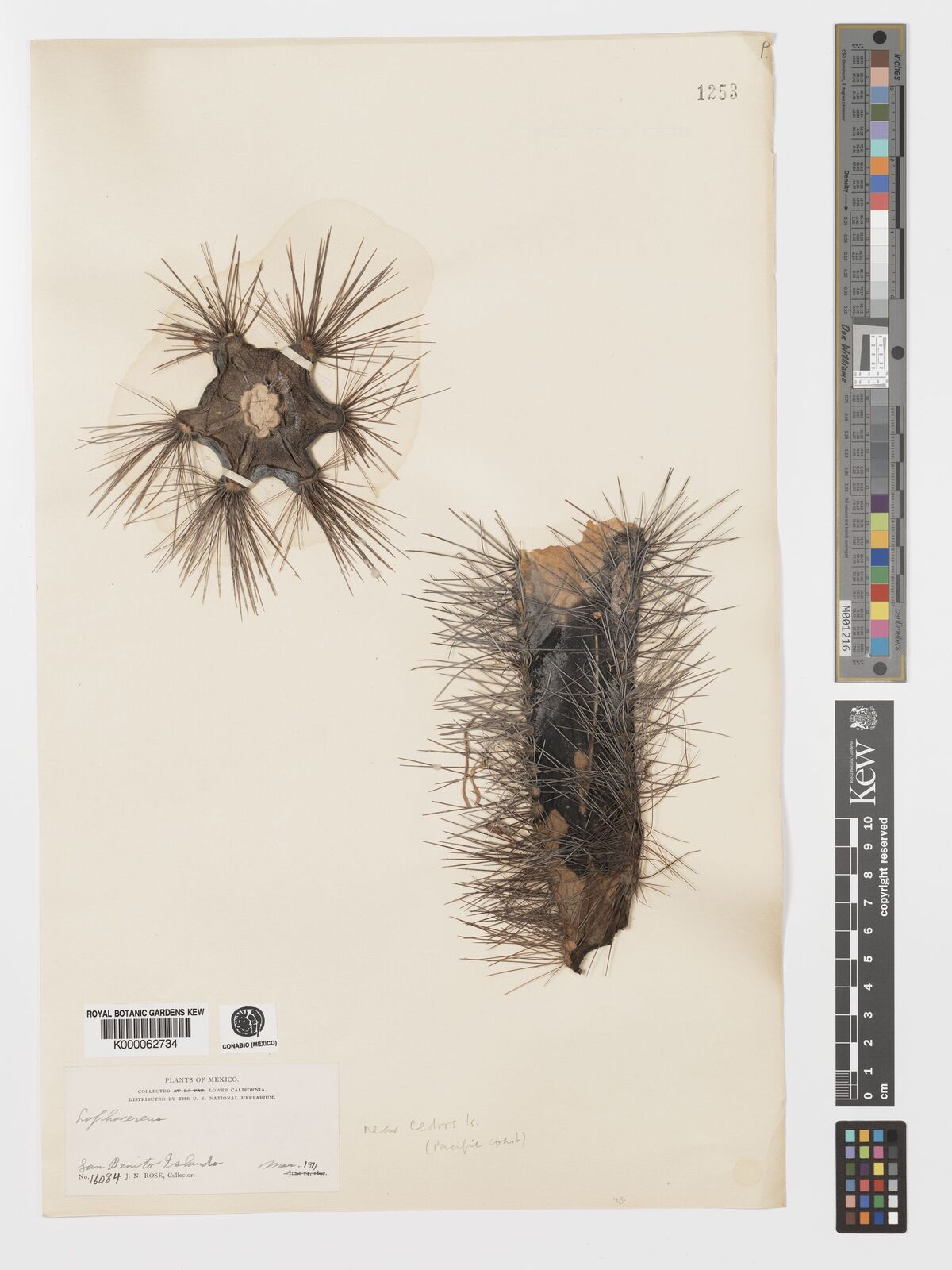
Lophocereus schottii
species of plant

Lophocereus marginatus
species of cactus
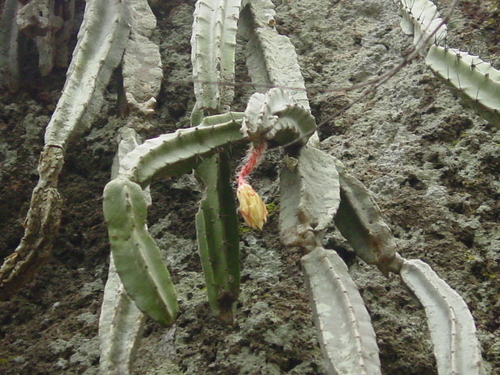
Deamia chontalensis
species of flowering plant
Polaskia chichipe
species of plant
Bergerocactus
Bergerocactus emoryi is a species of cactus, known commonly as the golden-spined cereus, golden snake cactus, velvet cactus or golden club cactus. It is a relatively small cactus, but it can form dense thickets or colonies, with the dense yellow spines giving off a velvety appearance when backlit by the sun. From April to May, yellow, green-tinged flowers emerge, which transform into reddish, globular fruit. This species is native to the California Floristic Province, and is found in northwestern Baja California and a small part of California, in San Diego County and on the southern Channel Is
Escontria
Escontria is a genus of cactus. The only species is Escontria chiotilla, the chiotilla or jiotilla.
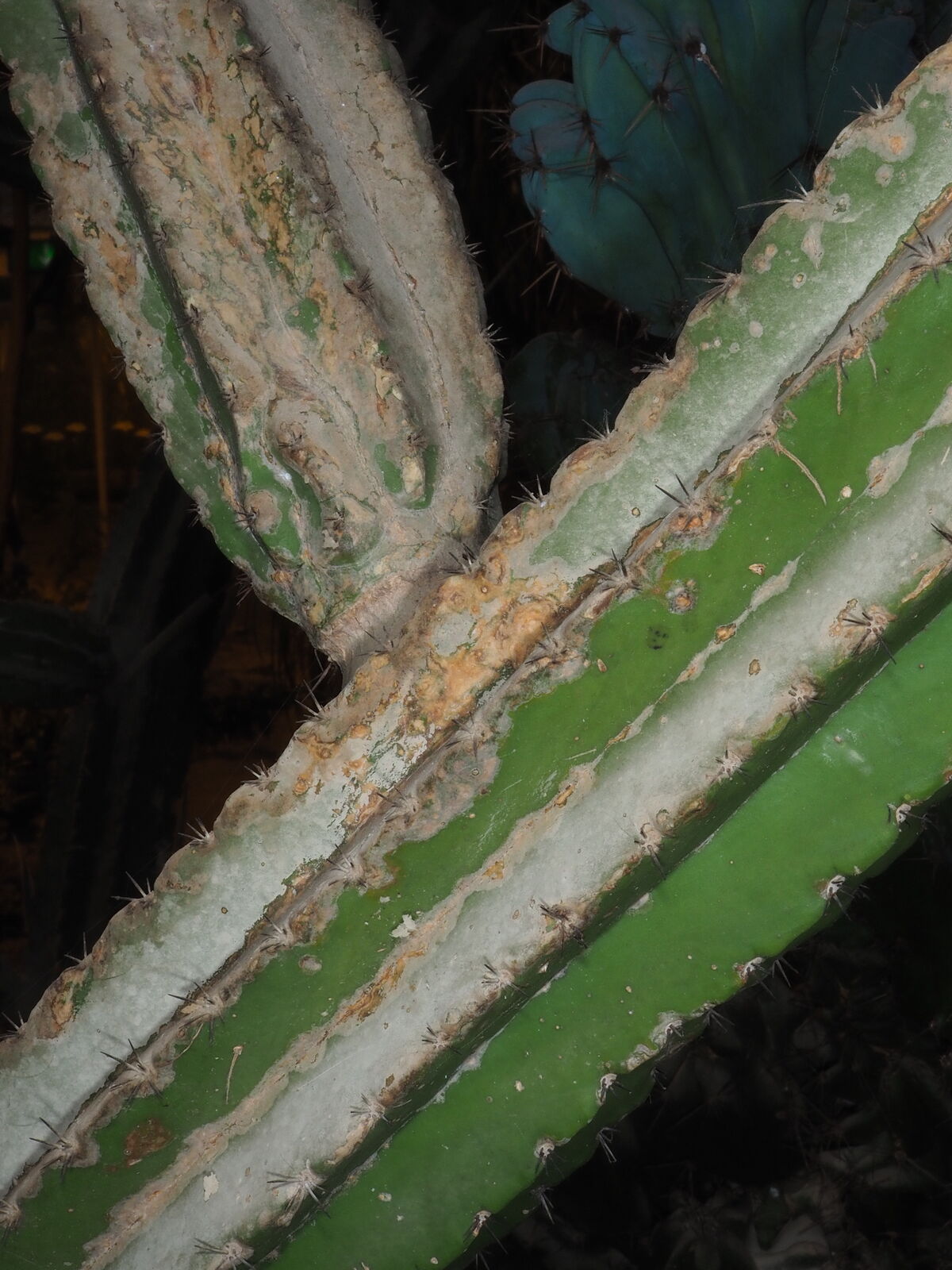
Polaskia chende
species of plant

Pfeiffera
Pfeiffera is a genus of flowering plants in the family Cactaceae, found in Bolivia and northwest Argentina. There has been some debate about the circumscription of the genus. It is placed in the tribe Echinocereeae.
Strophocactus sicariguensis
species of cactus

Strophocactus
Strophocactus is a genus of cacti in the subfamily Cactoideae. Its status and circumscription remain somewhat uncertain, with the genus containing one to three species (not always the same ones). Molecular phylogenetic data suggest that it consists of three species, including two formerly comprising the genus Pseudoacanthocereus. With this circumscription, the species have different growth habits, but share similarities in their flowers, which are white and open at night.

Lophocereus gatesii
species of plant
Echinocereeae
The Echinocereeae are a tribe of cacti in the subfamily Cactoideae. Since 2006, the tribe has included the former tribe Pachycereeae in many treatments of cactus classification. The exact circumscription of the tribe has been subject to considerable change, particularly since molecular phylogenetic approaches have been used in determining classifications, and remains uncertain. The tribe includes large treelike species, such as the saguaro (Carnegiea gigantea), as well as shorter shrubby species. Most members of the tribe are found in desert regions, particularly in Mexico and the southwestern
Deamia
Deamia is a genus of cacti. Its species are native from south Mexico through Central America to Nicaragua. Its species have been placed in Selenicereus and Strophocactus.