Category
page 1Ectolechiaceae

Fellhaneropsis
Fellhaneropsis is a genus of lichen-forming fungi in the family Ectolechiaceae. The genus comprises 11 accepted species as of 2025. These inconspicuous lichens form extremely thin, smooth to powdery films that spread over bark, leaves, or other plant surfaces, and unlike their close relatives in Fellhanera, they produce no detectable lichen products.

Fellhanera
Fellhanera is a genus of mostly leaf-dwelling lichens in the family Ectolechiaceae. Established by the lichenologist Antonín Vězda in 1986 and named in honour of the Austrian lichenologist Josef Hafellner, the genus comprises 69 accepted species as of 2026. These small lichens form powdery, crust-like growths that adhere tightly to their substrate without developing a true protective skin (a ), and they produce distinctive chemical compounds including roccellic acid and zeorin that help distinguish them from similar-looking genera.

Byssoloma
Byssoloma is a genus of leaf-dwelling lichens in the family Ectolechiaceae.
Fellhanera gyrophorica
species of fungus
Sporopodiopsis
Sporopodiopsis is a genus of two species of lichenized fungi in the family Ectolechiaceae. The genus was circumscribed by the Belgian lichenologist Emmanuël Sérusiaux in 1997.
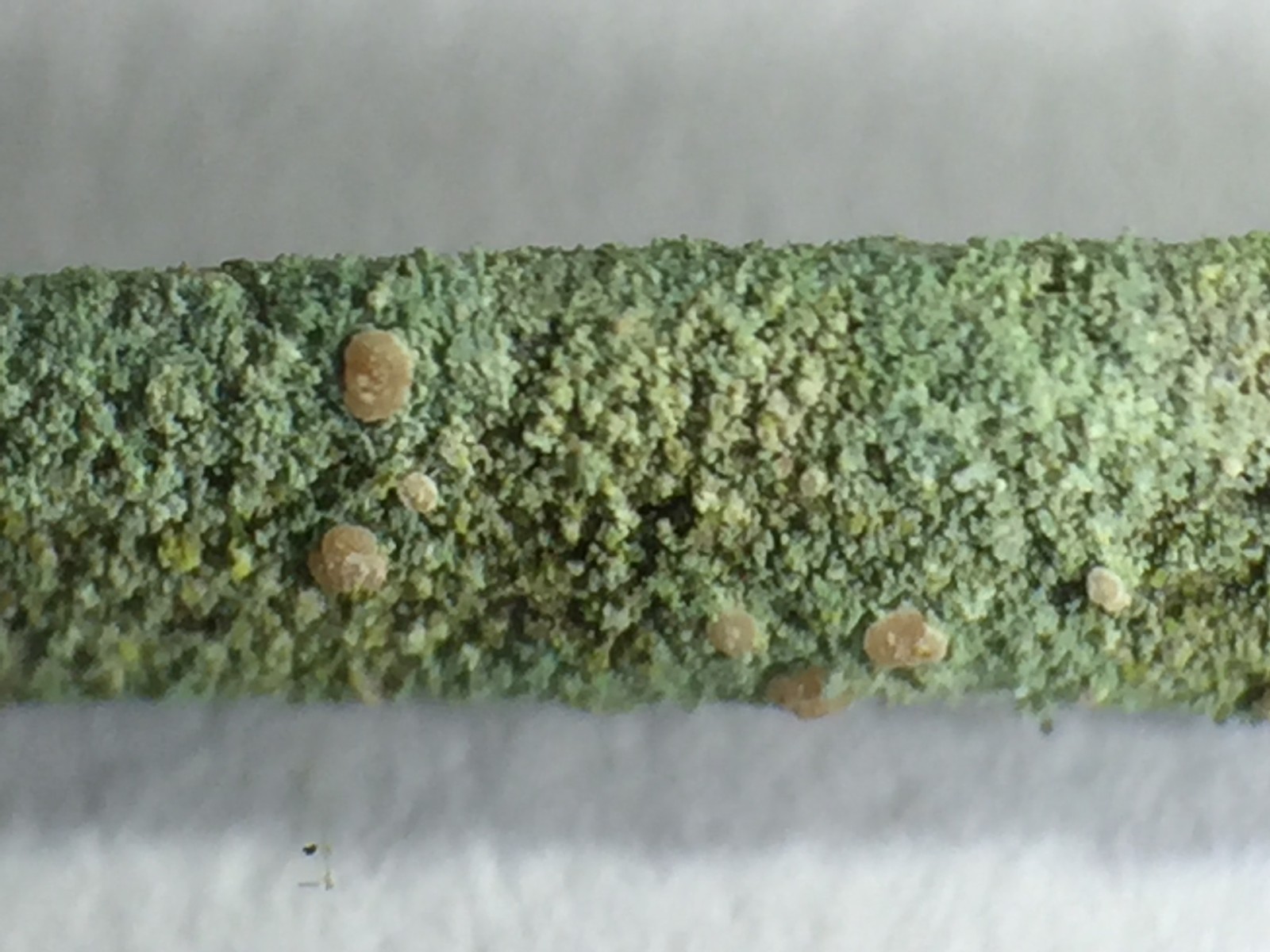
Fellhanera bouteillei
species of fungus

Calopadia
Calopadia is a genus of foliicolous (leaf-dwelling) lichens in the family Ectolechiaceae. The genus was established by the Czech lichenologist Antonín Vězda in 1986 and contains around 24 species found primarily in tropical regions. These lichens form thin, pale brownish to greyish crusts on leaf surfaces and produce small brown disc-shaped fruiting bodies. They are distinguished from similar genera by their non-black fruiting structures and characteristic curved or coiled asexual spores. The genus has its greatest diversity in the Neotropics, though species have also been recorded from tropic
Calopadia cinereopruinosa
species of fungus
Barubria
Barubria is a fungal genus in the family Ectolechiaceae. It contain a single species Barubria fuscorubra, a leaf-dwelling lichen. The genus was established in 1986 by the Czech lichenologist Antonín Vězda, based on material collected from Guinea (West Africa). It is characterised by dark blue, sharply pointed (asexual spore-producing structures) and by asci (spore sacs) whose tip stains blue in iodine. The species forms a thin, smooth crust on leaf surfaces and produces brown fruiting bodies (apothecia) that narrow where they meet the crust.
Loflammia
Loflammia is a small genus of lichen-forming fungi in the family Ectolechiaceae. The genus was established by the Czech lichenologist Antonín Vězda in 1986 to accommodate a group of foliicolous (leaf-dwelling) lichens with distinctive reddish fruiting bodies. These lichens form small greyish-white crusts on the surfaces of living leaves in tropical forests, and are recognised by their bright carmine-red disc-shaped reproductive structures. Species are known from Central and South America, Africa, and Papua New Guinea.
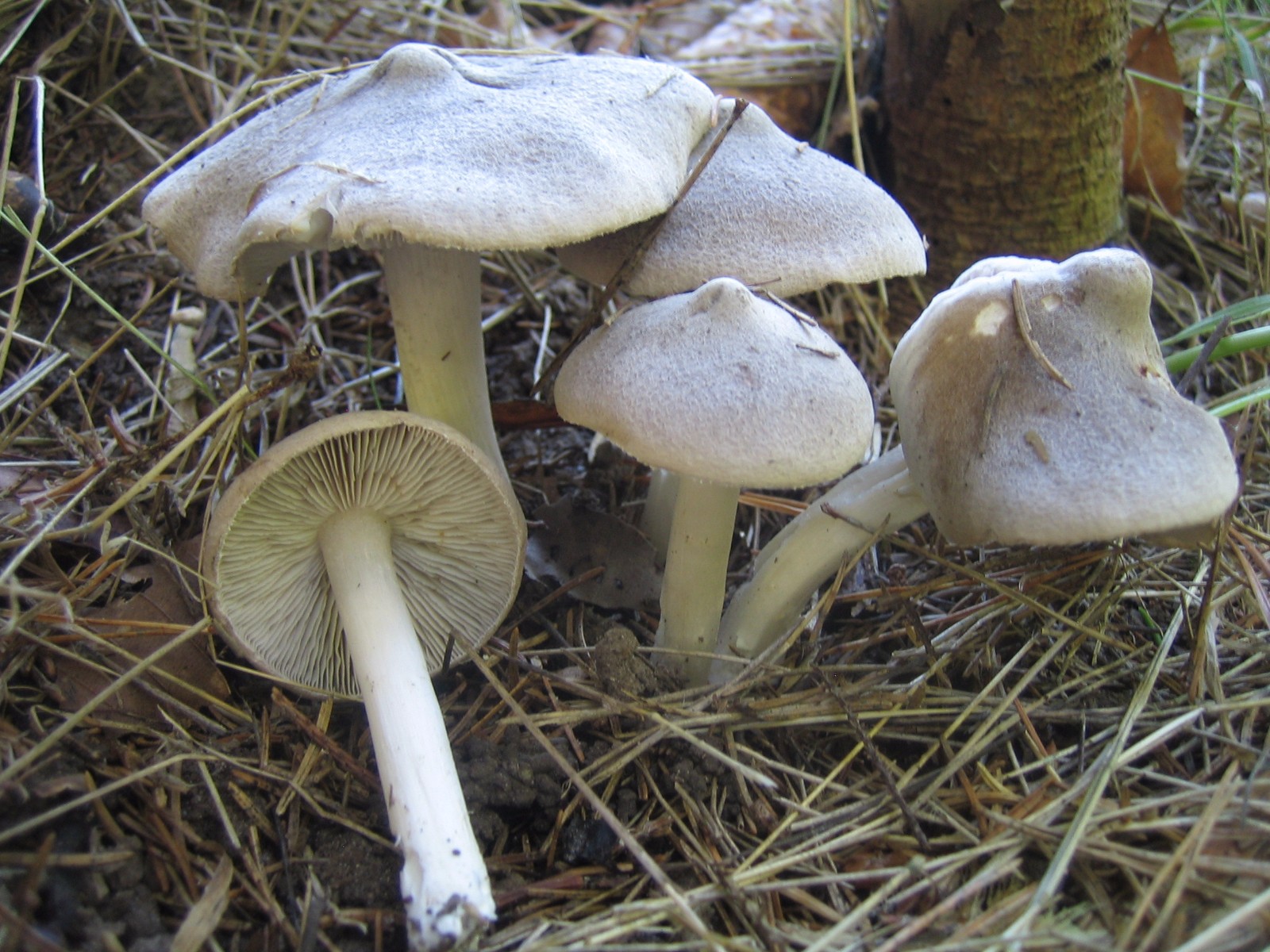
Badimiella
Badimiella is a genus of lichen-forming fungi in the family Ectolechiaceae. It has two species of foliicolous (leaf-dwelling) lichens.
Roccellinastrum flavescens
species of fungus
Byssoloma spinulosum
species of fungus
Roccellinastrum lagarostrobi
species of fungus
Pseudocalopadia
Pseudocalopadia is a genus of lichen-forming fungi in the family Ectolechiaceae. The genus was circumscribed in 1999 by the lichenologist Robert Lücking, with Pseudocalopadia mira as the type, and at the time, only species. P. chibaensis was added to the genus in 2017.
Septotrapelia
Septotrapelia is a genus of lichen-forming fungi in the family Ectolechiaceae. It comprises four species. Species in this genus form tiny, scale-like crusts on rocks and are distinguished by their chocolate-brown fruiting discs with pale margins and unusually large ascospores divided into three segments. These small, bluish-grey lichens grow primarily on volcanic boulders and weathered stone in tropical and subtropical regions, from Costa Rica and the Galápagos to Thailand and South Korea. The genus was established in 2007 after DNA studies showed that certain species with this distinctive spo

Tapellaria
Tapellaria is a genus of mostly leaf-dwelling lichens in the family Ectolechiaceae. These lichens form thin, paint-like crusts on their host surfaces and are found mainly in tropical regions of the Americas, with about twenty known species. The genus was first proposed in 1890 by the lichenologist Johannes Müller Argoviensis. Tapellaria lichens reproduce both sexually through small black disc-shaped structures and asexually through distinctive hood-shaped outgrowths that release thread-like spores.
Lasioloma
Lasioloma is a genus of lichenized fungi in the family Ectolechiaceae. The genus was circumscribed by the Swedish lichenologist Rolf Santesson in 1952, with Lasioloma arachnoideum assigned as the type species. Found predominantly in tropical rainforests, genus Lasioloma contains both foliicolous (leaf-dwelling) and corticolous (bark-dwelling) species. The foliicolous species are distinguished by their woolly prothallus (initial growth stage), a thallus that ranges from dispersed to continuous, and a hairy margin (the edge of the spore-producing structure). In contrast, corticolous species typi
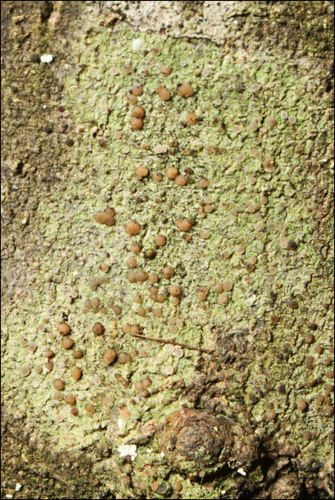
Bapalmuia
Bapalmuia is a genus of lichen-forming fungi in the family Ectolechiaceae.
Calopadiopsis
Calopadiopsis is a genus of lichen-forming fungi in the family Ectolechiaceae. It was circumscribed in 2002 by the lichenologists Robert Lücking and Rolf Santesson. It has two species:

Byssolecania
Byssolecania is a genus of lichen-forming fungi in the family Ectolechiaceae.

Leimonis erratica
species of fungus
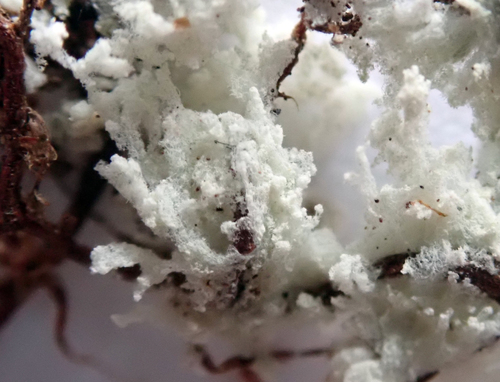
Roccellinastrum
Roccellinastrum is a genus of lichen-forming fungi in the family Ectolechiaceae. It has seven species.