Category
page 1Ego psychology
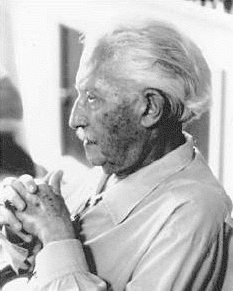
Erik Erikson
American German-born psychoanalyst & essayist

Karen Horney
American-German psychoanalyst

egocentrism
alt=An orange stick figure in the center of orange concentric circles, with six black stick figures scattered on the rim|thumb|A diagram of egocentrism
Egocentrism refers to difficulty differentiating between self and other. More specifically, it is difficulty in accurately perceiving and understanding perspectives other than one's own.
Egocentrism is found across the life span: in infancy, early childhood, adolescence, and adulthood.
Although egocentric behaviors are less prominent in adulthood, the existence of some forms of egocentrism in adulthood indicates that overcoming egocentrism may

alter ego
Latin phrase; alternate self
self-criticism
Self-criticism involves how an individual evaluates oneself. Self-criticism in psychology is typically studied and discussed as a negative personality trait in which a person has a disrupted self-identity. The opposite of self-criticism would be someone who has a coherent, comprehensive, and generally positive self-identity. Self-criticism is often associated with major depressive disorder. Some theorists, such as Sidney Blatt, Samantha Reis and Brin Grenyer, define self-criticism as a mark of a certain type of depression (introjective depression), and in general people with depression tend to
self-hatred
Self-hatred is a state of personal self-loathing or low self-esteem.
ego psychology
school of psychoanalysis rooted in Sigmund Freud's structural id-ego-superego model of the mind

self-deprecation
thumb|200px|''Don't Buy This'' is a video game, released in Britain where self-deprecation is considered virtuous, that openly markets itself as containing "the worst games ever".
Self-deprecation is the act of reprimanding oneself by belittling, undervaluing, disparaging oneself, or being excessively modest. It can be used as a way to make complaints, express modesty, invoke optimal reactions or add humour. It may also be used as a way for individuals to appear more likable and agreeable.
ego depletion
psychological theory
Edoardo Weiss
Italian psychiatrist & psychoanalyst (1889–1970)
ego death
complete loss of subjective self-identity
ego ideal
Freudian concept
egosyntonic and egodystonic
In psychoanalysis, egosyntonic behaviors, values, and feelings are in harmony with or acceptable to the needs and goals of the ego, or consistent with one's ideal self-image. Egodystonic (or ego alien) behaviors are the opposite, referring to thoughts and behaviors (dreams, compulsions, desires, etc.) that are conflicting or dissonant with the needs and goals of the ego, or further, in conflict with a person's ideal self-image.
egomania
Egomania is a psychiatric term used to describe excessive preoccupation with one's ego, identity or self and applies the same preoccupation to anyone who follows one's own ungoverned impulses, is possessed by delusions of personal greatness & grandeur and feels a lack of appreciation. Someone suffering from this extreme egocentric focus is an egomaniac. Egomania as a condition, while not a classified personality disorder, is considered psychologically abnormal.
self-discrepancy theory
psychological theory
self-affirmation
Self-affirmation theory is a psychological theory that focuses on how individuals adapt to information or experiences that are threatening to their self-concept. Claude Steele originally popularized self-affirmation theory in the late 1980s, and it remains a well-studied theory in social psychological research.
ego-state therapy
parts-based psychodynamic approach
psychology of self
the study of either the cognitive, conative or affective representation of one's identity or the subject of experience