Category
page 1Electrochemical concepts

galvanic cell
device for spontaneous conversion of chemical into electrical energy

Faraday constant
physical constant: electric charge of one mole of electrons
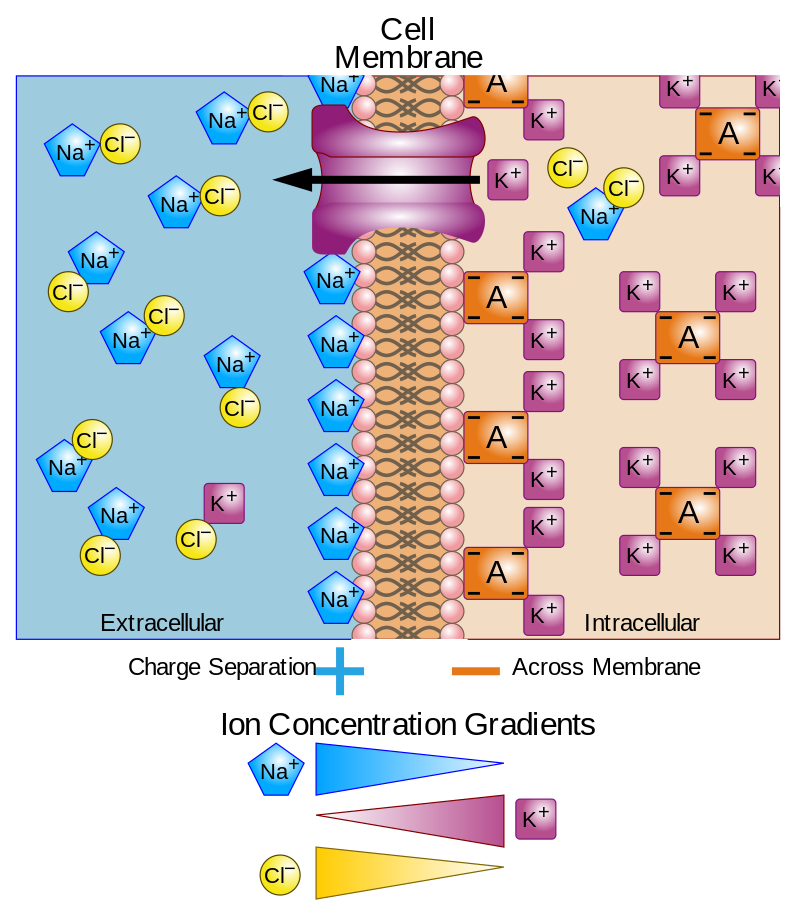
membrane potential
type of physical quantity
reduction potential
measure of tendency of a substance to gain or lose electrons
standard electrode potential
electromotive force of a half reaction cell versus standard hydrogen electrode
ionic strength
quantification of the electrical interactions between ions in solution
salt bridge
laboratory device in electrochemistry
electrochemical gradient
gradient of electrochemical potential, usually for an ion that can move across a membrane
electron donor
chemical element or compound that donates one or several electrons to another element or compound
electron acceptor
chemical element or compound that accepts one or several electrons transferred to it from another element or compound
Galvani potential
Electrical property
Volta potential
effect in electrochemistry
overpotential
In electrochemistry, overpotential is the potential difference (voltage) between a half-reaction's thermodynamically determined reduction potential and the potential at which the redox event is experimentally observed. The term is directly related to a cell's voltage efficiency. In an electrolytic cell the existence of overpotential implies that the cell requires more energy than thermodynamically expected to drive a reaction. In a galvanic cell the existence of overpotential means less energy is recovered than thermodynamics predicts. In each case the extra/missing energy is lost as heat. The
fast ion conductor
solid-state electrical conductor which conducts due to the movement of ions

counterion
thumb|160px|right|Polystyrene sulfonate, a [[cation-exchange resin, is typically supplied with as the counterion.]]
electrochemical polarization
effect produced upon the plates of a voltaic battery, or the electrodes in an electrolytic cell, by the deposition upon them of the gases liberated by the action of the current
molar conductivity
conductivity per molar concentration of electrolyte
electrolytic conductivity
measure of the ability of a solution containing electrolytes to conduct electricity
Debye–Falkenhagen effect
electrochemical effect