Category
page 1Emesene dynasty
.jpg)
Homs
Homs ( ; ), known in pre-Islamic times as Emesa ( ; ), is a city in western Syria and the capital of the Homs Governorate. It is above sea level and is located north of Damascus. Located on the Orontes River, Homs is also the central link between the interior cities and the Mediterranean coast.

Caracalla
Marcus Aurelius Antoninus (born Lucius Septimius Bassianus, 4 April 188 – 8 April 217), better known by his nickname Caracalla (; ), was Roman emperor from 198 to 217 AD, first serving as nominal co-emperor under his father and then ruling alone after 211 AD. He was a member of the Severan dynasty, the elder son of Emperor Septimius Severus and Empress Julia Domna. Severus proclaimed Caracalla co-ruler in 198, doing the same with his other son Geta in 209. The two brothers briefly shared power after their father's death in 211, but Caracalla soon had Geta murdered by the Praetorian Guard
.png)
Elagabalus
Marcus Aurelius Antoninus (born Sextus Varius Avitus Bassianus, 204 – 13 March 222), better known by his posthumous nicknames Elagabalus ( ) and Heliogabalus ( ), was Roman emperor from 218 to 222, while he was still a teenager. His short reign was notorious for religious controversy and alleged sexual debauchery. A close relative to the Severan dynasty, he came from a prominent Syrian Arab family in Emesa (Homs), Syria, where he served as the head priest of the sun god Elagabal from a young age. After the death of his cousin, the emperor Caracalla, Elagabalus was raised to the Principate at 1

Severus Alexander
Roman Emperor (208-235)

Geta
Roman emperor from 209 to 211
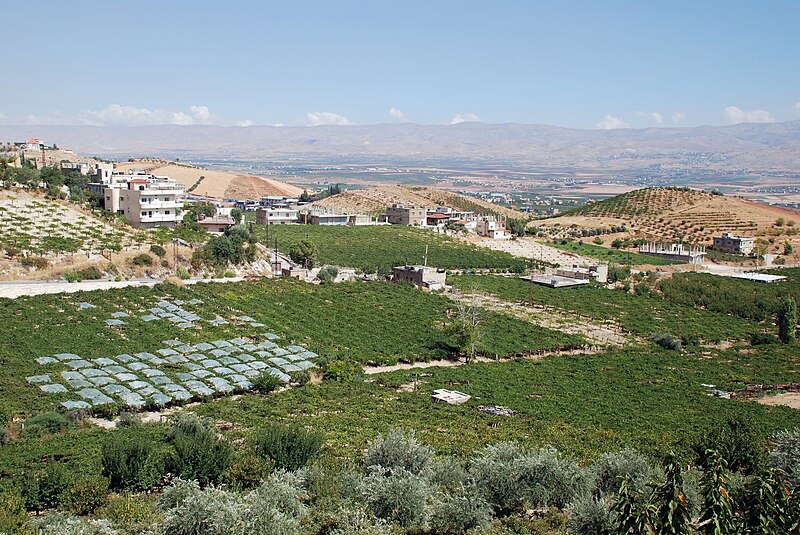
Beqaa Valley
valley in eastern Lebanon
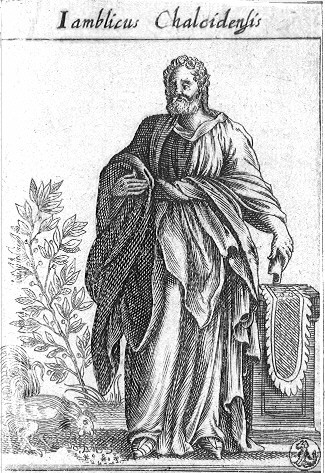
Iamblichus
Iamblichus ( ; ; ; ) was a Syrian Arab Neoplatonist philosopher who determined a direction later taken by Neoplatonism. Iamblichus was also the biographer of the Greek mystic, philosopher, and mathematician Pythagoras. In addition to his philosophical contributions, his is important for the study of the sophists because it preserved about ten pages of an otherwise unknown sophist known as the Anonymus Iamblichi.

Severan dynasty
Roman imperial dynasty (ruled 193 to 235)

Julia Domna
ancient Roman empress
Julia Maesa
grandmother of Roman emperors Elagabalus and Severus Alexander
The Fall of the Roman Empire
1964 American epic film by Anthony Mann

Julia Soaemias
mother of Roman emperor Elagabalus (180-222)

Salamiyah
thumb|A full view of Shmemis (spring 1995)

Julia Avita Mamaea
mother of Roman emperor Alexander Severus (died 235)

Al-Rastan
Al-Rastan () is the third largest city in the Homs Governorate, located north of its administrative capital Homs and from Hama. Nearby localities include Talbiseh and al-Ghantu to the south, al-Zaafaraniyah and al-Mashrafah to the southeast, Murayj al-Durr to the northeast, Tumin to the north, Deir al-Fardis to the northwest and Kafr Nan and the Houla village cluster to the west. Ar-Rastan had a population of nearly 40,000 in 2004.

Vaballathus
Septimius Vaballathus (; ; – ) was emperor of the Palmyrene Empire centred at Palmyra in the region of Syria.
Yabrud
Yabroud or Yabrud () is a city in Syria, located in the Rif Dimashq (i.e. Damascus' countryside) governorate about north of the capital Damascus. According to the Syria Central Bureau of Statistics (CBS), Yabroud had a population of 25,891 in the 2004 census.

Uranius
thumb|300px|Uranius Antoninus coin, with Greek inscriptions and dated according to the Seleucid Empire. On the reverse, the Emesa temple to the sun god El Gabal, with the holy stone.
Drusilla
daughter of Herod Agrippa
Polemon II of Pontus
king of Pontus
Jamblichus
2nd century Syrian Greek novelist
Sohaemus of Armenia
Roman client king of Armenia (died 180)
Sextus Varius Marcellus
Syrian-born Roman nobleman and politician (c. 165 – c. 215)
Aristobulus Minor
1st century prince from the Herodian Dynasty
Julius Avitus
Syrian-born Roman military commander, senator and governor (c. 155-217)
Sohaemus of Emesa
Roman Client Priest King of the Emesan kingdom (ruled AD 54-73)

Emesene dynasty
Roman client kingdom based in the Levant
Drusilla of Mauretania
1st century AD Mauretanian princess
Iamblichus
Wikimedia human name disambiguation page
Julius Bassianus
Syrian high priest of Elagabalus (died 217)

Shmemis
Shmemis () also ash-Shmemis, ash-Shmamis) is a castle located in Syria. It is located 3 km north west of Salamiyah and 30 km south east from Hama.
==History==
thumb|200px|A view of Shmemis castle at sunset
The castle (Qalat Shmamis) was first built, on top of an extinct volcano, in the 1st century BC by Sampsiceramus I, the first Priest King of the Royal family of Emesa. Most of the original structure was subsequently destroyed by an earthquake. It was later destroyed by the Persian king Khosrau II in AD 613. It was rebuilt by Assad ud-Din Shirkoh, an Ayyubid governor of Homs; the da
Gessius Marcianus
2nd/3rd century Syrian-born Roman nobleman
Theodora of Emesa
5th–6th-century Neoplatonist based in Alexandria
Sampsiceramus II
king-priest of Emesa, vassal of the Roman Empire
Iamblichus I
1st century BC Emesene phylarch
Timolaus of Palmyra
probably fictional Roman usurper

Sampsiceramus I
priest King of Emesa
Iotapa
1st century daughter of Sampsiceramus II of Emesa

Gaius Julius Alexion
1st century Roman Client Priest King of Emesa
Iotapa of Emesa
Queen of Emesa, daughter of Mithridates III, spouse of Sampsiceramus II